





Most Malaysian websites don’t fail because of low traffic.
They fail because the website experience gives users no clear, trustworthy reason to act.
If your website conversion rate in Malaysia is dropping, you’re not alone.
Traffic comes in. Users scroll. Then they leave.
No enquiries. No purchases. No WhatsApp clicks.
Across Malaysian SMEs, e‑commerce brands, SaaS companies, and service providers, the pattern is consistent: money is spent on ads, but the website leaks conversions.
This guide breaks down what website conversion actually means in Malaysia, the most common conversion killers, and specific fixes that consistently improve results, without increasing ad spend.
What “Conversion” Actually Means for Malaysian Websites
Definition: A website conversion is any user action that directly contributes to revenue.
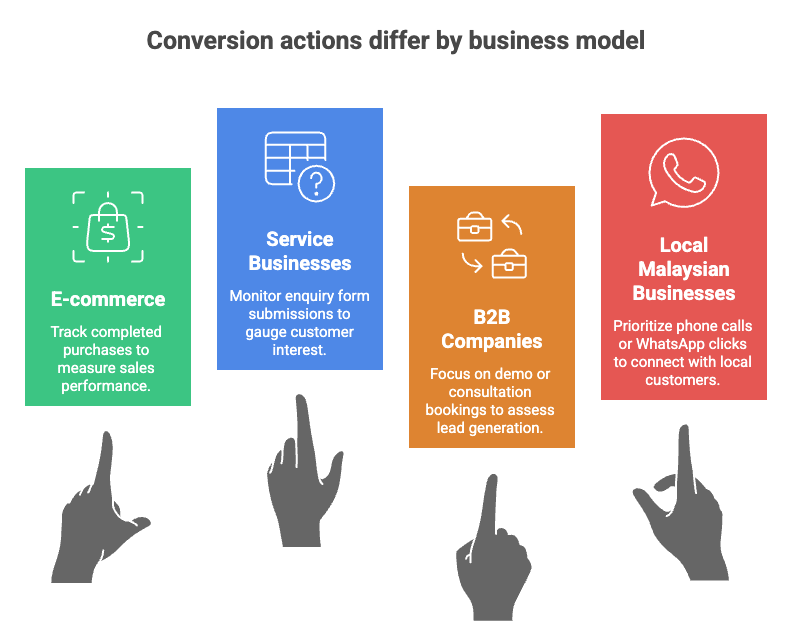
Conversion actions differ by business model:
- E‑commerce: completed purchases
- Service businesses: enquiry form submissions
- B2B companies: demo or consultation bookings
- Local Malaysian businesses: phone calls or WhatsApp clicks
If a metric does not influence revenue, it is a vanity metric.
For Malaysian businesses, the most reliable conversion indicators are:
- Completed checkout
- Qualified enquiries
- Direct contact actions (WhatsApp, calls)
Everything else is secondary.
You Don’t Have a Traffic Problem, You Have a Conversion Problem
Many Malaysian businesses increase ad spend when sales stagnate.
This approach rarely works.
Increasing traffic does not increase conversions if the website experience remains unchanged.
If 1,000 visitors don’t convert, 10,000 visitors usually won’t either.
Before increasing ad budget, answer these questions:
- What is your current website conversion rate in Malaysia?
- Where do users drop off?
- Which pages have the highest exit rates?
When traffic arrives but actions don’t happen, the issue is almost always UX, clarity, or trust.
Poor UX Is a Primary Conversion Killer in Malaysia
Malaysian users abandon websites quickly when something feels slow, confusing, or visually overwhelming.
Common UX issues that reduce website conversion rates in Malaysia:
- Slow load speed: Google reports that when page load time increases from 1 second to 3 seconds, the probability of bounce rises by 32%.
- Confusing navigation: Users cannot immediately find what they want.
- Too many choices: Excessive categories and CTAs make users difficult to decide.
- Cluttered layouts: Lack of white space reduces comprehension.
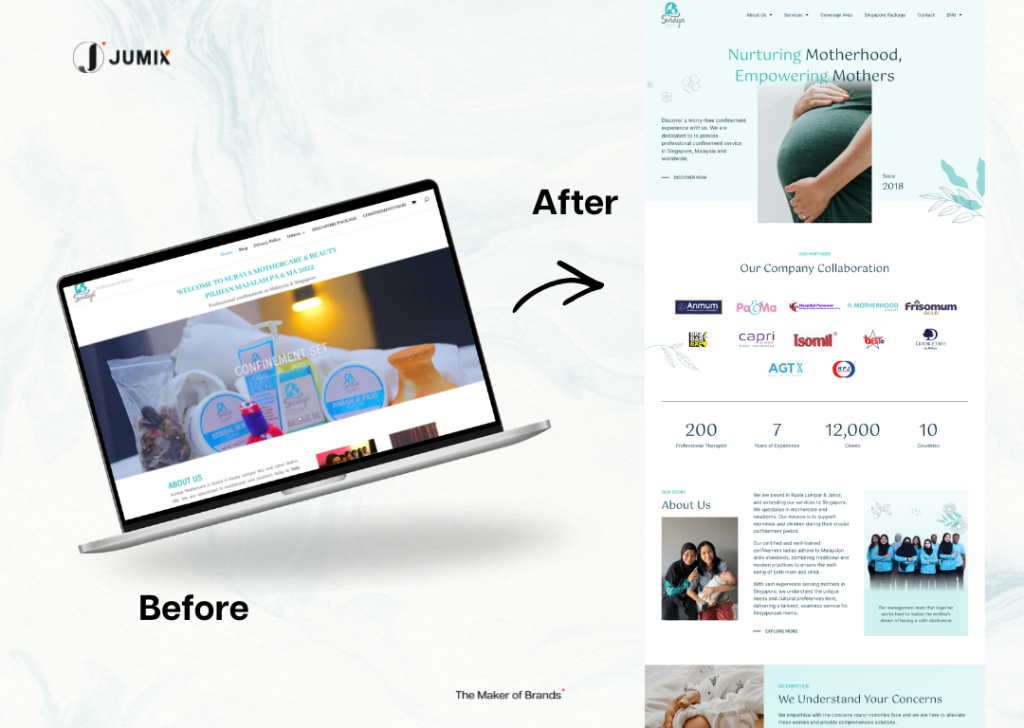
For Suraya Mothercare, we redesigned the website to simplify confusing content and clearly present their full range of confinement services.
By streamlining the layout, improving information flow, and guiding visitors toward the right package, the website now makes decision-making easier, not overwhelming.
Website conversion increased by 34% in two weeks.
Trust Is the Strongest Conversion Driver in Malaysia
A study states that Malaysian users are highly trust-sensitive when transacting online.
A lack of visible credibility causes visitors to assume:
- The business is unreliable
- The business is unprofessional
- The business may be a scam
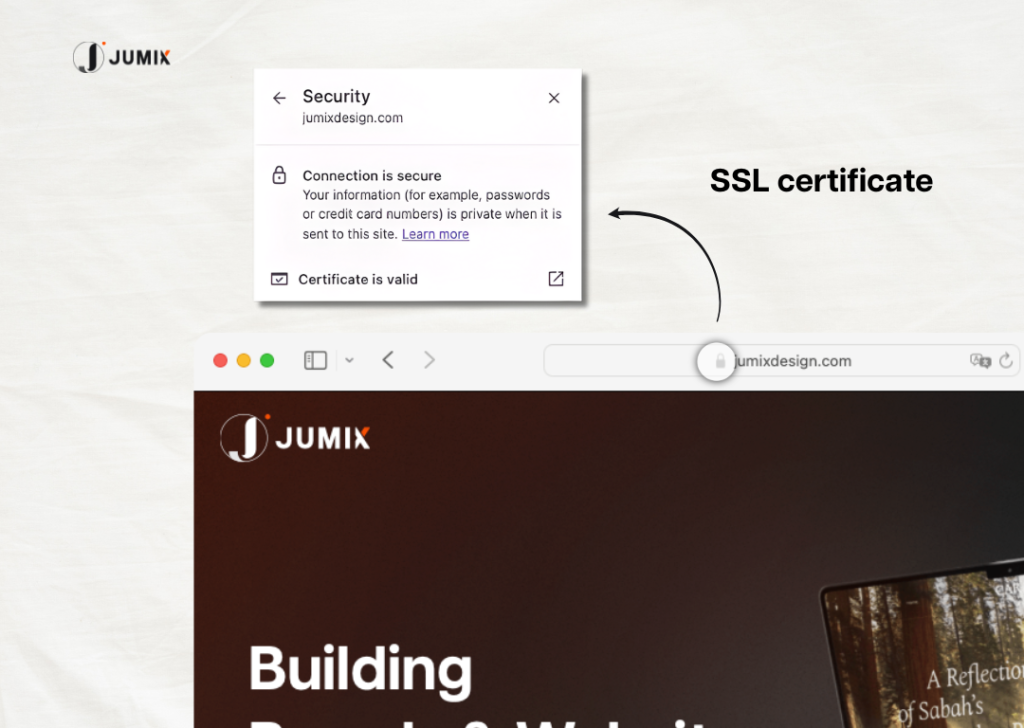
Elements that reduce trust:
- No testimonials or reviews. Malaysians want proof from other Malaysians.
- Missing phone number or physical address. People may assume your business is unreliable or not established.
- Outdated website design. People think you don’t take your business seriously.
- No SSL or payment security indicators, especially for e-commerce.
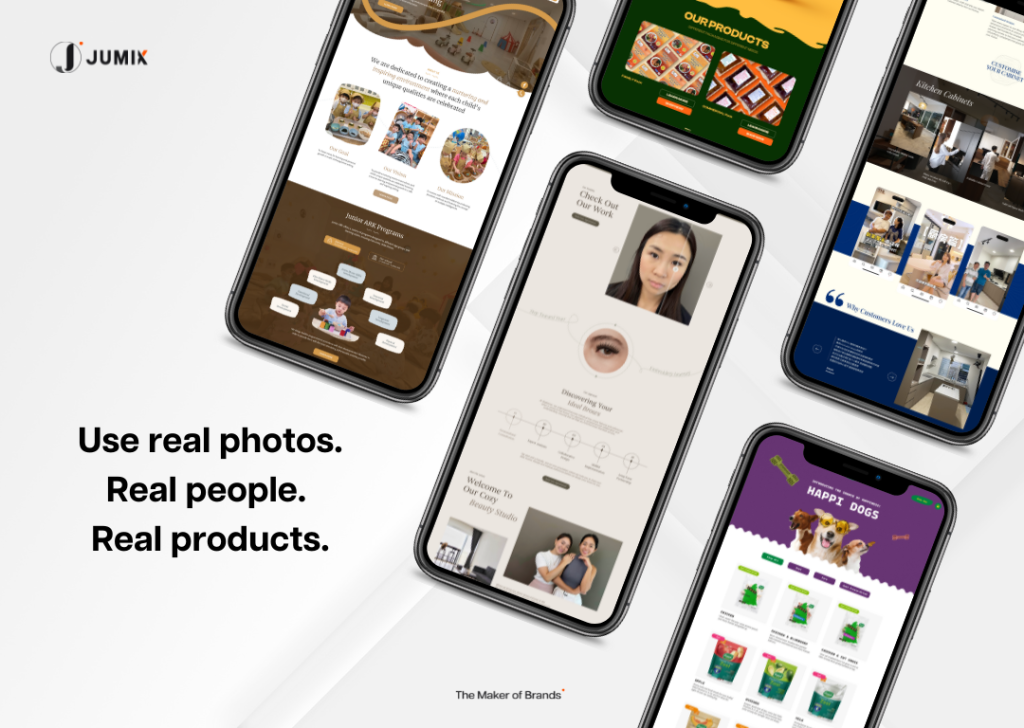
- Generic stock photos. Use real photos. Real people. Real products.
High-impact trust fixes:
- Add testimonials with real names and photos
- Display SSM registration details
- Show real product, team, or office photos
- Place security badges near forms and checkout
- Highlight media features or client logos
Trust directly influences website conversion in Malaysia. Without it, optimisation elsewhere has limited impact.
Mobile Experience Determines Conversion Success
According to the Department of Statistics Malaysia, over 99.5% of Malaysian users browse primarily on mobile devices.
Despite this, many websites are still designed desktop-first.
Common mobile conversion blockers:
- Text smaller than 16px
- Buttons too small for thumbs
- Forms breaking when the keyboard opens
- Pop-ups that cannot be closed
- Dropdowns that don’t open
- Heavy images slowing page load
Mobile Test: Visit your own website on a phone and attempt the primary conversion action. Any frustration you experience is costing you conversions.
For more on this critical topic, read our complete guide on mobile-first web design in Malaysia.
Weak CTAs Kill Conversions
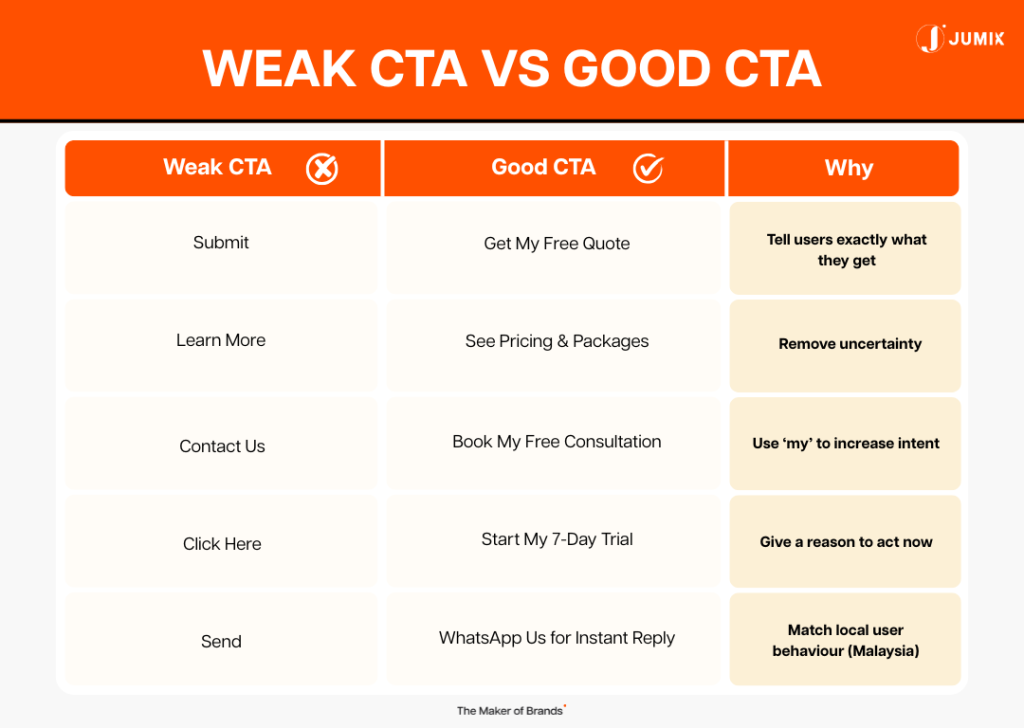
The call-to-action is the moment where interest becomes action.
Low-performing CTA examples:
- “Submit”
- “Click here”
- “Learn more”
These fail because they do not explain value.
High-performing CTA alternatives:
- “Get My Free Quote Now”
- “Book a Free Consultation”
- “See Pricing & Packages”
- “Start Free Trial”
Proven CTA improvements:
- Place CTAs above the fold
- Use high-contrast colours
- Repeat CTAs on long pages
- Optimise size for mobile tapping
Website Conversion Malaysia Fix Checklist
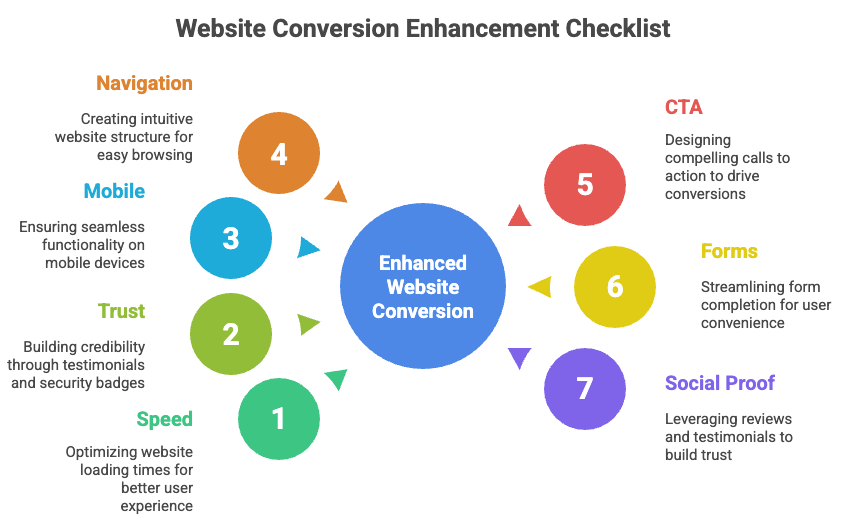
Stop guessing.
Use this checklist to systematically improve conversions.
Speed
Trust
Mobile
Navigation
CTA
Forms
Social Proof
Tools to Improve Website Conversion in Malaysia
- Google Analytics: conversion tracking
- Google Search Console: search performance
- Hotjar or Microsoft Clarity: heatmaps and session recordings
Watching real user behaviour often reveals issues analytics alone cannot.
Ready to Stop Losing Money?
Website conversion issues in Malaysia are rarely mysterious.
They are ignored.
You don’t need a full redesign tomorrow.
You need focused fixes.
Start small:
- Pick one issue
- Fix it this week
- Measure the impact
- Repeat
That’s how real conversion growth happens.
If you’re tired of paying for traffic that doesn’t convert, we can help.
Our conversion optimisation work has helped Malaysian businesses double and triple conversions without increasing ad spend.
Get a free website conversion Malaysia audit.
We’ll show you exactly what’s broken, and how to fix it.
No fluff.
No pressure.
Just clear, actionable insights.
Your competitors are already optimising.
Don’t lose customers because your website silently pushes them away.
Frequently Asked Questions
What’s a good conversion rate for Malaysian websites?
Most Malaysian e‑commerce sites average 1 to 3%. Service-based businesses typically see 5 to 10%. Rates below these benchmarks indicate optimisation opportunities.
How quickly can conversion improvements be seen?
CTA and speed optimization can show results within days. UX improvements usually reflect within 2 to 4 weeks.
Should I optimize for desktop or mobile first?
Mobile first. Most Malaysian users browse and convert on mobile devices. Learn more about mobile-first design strategies.
How much should I invest in conversion rate optimization?
If you spend RM10,000+ monthly on ads, allocating 10 to 20% to conversion optimization typically delivers higher ROI than increasing ad spend. Understanding how to measure ROI of your website is crucial for making informed decisions.







Comments are closed for this article!