




AI shopping agents like ChatGPT’s Instant Checkout now buy products directly through structured product data and payment tokens, bypassing search results entirely. Malaysian sellers who only list on Shopee or Lazada are invisible to these agents because marketplace data is closed. A readiness check takes about a week: schema markup, a stable product feed, and one channel an AI agent can actually query.
- Quick Takeaways
- What AI Shopping Agents Are, and Why 2026 Is the Year They Matter
- How Agentic Checkout Actually Works
- Why Marketplace-Only Sellers Are Invisible to AI Agents
- The Product Data an AI Agent Needs Before It Will Buy From You
- Mistakes Malaysian Sellers Are Already Making
- What to Fix This Quarter
- FAQ
Quick Takeaways
- ChatGPT’s Instant Checkout lets users buy without leaving the chat, using Stripe’s Agentic Commerce Protocol and a Shared Payment Token scoped to one merchant (Source: OpenAI).
- Shopee and Lazada have not publicly adopted the Agentic Commerce Protocol as of mid-2026, so products sold only on those platforms cannot be queried by outside AI agents.
- Google’s product structured data spec requires a unique ID (SKU or GTIN) on every product and variant before it counts for rich results or shopping surfaces (Source: Google Search Central).
- Malaysia’s e-commerce revenue hit RM937.5 billion in the first nine months of 2025, up 1.9% year on year (Source: Department of Statistics Malaysia).
- OpenAI has already begun shifting its checkout strategy toward merchant-hosted apps rather than only in-chat purchases, so treat Instant Checkout as one channel among several, not the finished standard (Source: Digital Commerce 360).
What AI Shopping Agents Are, and Why 2026 Is the Year They Matter

An AI shopping agent is software that buys on a person’s behalf.
It reads a question like “find me a waterproof phone case under RM50,” compares product data across the web, and completes the purchase.
No browsing. No comparing five tabs.
ChatGPT’s Instant Checkout is the clearest example.
It launched with Etsy sellers, then expanded to Shopify merchants including Glossier, Spanx and Vuori (Source: OpenAI).
Google’s AI Mode is doing something similar inside Search.
Both work the same way underneath.
They query structured product data, not your homepage copy or your Instagram captions.
I don’t think this replaces normal search traffic this year.
But I’ve watched more than one hype cycle claim to “kill SEO,” and this is the first one with an actual payment protocol behind it.
That’s the difference worth paying attention to.
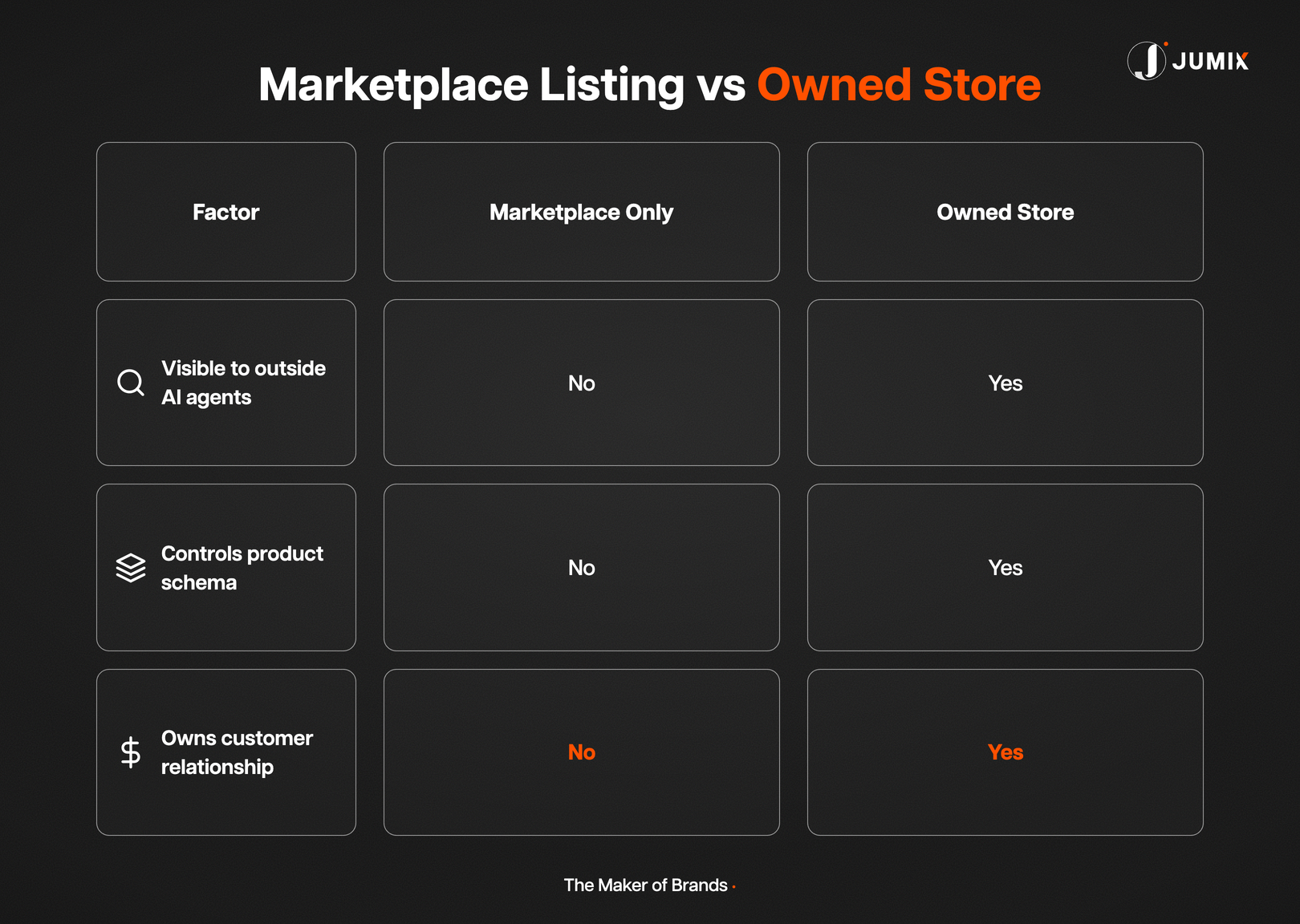
| Channel | Can an AI agent buy from you here? | Why |
|---|---|---|
| Own website (Shopify/WooCommerce) | Yes, with setup | Product schema and feed are yours to control |
| Shopee / Lazada listing only | No | Product data lives inside a closed marketplace system |
| Instagram/TikTok Shop only | No | No public structured product feed for agents to query |
How Agentic Checkout Actually Works
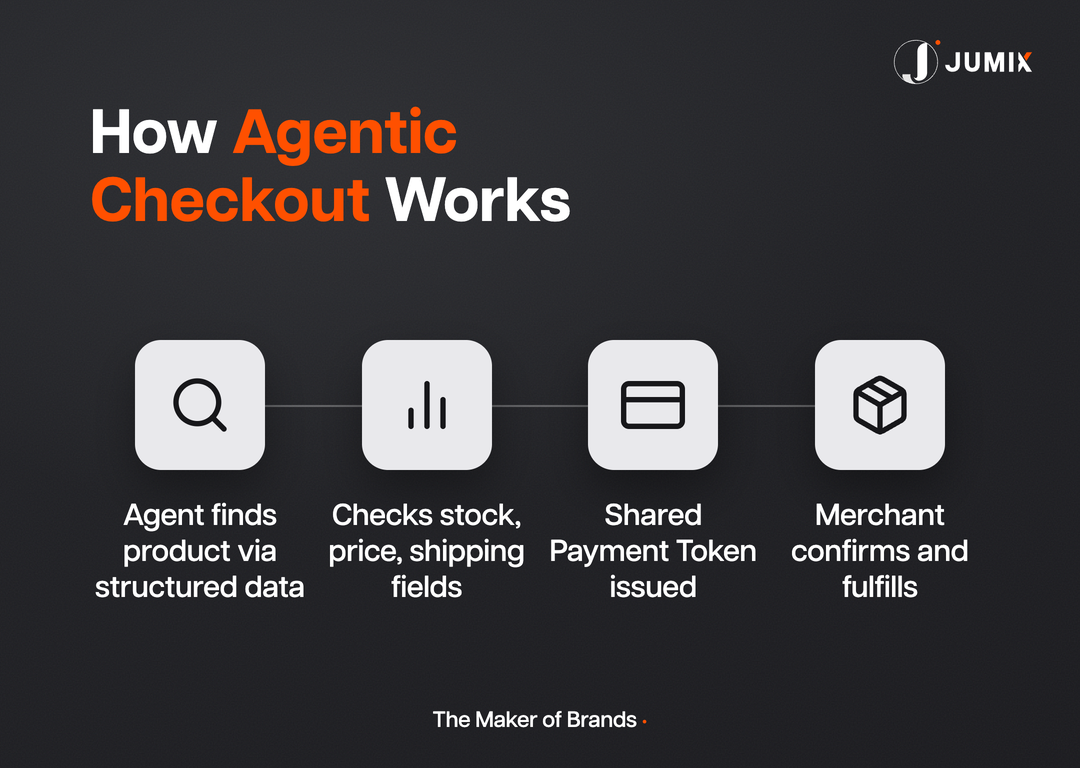
Four steps, roughly.
First, the agent finds your product through structured data, not a Google snippet.
Second, it checks stock, price, and shipping fields against what the shopper asked for.
Third, the buyer approves a payment.
Stripe issues a Shared Payment Token scoped to that one merchant and that one cart total, so the buyer’s card details never touch the agent (Source: Stripe).
Fourth, the merchant accepts the order, charges the token, and fulfills it exactly like a normal order.
Nothing changes on the fulfillment side.
The change is upstream, in whether the agent could find and trust your product data in the first place.
Right now Instant Checkout only supports single-item carts (Source: OpenAI).
Multi-item baskets are still coming.
That’s a real limitation, not a marketing footnote.
A shopper buying a birthday gift bundle still can’t do that inside the chat window today.
Why Marketplace-Only Sellers Are Invisible to AI Agents
Here’s the part that should worry sellers who built their entire business on Shopee.
As of mid-2026, neither Shopee nor Lazada has publicly committed to an open agentic commerce standard.
Their catalogs sit inside closed systems that outside AI agents can’t query.
If your only storefront is a Shopee listing, an AI shopping agent working outside Shopee’s own app simply cannot see you.
Structurally absent from the results, regardless of how good the listing is.
This is the same argument I’ve made about Shopee’s fee structure for a different reason, and it’s showing up again from a completely different angle.
Marketplace convenience has a hidden cost.
You don’t own the customer relationship, and now you don’t own the product data either.
Sellers who also run a TikTok Shop alongside an owned website already understand this trade-off from the discovery side.
The agentic commerce shift is the same lesson wearing a new hat.
The Product Data an AI Agent Needs Before It Will Buy From You

Google’s structured data guidelines are specific here, not vague.
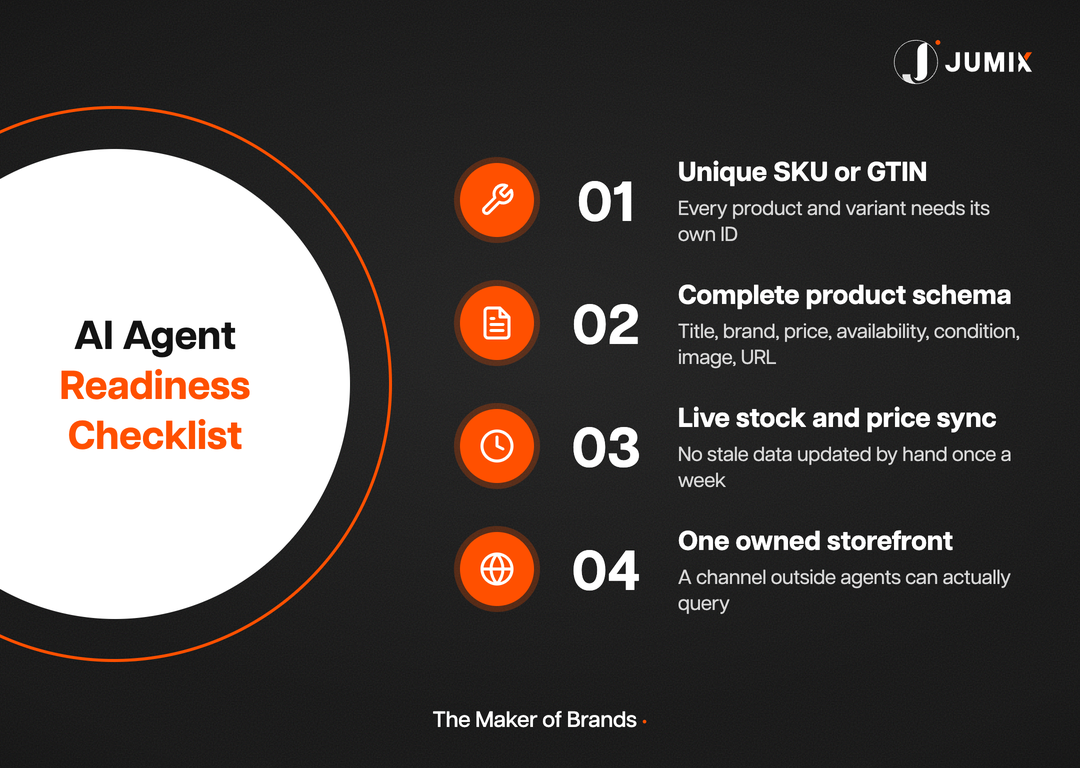
Every product and every variant needs a unique ID, using the SKU or GTIN field (Source: Google Search Central).
A shirt in three colors is three products, not one listing with a dropdown.
Twelve fields matter most: title, description, brand, GTIN, MPN, category, price, sale price, availability, condition, image URL, and product URL.
Miss half of these and an agent has nothing reliable to compare against a competitor’s listing.
Most Malaysian SME sites I’ve reviewed have maybe four of the twelve filled in properly.
Price and image, usually. Rarely GTIN or condition.
That’s not a judgment on the sellers.
Nobody asked them to fill in a GTIN field until this year.
If you want the mechanics of getting this schema onto your own pages correctly, our schema markup guide walks through the JSON-LD setup step by step.
Mistakes Malaysian Sellers Are Already Making
Treating this like a future problem is the first mistake.
The protocol exists today, and it’s already evolving; OpenAI shifted part of its own checkout strategy toward merchant-hosted apps within months of launch (Source: Digital Commerce 360).
Second mistake: assuming SEO content alone covers it.
A blog post about your product doesn’t help an agent complete a transaction.
Structured product data does.
Third mistake: leaving prices and stock levels stale on the website while the marketplace listing gets updated in real time.
An agent that reads outdated stock data once will trust your feed less the next time.
Fourth mistake: no owned channel at all.
If Shopee and Lazada are your entire footprint, there’s currently no bridge for an outside agent to reach you, no matter how good your product photography is.
What to Fix This Quarter
Start with one owned channel, Shopify or WooCommerce, even if marketplaces still carry most of your volume.
Add Product schema with GTIN or SKU on every SKU, not just the bestsellers.
Keep price and availability fields synced automatically, not updated by hand once a week.
Check your Shopify or WooCommerce theme actually outputs valid Product JSON-LD; many older themes don’t.
None of this replaces a real e-commerce strategy.
It’s plumbing.
But plumbing is exactly the kind of unglamorous work that decides whether an AI agent can find you at all in twelve months.
FAQ
Do Malaysian shoppers actually use ChatGPT to buy things yet?
Adoption is early and concentrated among younger, urban shoppers. Volume today is small next to Shopee and Lazada. The infrastructure question matters regardless, because agent-based shopping is being built into search and chat products that Malaysians already use daily.
Does this replace normal SEO?
No. Traditional search and AI agent discovery both need structured, accurate product data. Fixing your schema helps both at once.
Can Shopee sellers do anything about this right now?
Not on Shopee’s platform directly, since the marketplace controls that data. The practical move is building a parallel owned storefront that AI agents can query, the way sellers already do for search visibility and margin.
What does it cost to get product schema set up correctly?
For a store with an existing Shopify or WooCommerce catalog, proper Product schema implementation is typically a scoped technical project, not a full rebuild. Cost depends on catalog size and how much of the data already exists in clean form.
Should I wait until the standards settle before doing anything?
No. The specific checkout protocol may keep changing, but complete Product schema and a synced feed help traditional search, Google AI Mode, and whichever agent standard wins. Fix the data now regardless of which platform dominates later.
The Bottom Line
AI shopping agents deserve action now, not a wait-and-see approach. There’s a working payment protocol, real merchants live on it, and a clear technical bar to clear: unique product IDs, complete schema, and a channel an outside agent can actually query. Shopee and Lazada sellers are structurally locked out until those marketplaces change course, which puts more weight on having your own storefront in order.
At Jumix, we build that plumbing into every e-commerce site we ship, because the standards keep shifting and the store needs to keep up without a rebuild every time. Start with your product data. Everything else about agentic commerce depends on getting that part right first.




Comments are closed for this article!