





Yes, Shopify is available to Malaysian businesses. Shopify Payments is not, so you need a local gateway, you may owe withholding tax on your Shopify fees, and you’ll need to connect your own courier for shipping.
- Quick Takeaways
- Is Shopify available in Malaysia, and how do you get paid?
- Do you owe withholding tax on your Shopify subscription?
- Do you need a Malaysian TIN to sell on Shopify?
- How does shipping work for a Shopify store in Malaysia?
- FAQ
Quick Takeaways
- Shopify is available to Malaysian merchants, but Shopify Payments is not. You need a third-party gateway such as Fiuu, Adaptis, or Stripe.
- Shopify’s subscription and app fees can trigger Malaysia’s 10% withholding tax under Section 109B (Source: LHDN, 2026). The Malaysia-Ireland tax treaty caps the rate on royalties at 8% if Shopify bills you from its Irish entity.
- Shopify sellers with annual turnover of RM3,000,000 or more must issue their own e-invoices to buyers. Below that, you’re exempt.
- Shopify has no built-in Malaysian courier. EasyParcel connects your checkout to J&T Express and Pos Laju.
Is Shopify available in Malaysia, and how do you get paid?
Shopify lists Malaysia as a country you can sell from.
Sign up, pick a plan, launch a store. Nothing stops you.
What doesn’t work is Shopify’s own payment processor.
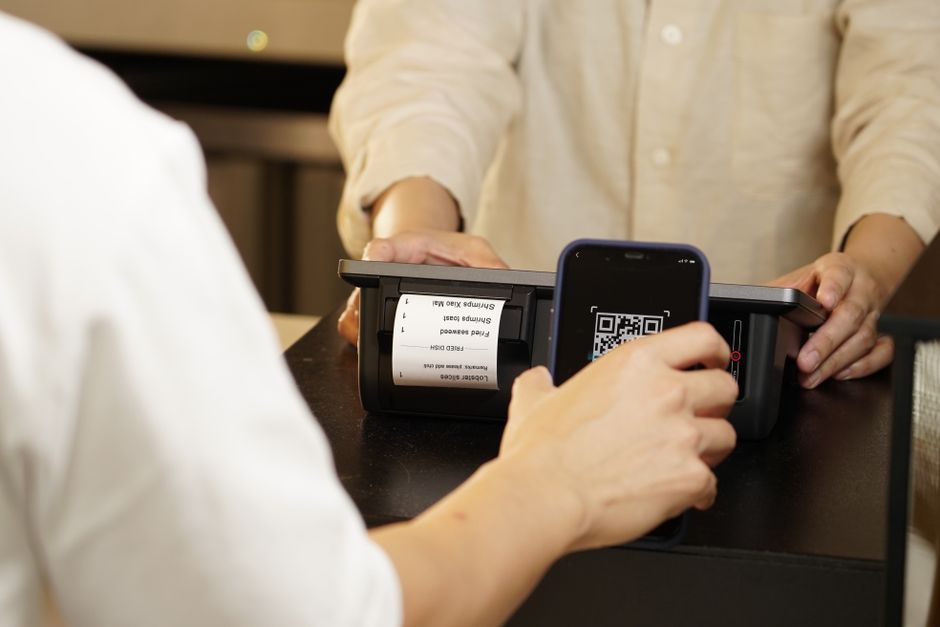
Shopify Payments isn’t available to merchants based in Malaysia (Source: Airwallex, 2026). You connect a third-party gateway instead.
That gateway isn’t free of Shopify’s own cut, either.
Shopify adds a third-party payment fee on top: 2% on its Basic plan, 1% on Grow, 0.6% on Advanced (Source: Shopify, 2026).
Three gateways are worth connecting here: Fiuu, Adaptis (formerly iPay88 or eGHL), and Stripe. They plug into Shopify’s checkout and support FPX, DuitNow, and the e-wallets Malaysian shoppers actually reach for.
Our payment gateway comparison breaks down FPX, DuitNow, and e-wallet mechanics if you need the full picture.
| Gateway | What it supports | Best fit |
|---|---|---|
| Fiuu | FPX, DuitNow QR, Touch ‘n Go, GrabPay | Malaysian-first stores |
| Adaptis | FPX, cards, recurring billing | Subscription or repeat-charge stores |
| Stripe | International cards, Apple Pay, Google Pay | Stores with overseas customers too |
Pick based on where your customers actually are, not which one is cheapest on paper.
Do you owe withholding tax on your Shopify subscription?
Possibly, and most Malaysian Shopify merchants never check.
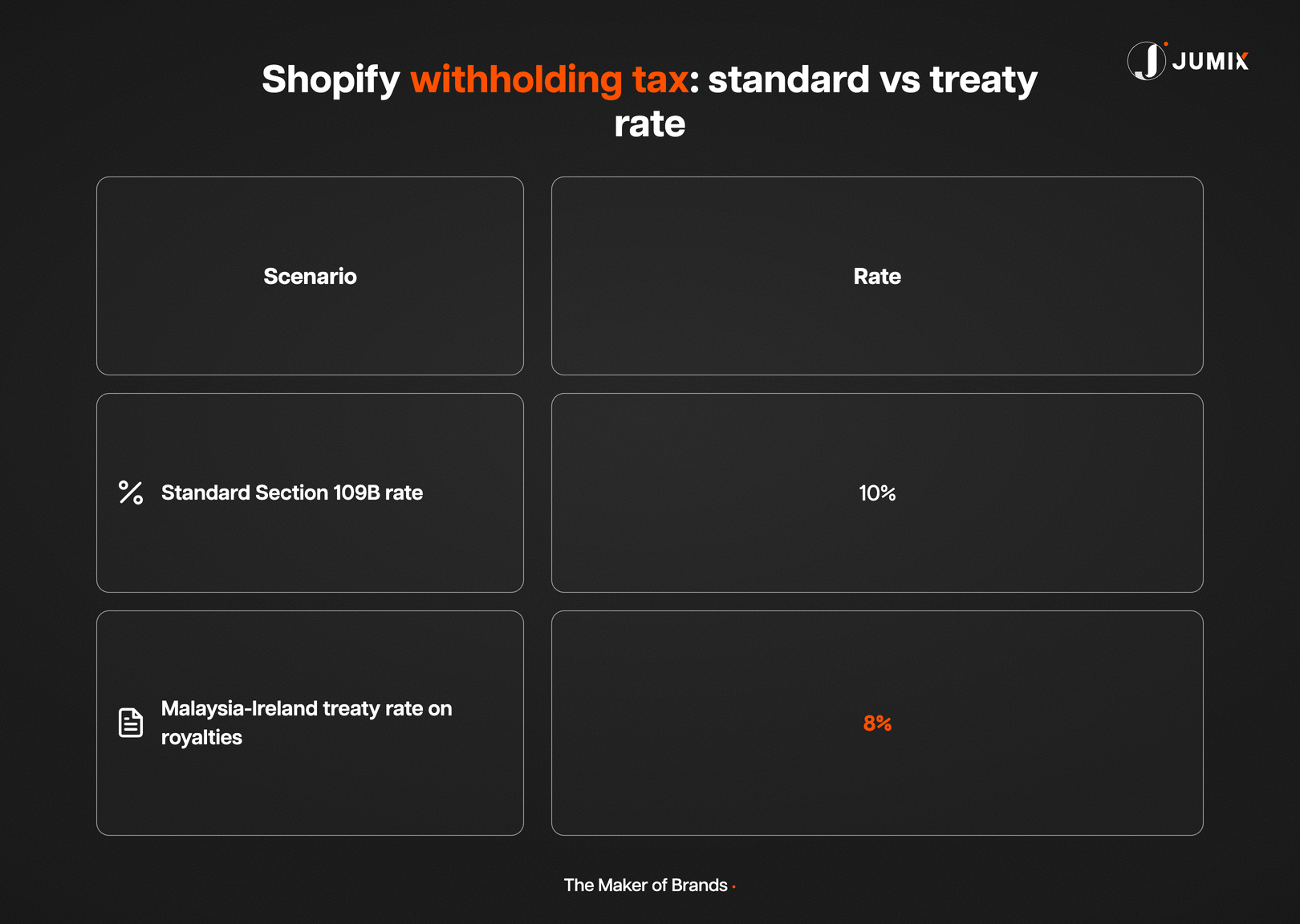
Malaysia charges a 10% withholding tax on certain payments made to non-residents, under Section 109B of the Income Tax Act 1967 (Source: LHDN, 2026).
Shopify is a foreign company. Paying its monthly subscription or app fees from a Malaysian bank account can fall under this rule.
You, the payer, are legally responsible for deducting and remitting it. Not Shopify.
There’s a reduction worth knowing about. If Shopify bills you from its Irish entity, Shopify International Limited, the Malaysia-Ireland tax treaty caps the rate on royalties at 8%, down from the standard 10% (Source: Irish Revenue, 2026).
Claiming that lower rate needs a Certificate of Residence, issued by Irish Revenue and provided through Shopify. You still remit the withholding tax itself on form CP37D (Source: LHDN, 2026).
Most SME owners pay the Shopify invoice and move on. Ask a tax agent about this before your Shopify fees cross a few thousand ringgit a year, not after LHDN asks first.
Do you need a Malaysian TIN to sell on Shopify?
Short answer: you probably already have one.
Every individual and business registered with LHDN for income tax already holds a Tax Identification Number.
What actually changes with a Shopify store is e-invoicing your own customers, not registering a new TIN.
Businesses with annual turnover under RM3,000,000 are exempt from e-invoicing entirely (Source: LHDN, 2026).
Cross that threshold and your Shopify store, as the seller of record, must issue the e-invoices itself.
That’s different from selling on Shopee or Lazada, where the marketplace often handles parts of this for you.
For consumer sales, a consolidated e-invoice covers them. For a business buyer, their TIN goes on the invoice so they can claim it.
Our e-invoice checklist for online sellers covers the full setup once you’re past the threshold.
How does shipping work for a Shopify store in Malaysia?

Shopify doesn’t come with a Malaysian courier built in either.
You connect a shipping aggregator. EasyParcel is the common one, with a direct Shopify app (Source: EasyParcel, 2026).
It shows live courier rates at your checkout, then books the shipment once an order comes in.
J&T Express and Pos Laju are both among EasyParcel’s courier partners, alongside dozens more (Source: EasyParcel, 2026).
Set this up before launch. A store that can’t quote shipping at checkout loses the sale right there.
FAQ
Is Shopify legal to use for a Malaysian business?
Yes. There’s no law against a Malaysian company using Shopify. You handle your own payment gateway, tax, and shipping instead of relying on Shopify’s defaults.
Why can’t I turn on Shopify Payments in Malaysia?
Shopify Payments only operates in a fixed list of countries, and Malaysia isn’t one of them. Connect a third-party gateway such as Fiuu, Adaptis, or Stripe instead.
Does Shopify charge extra if I don’t use Shopify Payments?
Yes. Shopify adds its own transaction fee on top of your gateway’s fee: 2% on the Basic plan, dropping to 0.6% on Advanced (Source: Shopify, 2026).
Do I need to register a company to sell on Shopify from Malaysia?
No. A sole proprietor can sell on Shopify. You still need a TIN for tax purposes, and SSM registration once you’re trading as a real business rather than a side project.
Can I use Shopify alongside Shopee or Lazada?
Yes, and many Malaysian brands do. Our Shopify vs Shopee vs Lazada breakdown covers which channel to prioritize for your stage of growth.
Shopify works here. The defaults just aren’t local
Shopify runs fine for a Malaysian store. The platform isn’t the problem.
What catches people out is everything Shopify assumes you’ll sort out yourself: a local payment gateway, withholding tax on its own fees, e-invoicing your own customers, and a courier connection for shipping.
None of this is hard once you know it exists. Most of it is a one-time setup, not an ongoing headache.
If it were my money, I’d sort the gateway and shipping before launch, and raise the withholding tax question with a tax agent in the first month, not the first audit.
Jumix builds and migrates Shopify stores for Malaysian brands, Thirtydots and Kawai Malaysia among them, and these pieces go in during the build itself. If you’re weighing Shopify against a custom build, our Shopify web design service is a good place to start that conversation.






Comments are closed for this article!