


A brand design agency can sell you three different things under one label. Logo design gives you a mark and basic usage rules, nothing more. Brand identity adds the full visual system: color, typography, imagery, and guidelines. Brand strategy comes first, and defines the positioning that visual system has to express.
- Quick Takeaways
- What Logo Design Only Actually Includes
- What a Brand Identity Package Adds
- What Brand Strategy Work Includes
- The Three Tiers Compared
- Common Scoping Mistakes
- Which Tier to Ask Your Brand Design Agency For
- FAQ
Quick Takeaways
- A logo package typically includes the mark, 2 to 3 concept directions, and a one-page usage sheet, nothing more.
- A brand identity package adds a full visual system: color palette, typography, imagery style, and a guidelines document.
- Brand strategy work happens before any visual design: positioning, audience definition, and a messaging framework.
- Registering a company name with SSM protects the name only. Trademark registration with MyIPO is what stops a competitor from using a similar mark.
- Most Malaysian SMEs need a brand identity package. Full strategy work earns its cost when a business is repositioning, merging, or entering a new market.
“Branding agency” quotes swing from RM2,000 to RM50,000 for what looks, on paper, like the same job.
Three different products get sold under that one label, and most buyers never ask which one they’re getting.
This breaks down what each tier actually contains, so you can scope a quote instead of just comparing numbers.
What Logo Design Only Actually Includes
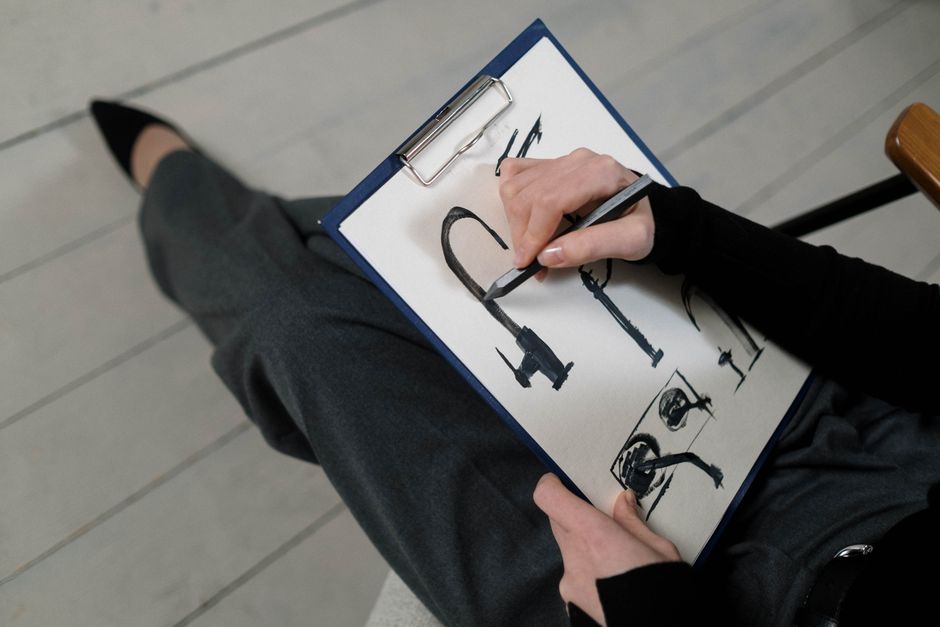
A logo-only package buys you the mark itself.
Usually 2 to 3 concept directions. One round of revisions on the direction you pick.
You get the final files in a few formats.
A one-page sheet covers clear space, minimum size, and what not to do to the mark. That’s the whole deliverable list.
The scope stops there: no color system beyond the logo’s own palette, no typography for the rest of the business, no research into your actual audience, and no messaging work.
It happens more than it should: a founder holds a finished logo file and asks where the brand guidelines are. There aren’t any, because that’s what got scoped.
A logo tells people what to look for. It doesn’t tell them what to feel, or why to pick you over the shop next door.
What a Brand Identity Package Adds
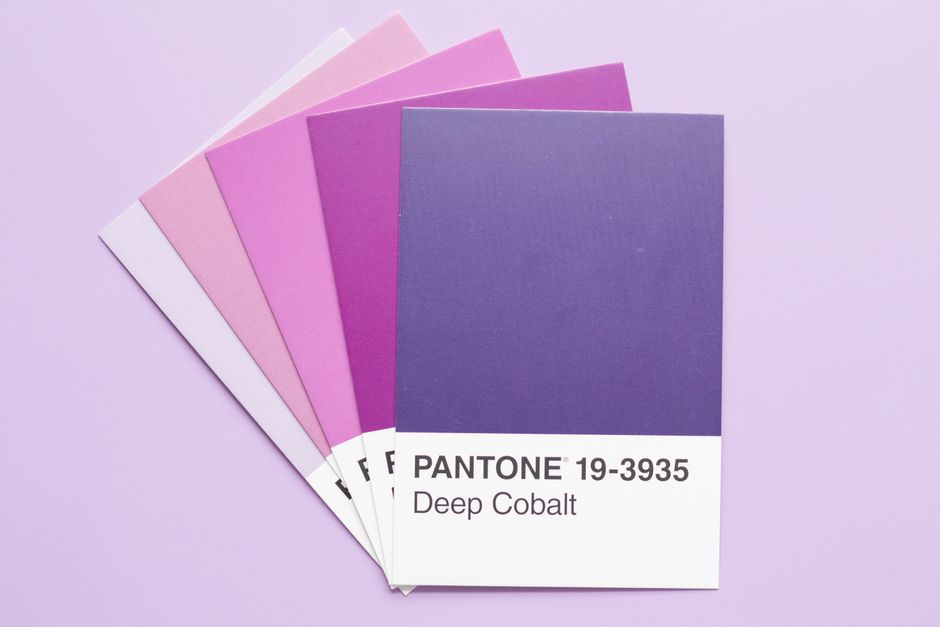
Brand identity is the logo plus everything it needs to work across a real business. Canva defines it as the visual and symbolic elements that represent a brand, paired with the verbal identity: voice, tone, and messaging (Source: Canva, 2026).
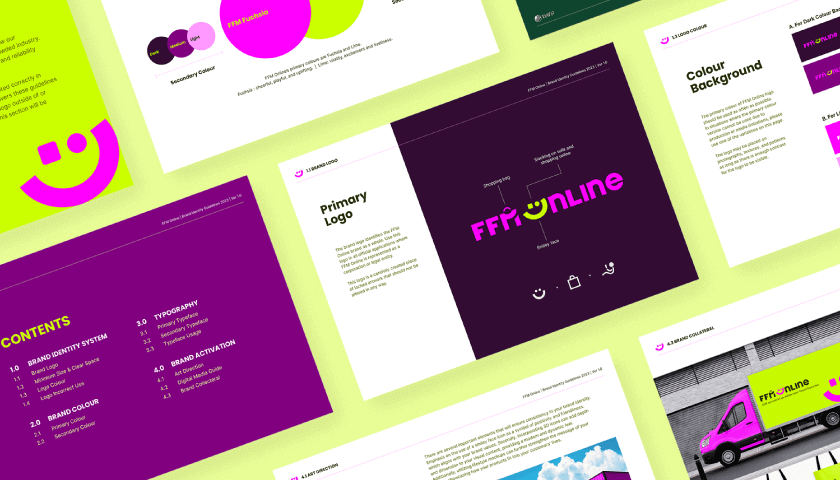
In practice that means a primary and secondary color palette. A typography system for headings and body text. A defined imagery or photography style, often an icon or pattern system too, for smaller touchpoints like social tiles or packaging.
All of it gets tied together in a guidelines document. A new hire or a second designer can then apply the system correctly, without asking you every time.
Whether you need that document written down, or just kept in one designer’s head, is its own decision (see our brand guidelines decision guide).
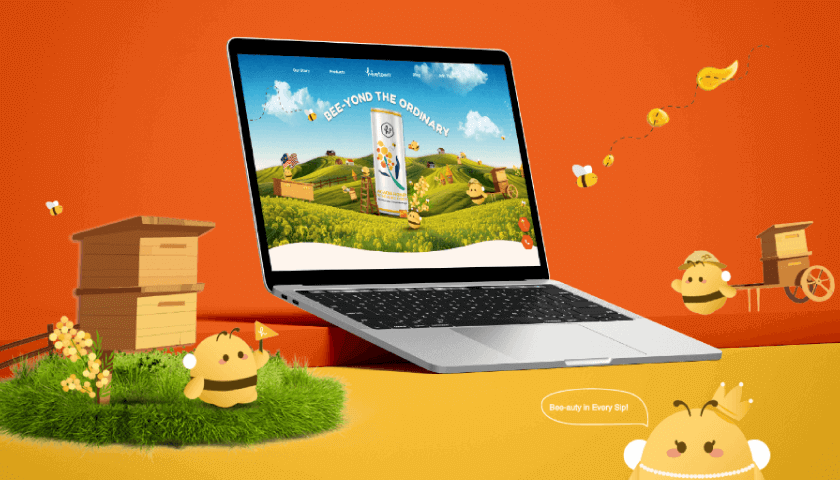
Take HiveTown. The founding team had a strong product and a clear premium positioning already.
What they needed was a visual system that matched it: custom bee mascots, distinct graphical elements, and a structured layout that stayed easy to navigate.
That’s identity-tier work: building a visual system worthy of a positioning that already existed.
What Brand Strategy Work Includes Before Any Design Starts

Brand strategy is the layer underneath the visuals. Canva frames it as the why and how behind bringing a brand to life (Source: Canva, 2026).
It defines the perception you want people to hold, how you differentiate from competitors, and the messaging that earns that differentiation.
A real strategy engagement produces a positioning statement, a target audience definition specific enough to write copy against, and a messaging framework with tone of voice.
Companies with more than one product line or subsidiary also get a brand architecture, showing how the pieces relate.
It’s the argument the visuals will later make.
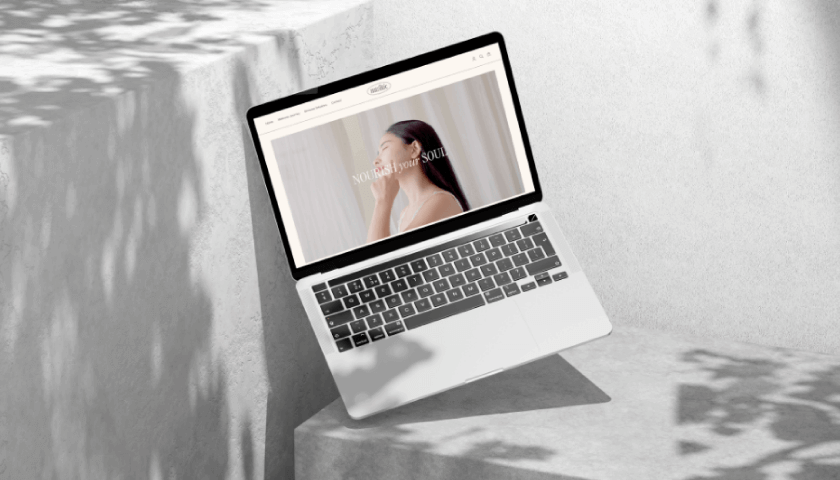
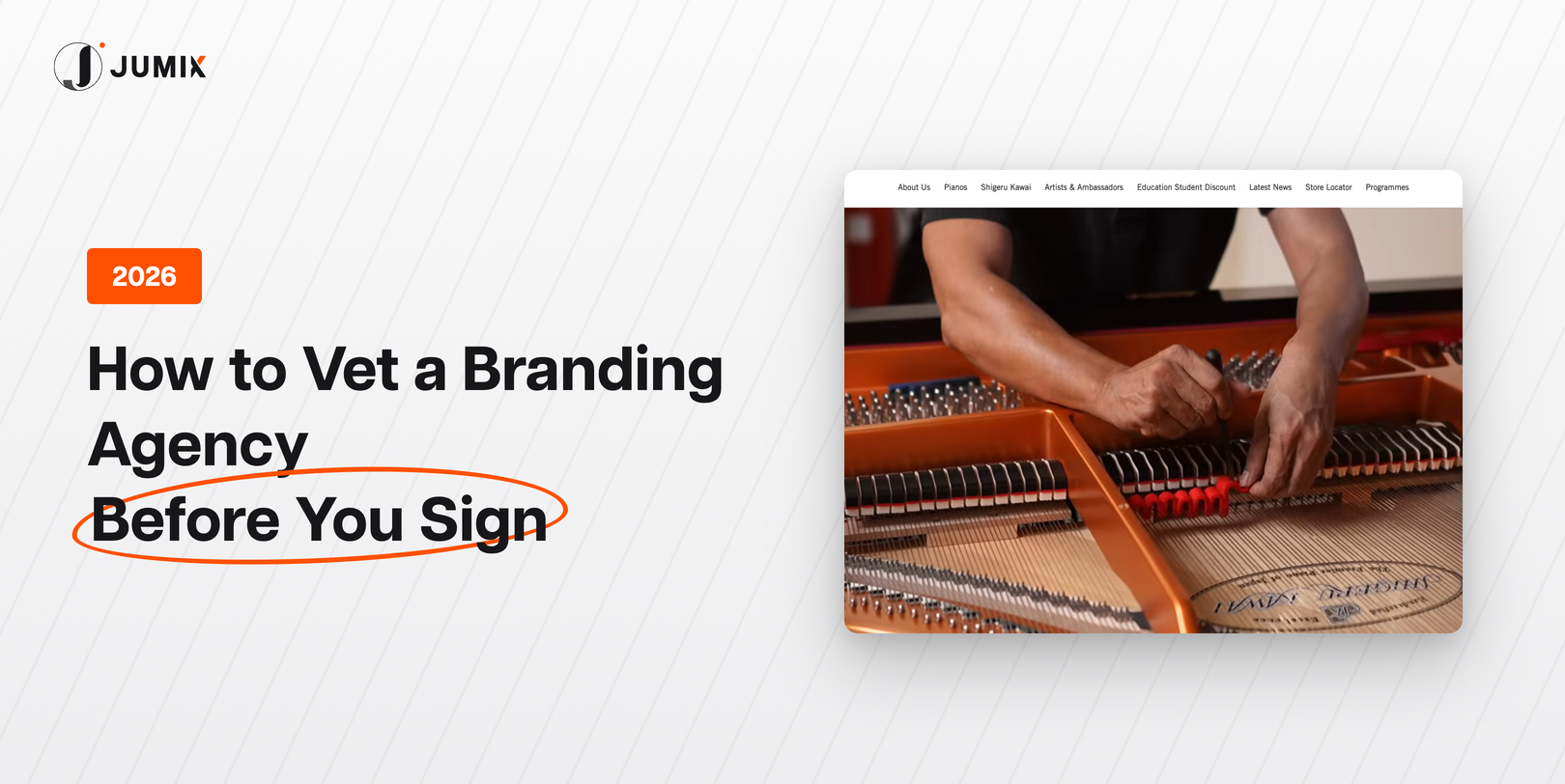
Kawai Malaysia needed exactly this. Their Shopify store functioned as a product listing, even though Kawai carries genuine heritage as a piano maker.
The fix meant repositioning the whole site as a storytelling platform first. The information architecture got restructured around three audiences (retail buyers, educators, dealerships) before a single visual element changed.
The design followed the strategy.
The Three Tiers Compared
Laid side by side, the scope difference is stark. This is what to expect at each tier, and roughly how long each one runs.
| Tier | Core deliverables | Typical timeline | Who it fits |
|---|---|---|---|
| Logo Only | Mark, 2-3 concepts, basic usage sheet | 1-2 weeks | New businesses needing a mark fast, or refreshing an existing system |
| Brand Identity | Logo, color palette, typography, imagery style, guidelines document | 3-6 weeks | Most SMEs launching or formalizing their visual presence |
| Brand Strategy | Positioning, messaging framework, audience definition, full identity system | 2-3 months | Businesses repositioning, merging, or entering a new market |
For exact RM figures at each tier, our branding cost breakdown covers pricing bands in detail. This article is about what’s inside the box, not the price on it.
Common Scoping Mistakes That Cost Buyers Money
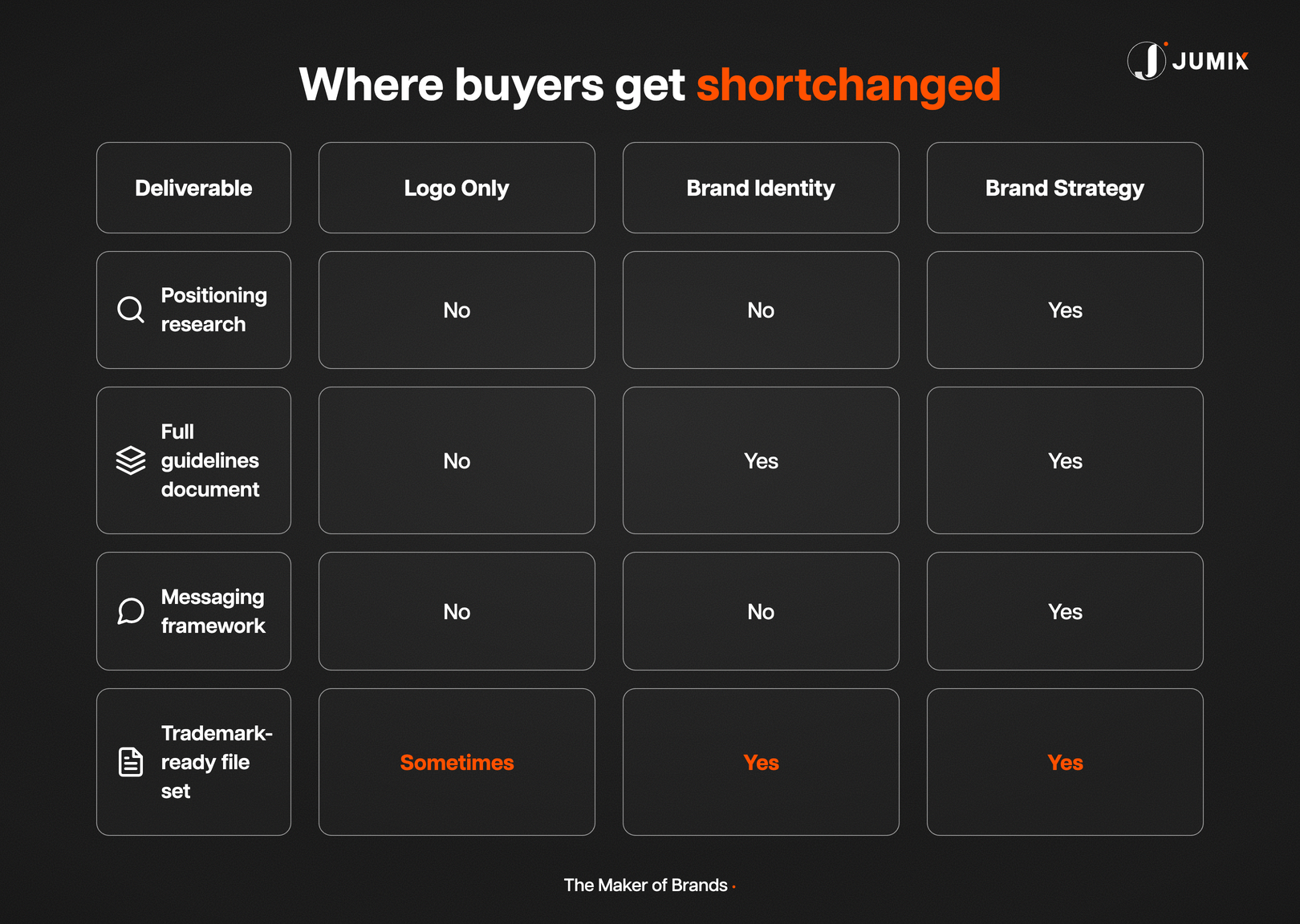
The single biggest mistake is not knowing which tier you asked for.
Picture a buyer expecting a guidelines document, a messaging framework, and a full color system. They only scoped a logo. They’ll feel shortchanged, even though the agency delivered exactly what was quoted.
| Deliverable | Logo Only | Brand Identity | Brand Strategy |
|---|---|---|---|
| Positioning research | No | No | Yes |
| Full guidelines document | No | Yes | Yes |
| Messaging framework | No | No | Yes |
| Trademark-ready file set | Sometimes | Yes | Yes |
Ask for this exact list in writing before you pay a deposit. Not a vague “branding package,” an itemized list.
The second mistake is assuming a company name registered with SSM protects the brand. It doesn’t.
SSM registration protects the entity name. It does nothing to stop a competitor from adopting a similar logo or wordmark.
Only a trademark filed with MyIPO does that.
Filing costs RM950 per class on MyIPO’s pre-approved list, or RM1,100 per class for a customized specification. Add a RM450 publication fee once accepted. The process runs 12 to 18 months (Source: exyip.com, 2026).
Our business naming checklist walks through the SSM and MyIPO process step by step.
The third mistake is skipping straight to design because strategy work “feels slow.” A pretty identity built on no positioning still looks generic, just with better fonts.
The fourth is walking away without a guidelines document at all.
The moment a second freelancer, an intern, or a print shop touches the brand without one, colors drift. The logo gets stretched. Consistency dies within a year.
Which Tier to Ask Your Brand Design Agency For
If you’re launching fast on a tight budget, logo only is a defensible choice. Just plan to upgrade once the business has traction and a real audience to speak to.
If you’re an established business formalizing a look you’ve never properly built, brand identity is where most Malaysian SMEs actually belong.
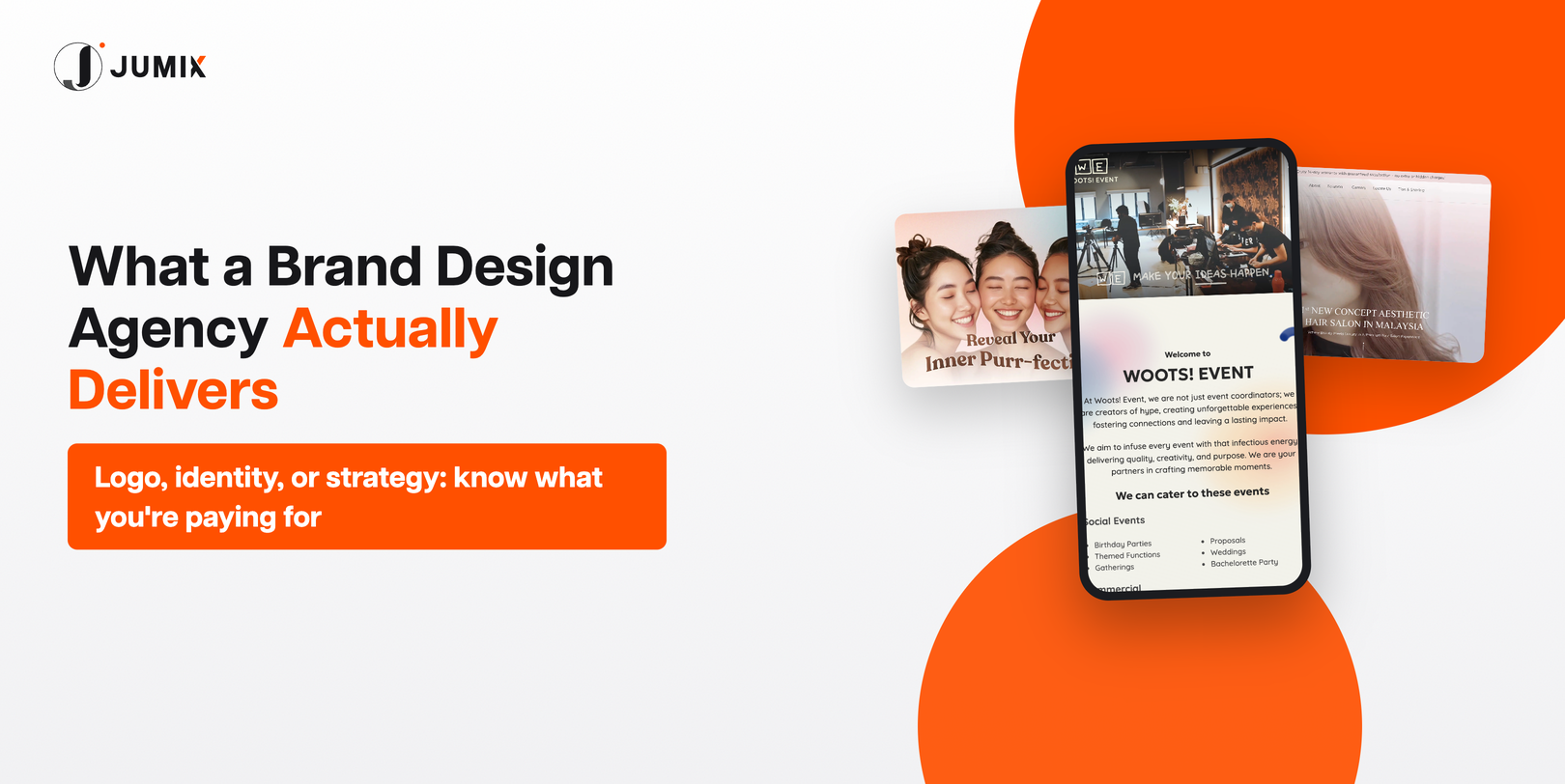
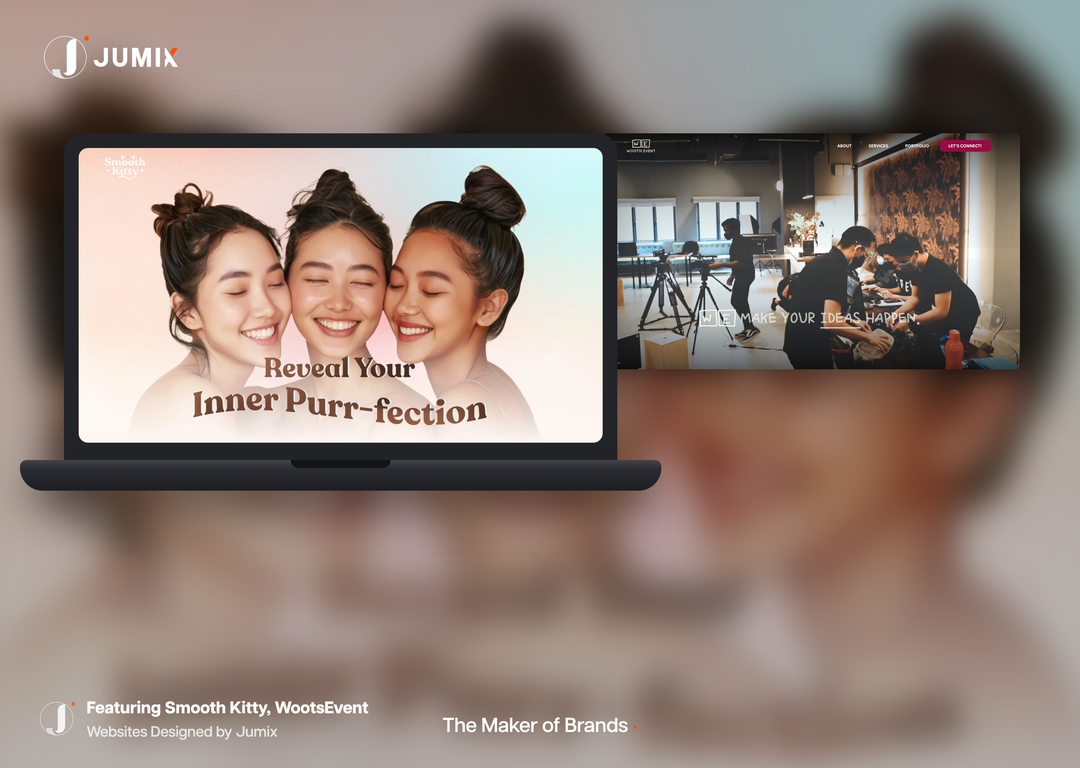
It’s what Smooth Kitty needed to stand out in a crowded, sterile-looking aesthetics market. WootsEvent needed it too, to prove their energy on-screen before a client ever booked a call.
If you’re repositioning, merging two entities, or entering a market that doesn’t know you yet, strategy work earns its cost. Skipping it in that situation just means paying for it later, after a wrong visual direction has already shipped.
I’d put it this way: branding is the reason a customer picks you even when you’re the more expensive option. Buy the tier that actually builds that reason.
Not sure which tier fits, or vetting agencies who claim to do all three? Our branding agency buyer’s framework covers the questions to ask before you sign anything.
FAQ
What’s the actual difference between a logo and a brand identity?
A logo is one graphic mark. Brand identity is the full visual system built around it: color palette, typography, imagery style, and a guidelines document that ties them together.
Can I skip brand strategy and go straight to design?
You can, and most small businesses do. It works when the positioning is already clear in the founder’s head.
It doesn’t work when the business is repositioning, merging, or targeting a new audience. The design then has nothing solid to express.
How much does each tier typically cost in Malaysia?
Roughly: logo only runs RM300 to RM3,000, brand identity runs RM3,000 to RM8,000, and full brand strategy work starts around RM15,000. Our branding cost breakdown covers current RM bands in detail.
Does registering my company name with SSM protect my brand?
No. SSM registration protects the company name only. Stopping a competitor from using a similar logo or wordmark requires trademark registration with MyIPO, a separate process.
Can I upgrade from a logo-only package to a full identity system later?
Yes, and it’s a common path. The logo itself usually survives the upgrade.
What gets added is the color system, typography, imagery direction, and the guidelines document, the parts that were never part of the original scope.
Buy the Deliverables, Not the Word “Branding”
“Branding agency” is one label covering three different jobs: a logo, an identity system, or strategy work that comes before either. Knowing which one you’re scoping is what separates a fair quote from a disappointing one.
Before you request quotes, write down which deliverables you actually need. Ask every agency to match that list item for item, alongside their price.
At Jumix, we scope every branding project against one of these three tiers from the first conversation. No ambiguity about what lands in your hands at the end.
Ready to figure out which one fits your business? Our branding team can walk you through it.




Comments are closed for this article!