


A growing Malaysian business needs a brand book once it operates across more than one channel, outlet, or team member making design decisions. Below that point, a shared folder of assets is usually enough. Above it, inconsistency starts costing you recognition, trust, and ad efficiency.
- Quick Takeaways
- What a Brand Book Actually Contains
- Signs Your Malaysian Business Needs One Now
- What Inconsistent Branding Costs You
- Brand Book vs Full Identity System
- How a Usable Brand Book Gets Built
- Common Mistakes Companies Make With Brand Books
- FAQ
Quick Takeaways
- A brand book earns its cost once you have more than one person, outlet, or platform making design decisions.
- Consistent brand presentation across channels can lift revenue by up to 33% (Source: Lucidpress, 2019, via PR Newswire).
- Most Malaysian SMEs don’t need a 40-page identity manual. A 6-10 page working document covers what most of them actually run into.
- Franchise and multi-branch businesses need one earliest, because every new outlet is a new chance to drift from the original brand.
- The cheapest fix costs less than one rebrand. The most expensive fix costs a rebrand plus the trust you already burned.
Most founders don’t ask “do I need a brand book” until the damage is already visible.
Someone posts a TikTok Shop banner in the wrong shade of orange.
A new outlet’s signboard uses a font nobody approved.
This guide gives you the actual decision framework: what a brand book contains, when it pays for itself, and what happens if you skip it.
It follows on from our branding strategy guide for Malaysian businesses, which covers the bigger picture before you get to the document itself.
What a brand book actually contains
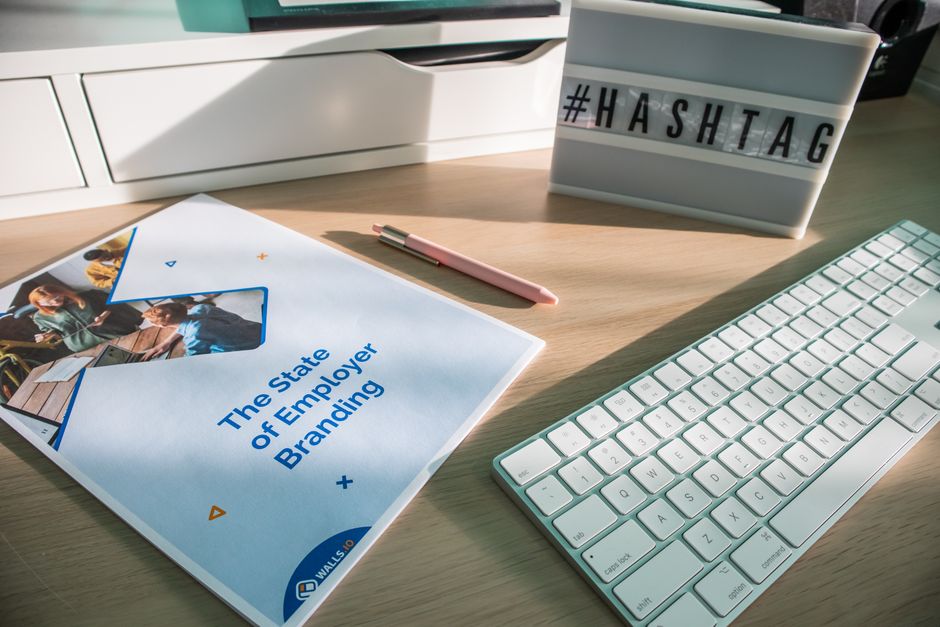
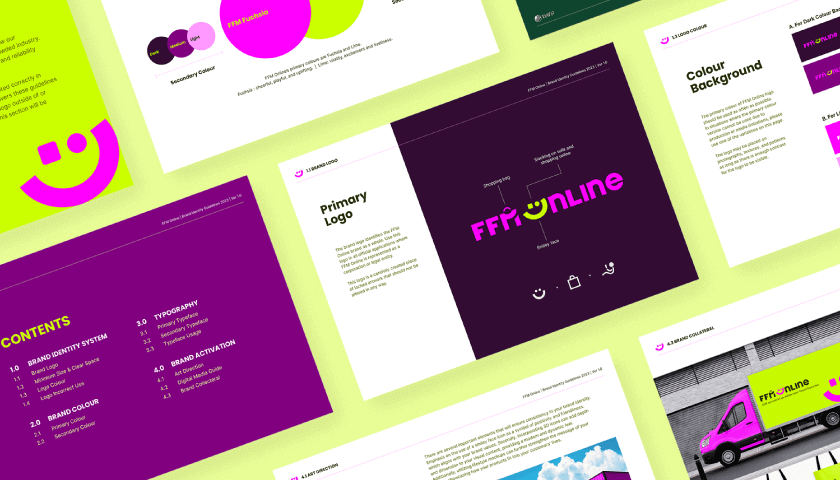
A brand book is a working reference, not a design portfolio.
It answers one question repeatedly: “how do we present this brand correctly, without asking the designer every time?”
A useful one covers five things:
- Logo variations and minimum clear space, including what to do on a dark signboard versus a white invoice.
- A locked color palette with hex, RGB, and CMYK codes, so print vendors and app designers match exactly.
- Typography rules: which fonts, which weights, and a fallback for platforms that don’t support your primary font.
- Tone of voice guardrails, so a Shopee reply and a LinkedIn post still sound like the same company.
- Application examples: packaging, signage, social templates, email signature, so staff copy a real example instead of guessing.
Nothing here requires a design degree to follow.
That’s the point. A brand book that only your designer understands isn’t doing its job.
Signs your Malaysian business needs one now
Not every business needs one on day one.
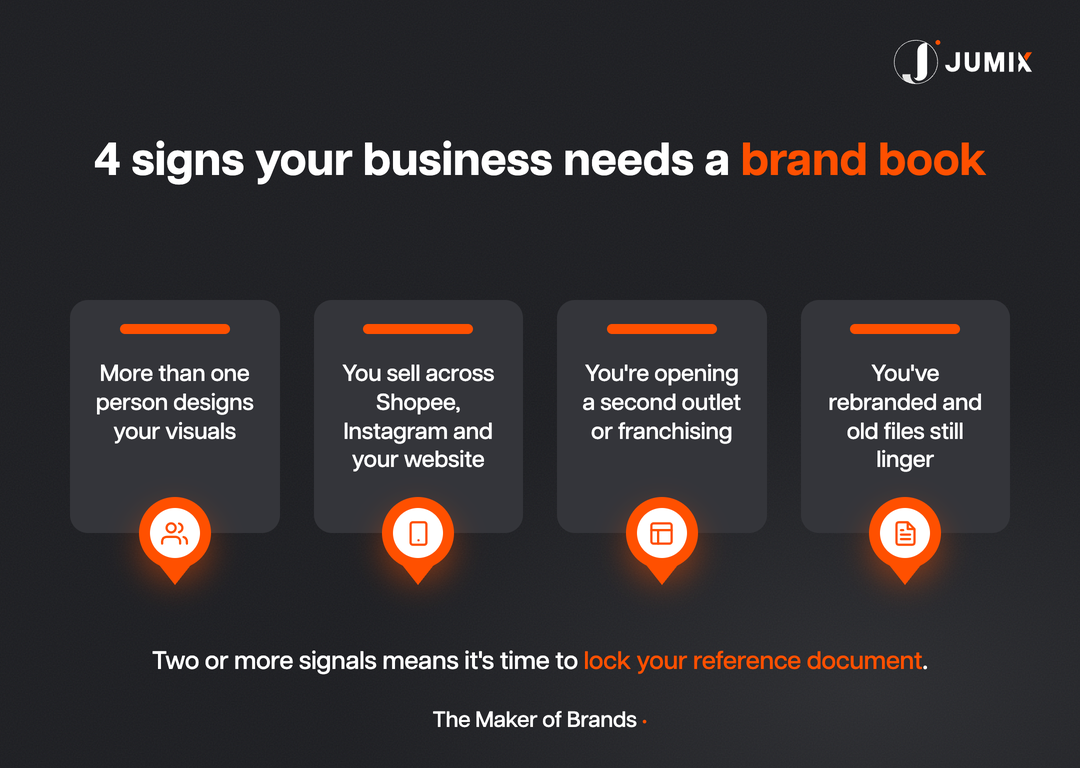
Four signals mean you’re past that point:
- More than one person touches your visuals. Once a second staff member, freelancer, or ad agency is designing posts, drift starts within weeks.
- You sell across Shopee, Instagram, and your own website. Each platform has its own dimensions and defaults. Without rules, each one slowly develops its own look.
- You’re opening a second outlet or franchising. Signage, uniforms, and menus at outlet two rarely match outlet one unless there’s a document to hand over.
- You’ve rebranded or refreshed your logo. Old files linger in old folders. Without a locked reference, half your materials quietly revert to the old identity.
SQAI, a manufacturing holding company under Qdos Group and Suiwa Group, hit this exact wall.
Its subsidiaries already had their own digital presence. SQAI itself didn’t have a cohesive identity as the holding entity, which made it harder to communicate scale and credibility to partners and stakeholders.
We built a decision-maker-focused visual system: structured hierarchy, refined typography, and subtle 3D elements that elevated the brand beyond a standard industrial site.
The lesson holds for any growing company: the more entities and channels you operate, the earlier a locked reference document pays for itself. This is closely tied to why Malaysian business owners rebrand in the first place: drift builds up quietly until the brand no longer matches the business.
What inconsistent branding costs you

Inconsistent branding is a recognition tax.
Consistent brand presentation across channels can increase revenue by up to 33% (Source: Lucidpress, 2019, via PR Newswire).
That’s what happens when customers can recognize you in half a second, instead of squinting at a logo that looks slightly different every time.
Klinik Medic 360, a clinic group with 11 branches across KL and Selangor, illustrates the multi-branch version of this problem.
A brand book works alongside your visuals, not instead of your website and web presence. See how the two connect in branding vs web design: why Malaysian companies need both.
Growing to 11 locations meant patients needed to trust every branch equally, without wondering if the newer outlets matched the standard of the first.
A locked visual and pricing structure across all locations removed that doubt before it could form.
Every outlet without a shared reference document is a fresh chance for that trust to slip.
Brand book vs full identity system
Not every company needs the same document.
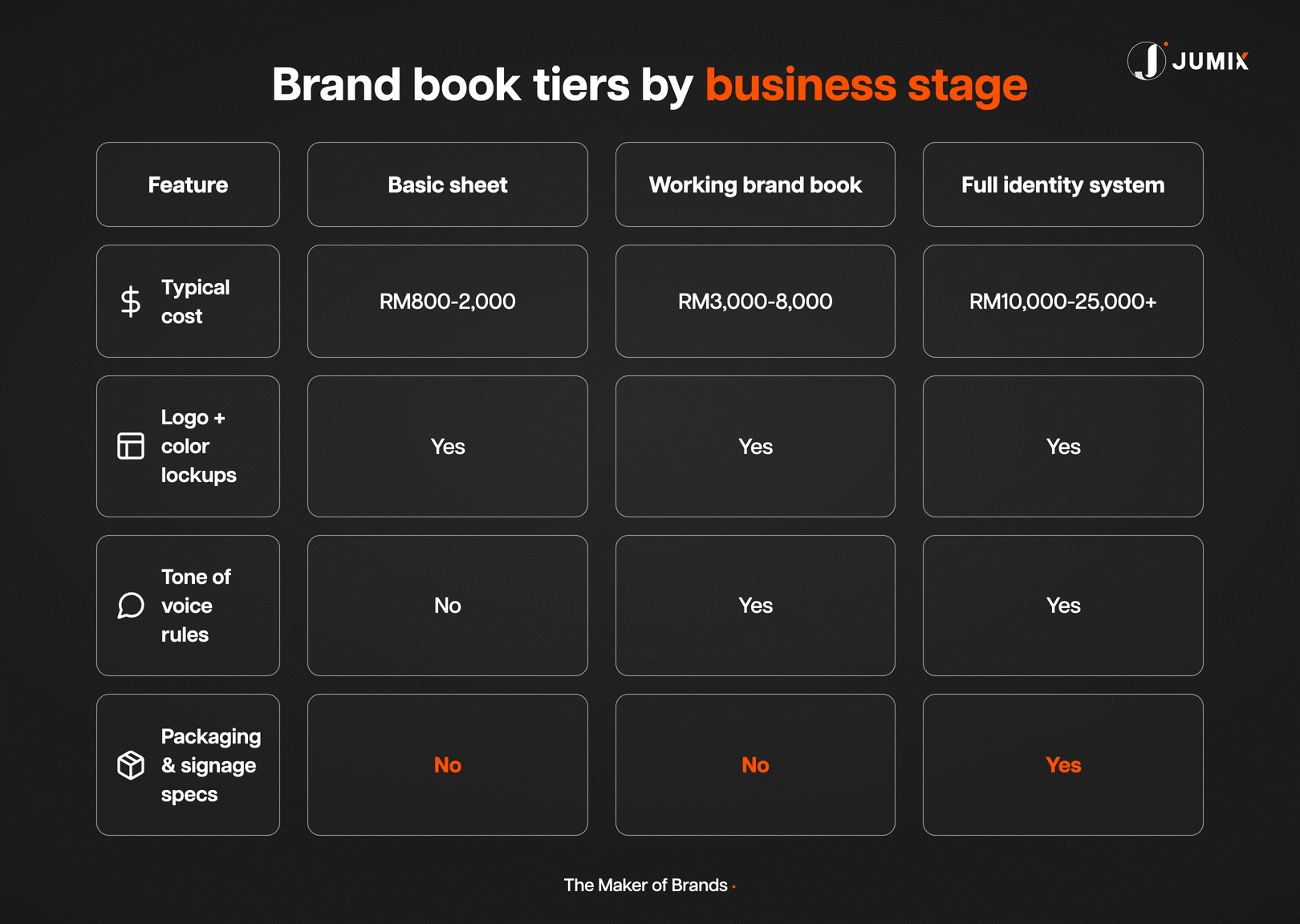
The three common tiers, priced against what a Jumix branding project typically covers:
| Tier | Typical cost (RM) | What’s included | Best for |
|---|---|---|---|
| Basic brand sheet | 800 – 2,000 | Logo lockups, color codes, 1 font pairing, 1-page reference | Solo founders, single-channel sellers |
| Working brand book | 3,000 – 8,000 | Above + tone of voice, social templates, application examples, 6-10 pages | Growing SMEs on 2-3 channels |
| Full identity system | 10,000 – 25,000+ | Above + packaging rules, signage specs, sub-brand guidelines, staff training deck | Multi-outlet, franchise, holding companies |
Most Malaysian SMEs overpay by jumping straight to the full identity system.
Start with the working brand book. Upgrade once you open outlet two or hire your first in-house marketer.
How a usable brand book gets built
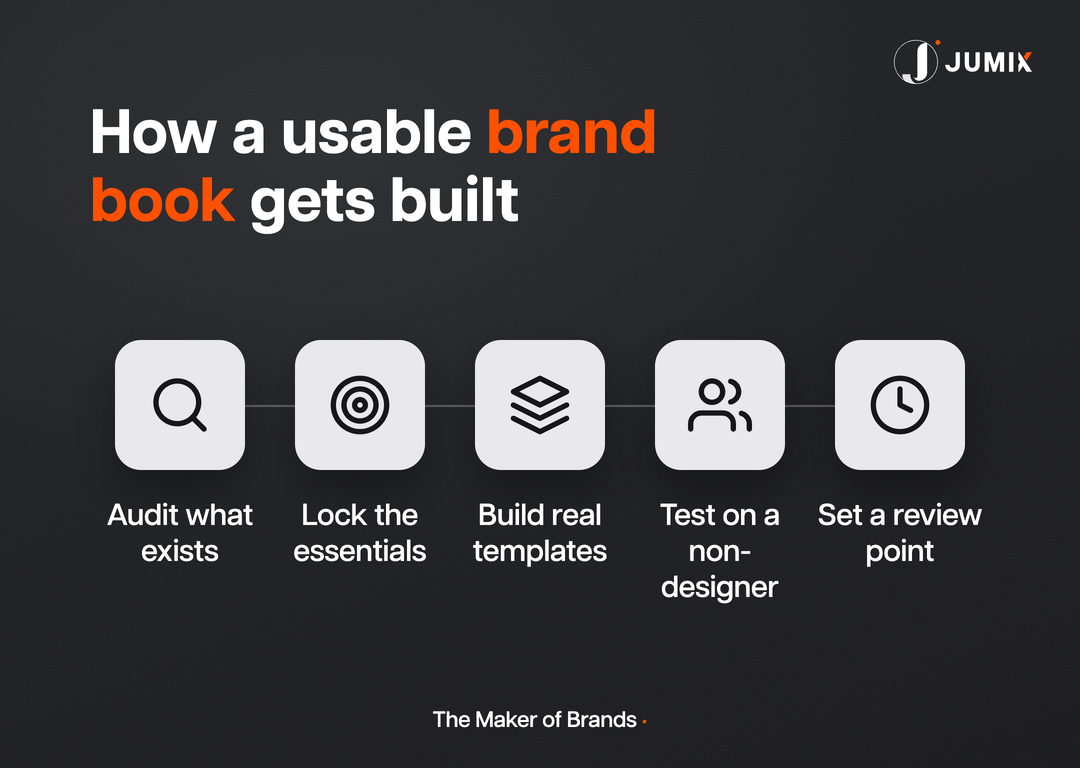
A brand book fails for one reason more than any other: nobody actually uses it.
The fix is building the document around how your team actually works, not adding more pages.
- Audit what already exists. Pull every logo file, social post, and printed material currently in use. Most companies find 3-5 versions of their own logo.
- Lock the essentials first. Logo, color, and type get finalized before anything else. These three touch everything downstream.
- Build real templates, not just rules. A rule says “use the primary color.” A template is a ready-made Canva or Figma file the staff can duplicate and edit.
- Test it on a non-designer. Hand the document to someone outside the design team. If they can’t apply it without help, it’s not finished.
- Set a review point. Revisit every 12-18 months, or after any major product or market shift.
Kawai Malaysia needed exactly this kind of practical system.
As a premium piano brand serving retail customers, educators, and dealerships at once, a single Shopify store wasn’t enough to hold Kawai’s heritage and craftsmanship together across three very different audiences.
We restructured the information architecture by audience and layered in a consistent visual system with subtle Japanese-inspired elements, so every touchpoint read as the same premium brand regardless of who was visiting or why.
That’s what a working brand book protects: the same brand feeling, no matter which door the customer walks through. For more on why that discipline matters day to day, see branding strategy: consistency is key.
Common mistakes companies make with brand books
Three mistakes show up again and again.
- Making it too long. A 40-page manual nobody reads is worse than no document at all. It creates a false sense that the problem is solved.
- Skipping the application examples. Rules without visual examples get misread constantly. Show the logo on a black signboard, not just on white.
- Never distributing it. A brand book saved only on the founder’s laptop protects nothing. Share it with every vendor, freelancer, and new hire on day one.
Fix these three and the document earns its cost within the first rebrand cycle it prevents.
If your logo itself isn’t legally protected yet, pair this with how to protect your logo in Malaysia before you lock it into a brand book.
FAQ
Do small businesses in Malaysia really need a brand book?
Only once more than one person is making design decisions, or you’re selling across more than one platform. Below that, a shared asset folder with locked colors is usually enough.
How long does it take to build a brand book?
A working brand book typically takes 2-4 weeks, including the audit of existing materials. A full identity system for a multi-outlet business can run 6-8 weeks.
Can I build a brand book myself without a designer?
You can document existing colors and fonts yourself. Getting genuinely locked, print-accurate color codes and application-ready templates usually needs a designer, since minor color drift is invisible to the eye but obvious in print.
What’s the difference between a brand book and a style guide?
In practice, Malaysian agencies use the terms interchangeably. A style guide sometimes refers to a narrower document covering only visual rules, while a brand book can include tone of voice and brand strategy too.
Do I need a new brand book every time I rebrand?
Yes. A rebrand without an updated reference document means old materials keep circulating for years, undermining the reason you rebranded in the first place.
Conclusion
A brand book is a working document that pays for itself the moment a second person, outlet, or platform enters the picture.
If you’re still deciding, use the four signals above as your test. If two or more apply, start with a working brand book, not the full identity system.
Jumix builds brand guidelines that survive contact with a real team: locked essentials, real templates, and application examples staff can actually follow. See how we approach full identity work on our branding services page.
The businesses that skip this step don’t fail because of it. They just spend years looking like three different companies at once.





Comments are closed for this article!