

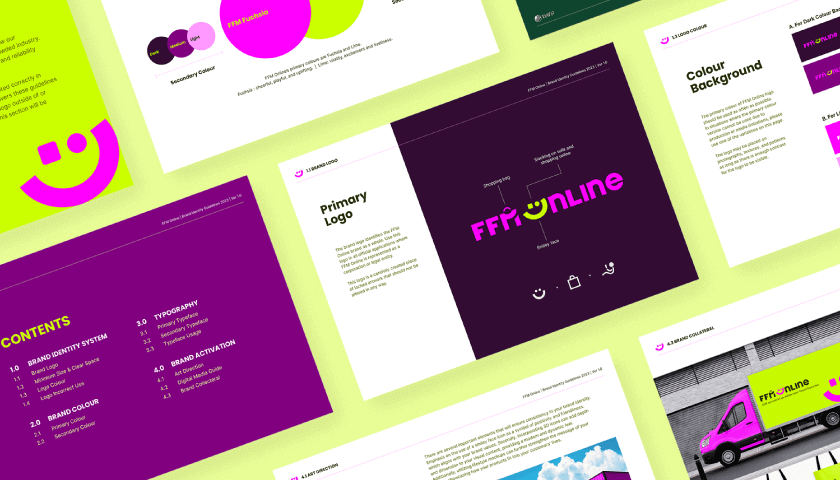
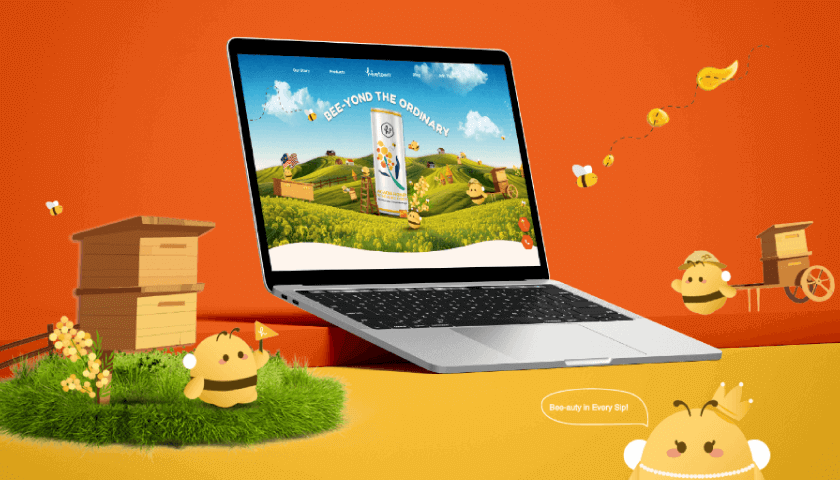
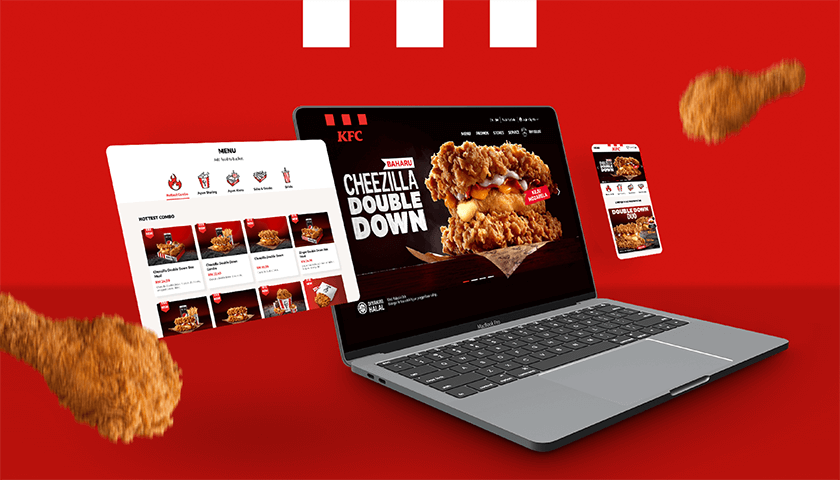

A strong branding strategy Malaysia businesses implement helps companies build trust faster, stand out from competitors, and attract better customers. Instead of competing on price alone, branding allows businesses to position themselves based on value, credibility, and expertise.
When branding is clear and consistent, marketing becomes more effective. Businesses often see lower customer acquisition costs, stronger brand recall, and improved long-term growth. This is why more Malaysian companies are investing in branding strategy rather than relying only on short-term marketing campaigns.
Let me ask you something straight up:
When someone hears your business name for the first time…
What do they feel?
Nothing?
A little confused?
Or do they instantly understand what you do, and why you matter?
That gap, between confusion and clarity, is exactly what a branding strategy Malaysia businesses need is designed to solve.
Today, branding isn’t just about looking professional.
It’s about shaping perception, building trust, and making people remember you long after they’ve left your website.
And in Malaysia’s competitive market, that difference matters more than ever.
What Is a Branding Strategy?
A branding strategy is the long-term plan that defines how your business:
- Looks
- Sounds
- Communicates
- Positions itself
- Builds customer trust
It’s not just your logo.
It’s not just your colors.
It’s the full picture, who you are, what you stand for, and why customers should care.
Think of it this way:
- Your brand is your reputation
- Your branding strategy is how you build and protect that reputation
Without a clear branding strategy, businesses tend to:
- Blend into competitors
- Compete only on price
- Struggle to build trust
- Attract inconsistent leads
A strong branding strategy Malaysia companies implement solves all of these.
Branding vs Marketing
| Branding | Marketing |
| Long-term strategy | Short-term campaigns |
| Builds trust | Drives traffic |
| Defines identity | Promotes offers |
| Shapes perception | Generates leads |
Branding = Who you are
Marketing = How you promote
Branding comes first. Marketing performs better when branding is clear.
Why Branding Strategy Matters in Malaysia
Malaysia’s market is becoming more competitive every year.
You’re no longer just competing with nearby businesses.
You’re competing with:
- Local SMEs
- Regional Southeast Asian brands
- Global companies entering Malaysia
And here’s the reality:
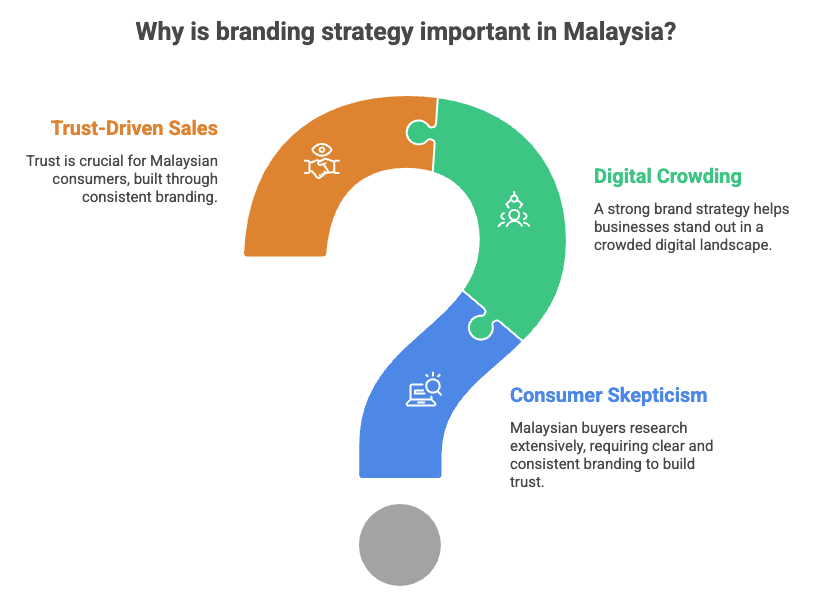
Consumers Are More Skeptical
Malaysian buyers research before they buy (Online Search and Buying Behaviour: Malaysian Experience).
They compare websites, reviews, and brand credibility.
If your brand looks unclear or inconsistent, trust drops immediately.
This is why your website’s design and branding must work together as a unified trust signal.
Digital Space Is More Crowded
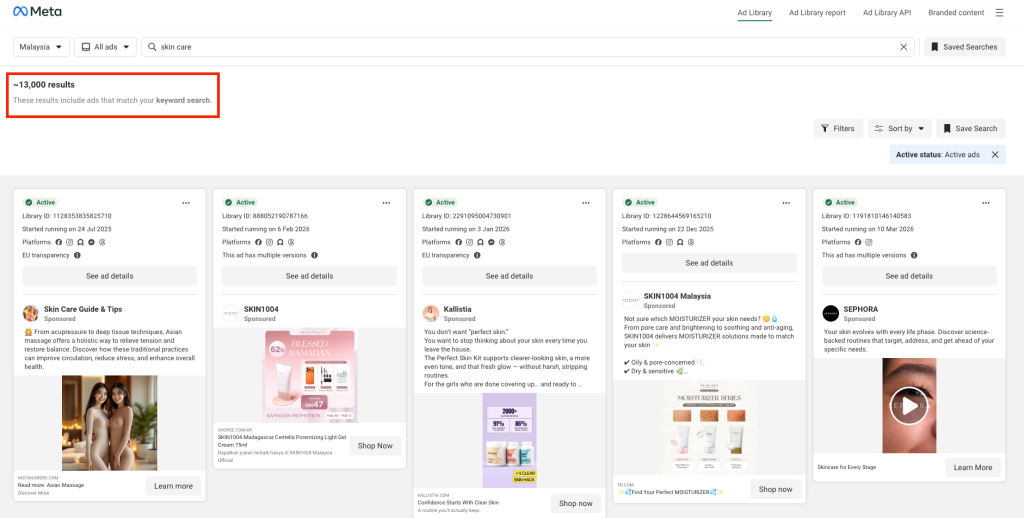
Everyone is running ads.
Everyone is on social media.
Everyone has a website.
Without a clear branding strategy Malaysia businesses risk becoming invisible.
Trust Drives Sales in Malaysia
Malaysian consumers buy from brands they:
- Recognize
- Feel comfortable with
- Trust
That trust doesn’t happen by accident.
It’s built through consistent branding.
A strong branding strategy Malaysia businesses implement today isn’t a luxury anymore, it’s survival.
Step 1: Define Your Brand Positioning
Brand positioning answers two questions:
- Who are you targeting?
- Why should customers choose you?
Know Your Target Audience
One of the biggest mistakes businesses make:
“Our target audience is everyone.”
This sounds inclusive, but it’s actually dangerous.
When you speak to everyone, you connect with no one.
Instead, get specific.
Ask yourself:
- Who is my ideal customer? (Age, location, income, lifestyle)
- What problems are they trying to solve?
- Where do they spend time online?
- What tone do they respond to?
In a branding strategy Malaysia businesses create, audience clarity is especially important.
For example:
- Urban millennials in Kuala Lumpur respond to modern, premium branding
- SME owners in Johor may respond better to practical, results-focused messaging
- Traditional industries may prefer more formal and authoritative tone
Different audiences require different positioning.
Build a persona.
Give them a name.
Make them real.
Your brand becomes clearer immediately.
Nail Your Unique Value Proposition (UVP)
Your UVP answers one simple question:
Why should customers choose you instead of competitors?
A strong UVP includes:
- What you do
- Who you do it for
- Why it matters
Example:
“We help Malaysian F&B businesses build social media presence that brings in walk-in customers, not just likes.”
That’s clear.
That’s specific.
That’s effective.
Weak UVPs sound like:
“We provide quality services at affordable prices.”
Every business says this.
It doesn’t differentiate you.
A strong branding strategy Malaysia companies use always starts with a clear UVP.
Step 2: Build Your Brand Identity
Now we move into the visual side of branding.
But remember, brand identity isn’t just about looking nice.
It’s about communicating your personality instantly.
Logo
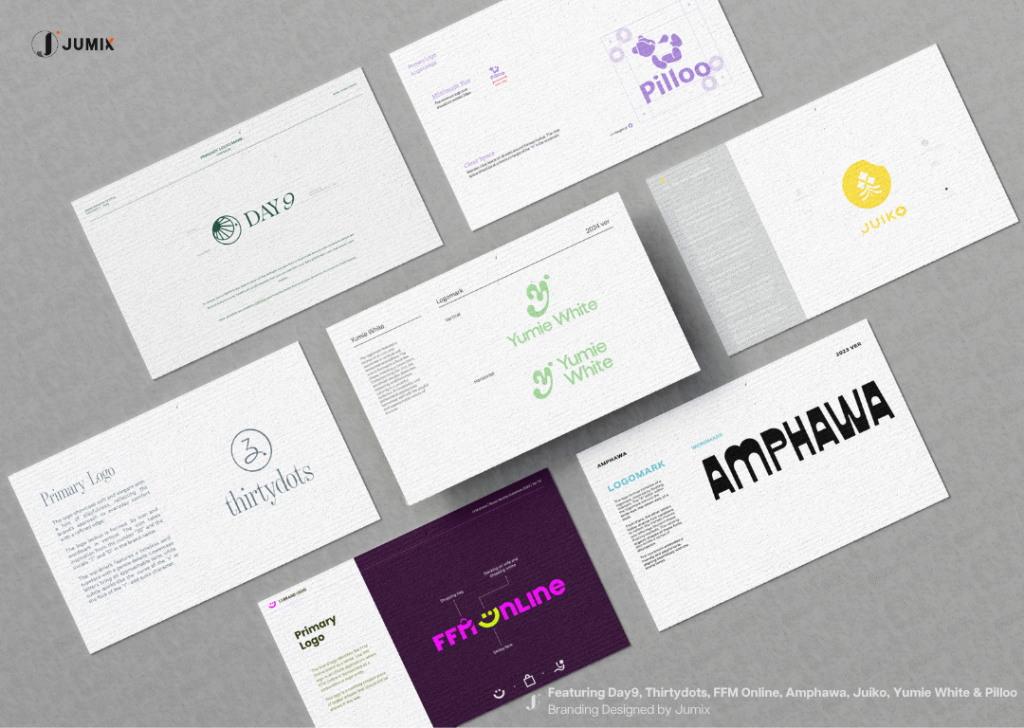
Your logo is the face of your brand.
It should:
- Be simple
- Be memorable
- Be relevant
- Be versatile
Your logo needs to work across:
- Website
- Social media
- Business cards
- Ads
- Packaging
Avoid chasing trends.
Trendy logos age quickly.
Timeless branding supports long-term recognition, which is the goal of any branding strategy Malaysia businesses want to scale with.
If you’re creating a logo in Malaysia, it’s worth understanding both the creative and legal aspects, including how to protect your logo once it’s built.
Brand Colors
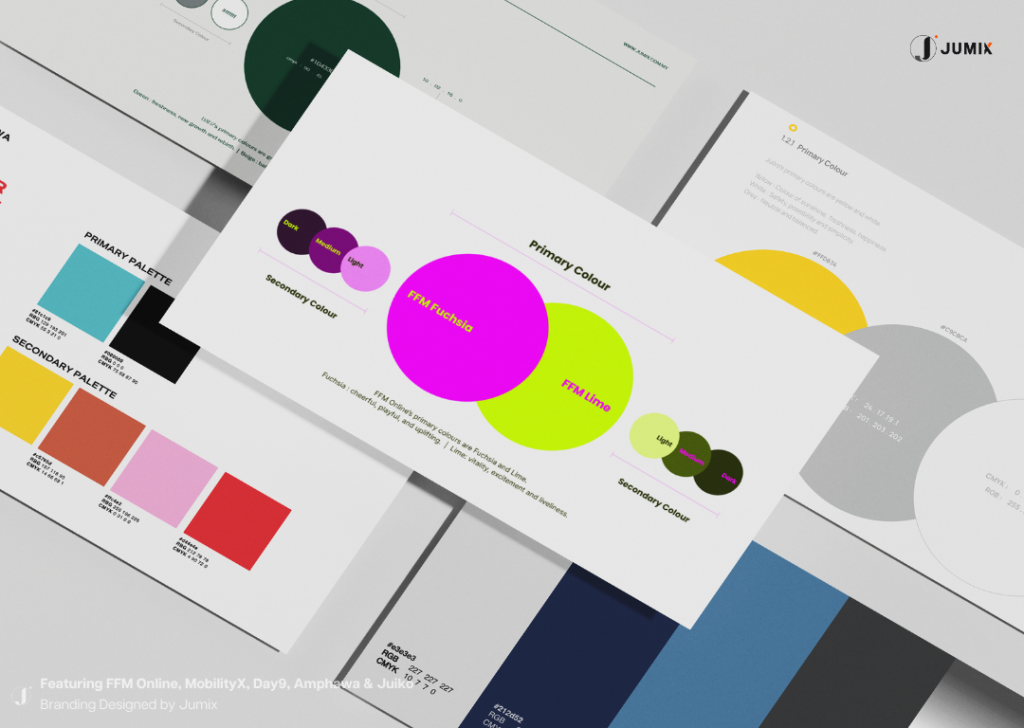
Colors influence perception and emotion.
In Malaysia’s multicultural market, this matters even more:
- Red: Energy, excitement, food, retail
- Blue: Trust, professionalism, corporate
- Green: Health, sustainability, wellness
- Gold / Yellow: Prosperity and warmth (strong cultural resonance in Malaysia)
Choose:
- 1 primary color
- 2 to 3 supporting colors
Then use them consistently across every platform.
Consistency builds recognition.
Recognition builds trust.
This principle extends into choosing the right colour scheme for your website design.
Typography
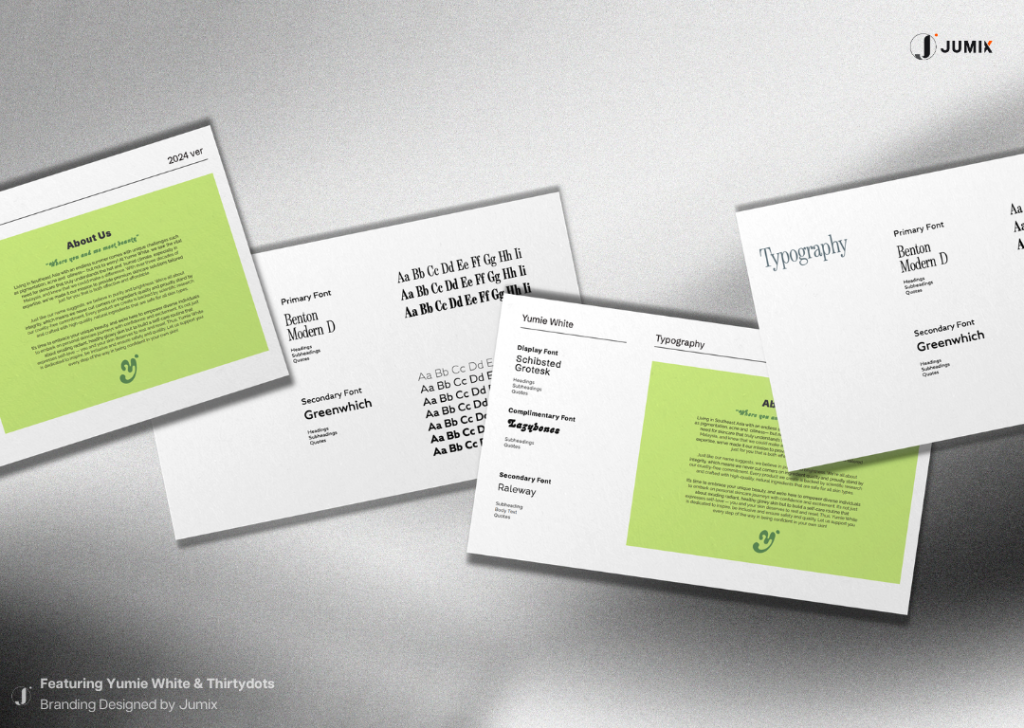
Fonts shape perception instantly.
- Serif fonts: Traditional, trustworthy, established
- Sans-serif fonts: Modern, clean, approachable
- Script fonts: Creative, personal (use sparingly)
Best practice:
- One font for headings
- One font for body text
More than that creates visual clutter.
A clean typography system strengthens your branding strategy Malaysia businesses rely on for consistency.
Step 3: Develop Your Brand Messaging
Branding isn’t just visual, it’s verbal too.
Your messaging is how your brand speaks.
It’s what turns your business from a company into something people connect with.
Tone of Voice
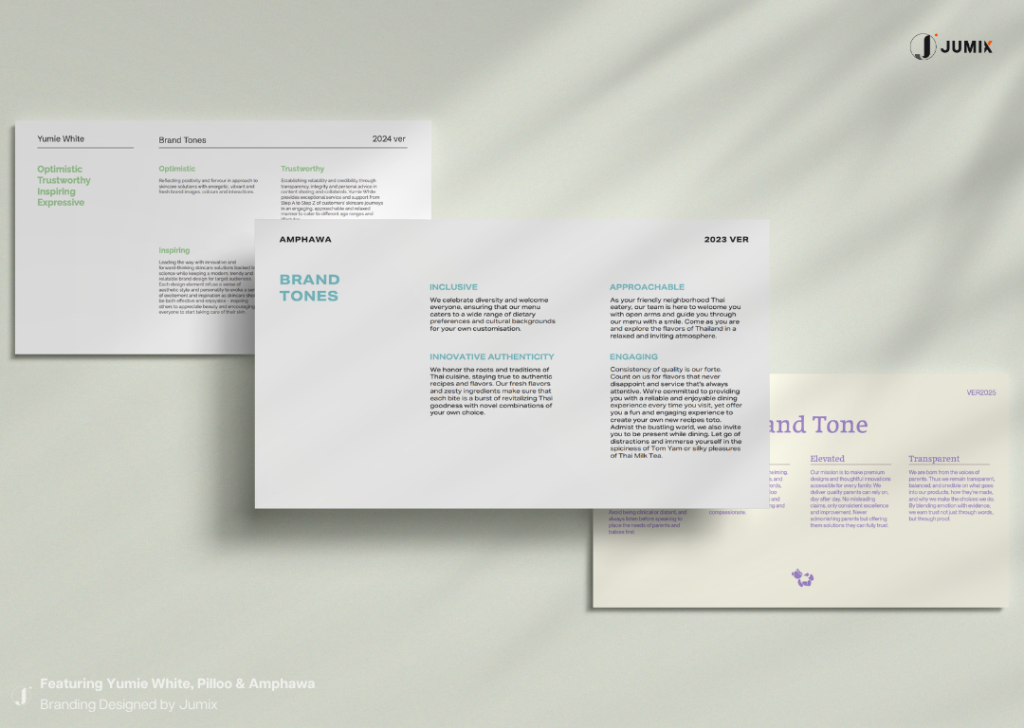
Your tone defines your brand personality.
Are you:
- Friendly and conversational
- Professional and authoritative
- Playful and bold
Each tone fits different industries.
In Malaysia, tone also depends on audience:
- Gen Z audiences prefer casual tone
- B2B audiences prefer professional tone
- Traditional sectors prefer respectful authority
Your branding strategy Malaysia messaging should align with your audience expectations.
Tagline
A tagline is optional, but powerful.
Good taglines are:
- Short
- Memorable
- Benefit-focused
Avoid generic taglines like:
- “Quality You Can Trust”
- “Your Partner in Success”
These sound nice, but mean nothing.
Strong taglines communicate positioning instantly.
Key Messages
Your key messages are your brand’s talking points.
Usually 3 to 5 core ideas:
Example: Malaysian halal skincare brand
- Halal-certified and dermatologist-tested
- Local Malaysian botanicals
- Designed for tropical climate
- Built for Malaysian skin tones
These messages should appear across:
- Website
- Social media
- Ads
- Sales conversations
Consistency strengthens your branding strategy Malaysia businesses implement long-term.
Step 4: Apply Your Branding Across Channels
This is where many Malaysian businesses struggle.
They invest time creating their brand, logo, colors, messaging, but when it comes to execution, everything becomes inconsistent.
Your website looks corporate.
Your Instagram looks casual.
Your ads look completely different again.
To customers, this creates confusion.
And confusion reduces trust.
A strong branding strategy Malaysia businesses implement successfully focuses on consistency across every touchpoint.
When customers see the same brand repeatedly, recognition builds faster, and recognition builds trust.
Let’s break down how to apply your branding properly across key channels.
Website
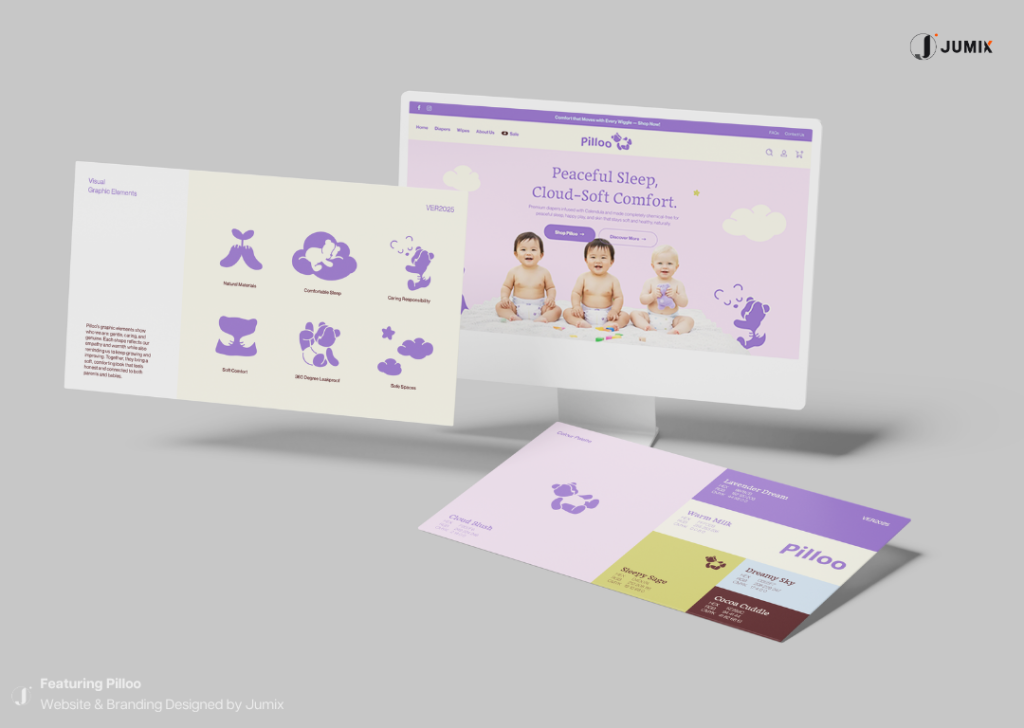
Your website is your most important branded asset.
It’s your digital headquarters, and often the first impression customers have of your business.
A strong branding strategy Malaysia websites follow ensures that the website clearly communicates your brand within seconds.
Use Consistent Visual Identity
Your website should consistently use:
- Brand colors across buttons, headers, and highlights
- Brand fonts across headings and body text
- Consistent image style (corporate, lifestyle, minimal, etc.)
- Consistent icon style and design elements
When these elements are inconsistent, the website starts to feel unprofessional, even if the content is strong.
Consistency builds credibility.
Highlight Your UVP Above the Fold
Visitors should immediately understand:
- What you do
- Who you help
- Why you’re different
This should appear above the fold, the first screen users see.
Malaysian users often skim quickly.
If they don’t understand your value within seconds, they leave.
A clear UVP improves:
- Time on site
- Engagement
- Lead conversion
This is a key part of executing a branding strategy Malaysia businesses can convert leads with.
Maintain Consistent Tone of Voice
Your tone should match your brand personality:
- Premium brand → Professional tone
- Friendly brand → Conversational tone
- B2B brand → Authoritative tone
Avoid switching tones between pages.
For example:
Homepage: Friendly
About Page: Corporate
Services Page: Sales-heavy
This inconsistency weakens brand identity.
If you’re evaluating whether your current site reflects your brand properly, consider whether it’s time for a website redesign or an entirely new website.
Social Media
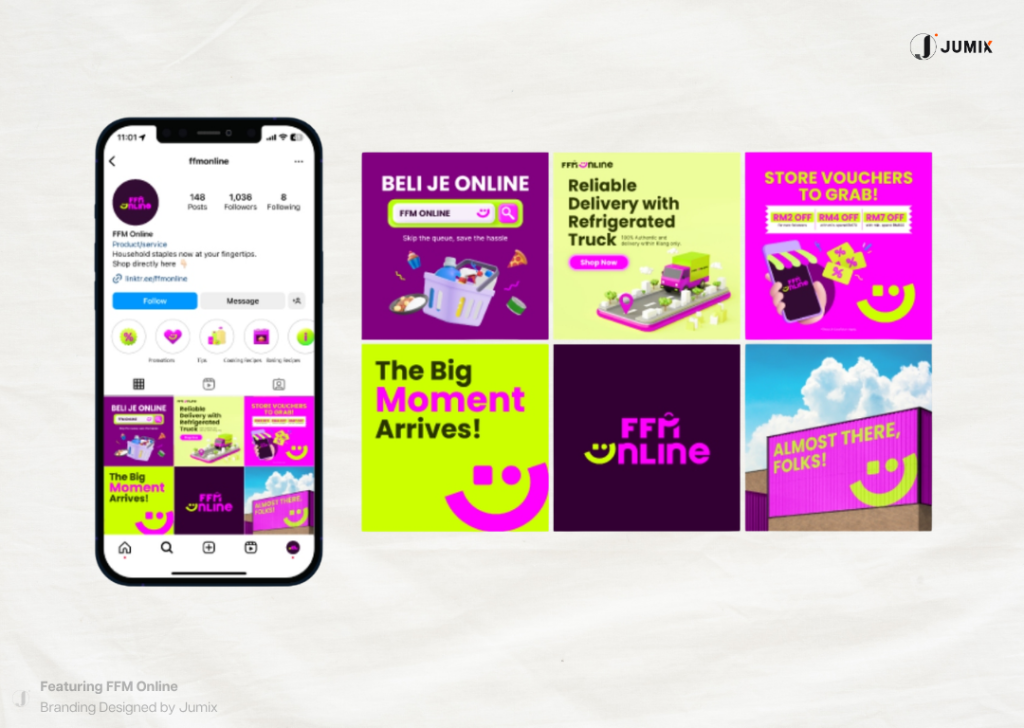
Malaysian consumers are highly active across multiple platforms:
- TikTok
Your social media presence shouldn’t feel like a separate brand.
It should feel like an extension of your website.
Consistent Visual Style
Your posts should follow a consistent visual identity:
- Same color palette
- Same typography style
- Similar layout structure
- Consistent image style
This helps your audience recognize your posts instantly, even before they see your logo.
This is how strong brands build familiarity.
Consistent Tone of Voice
Your captions should reflect your brand personality.
For example:
- Premium brand → Professional and refined
- Youth brand → Casual and fun
- B2B brand → Insightful and educational
Avoid switching tone randomly.
Consistency strengthens your branding strategy Malaysia social media execution.
Content Pillars for Consistency
Instead of posting randomly, define 3 to 4 content pillars:
For example:
- Educational content
- Portfolio / case studies
- Behind-the-scenes
- Client testimonials
This creates structured, consistent content aligned with your branding.
Ads
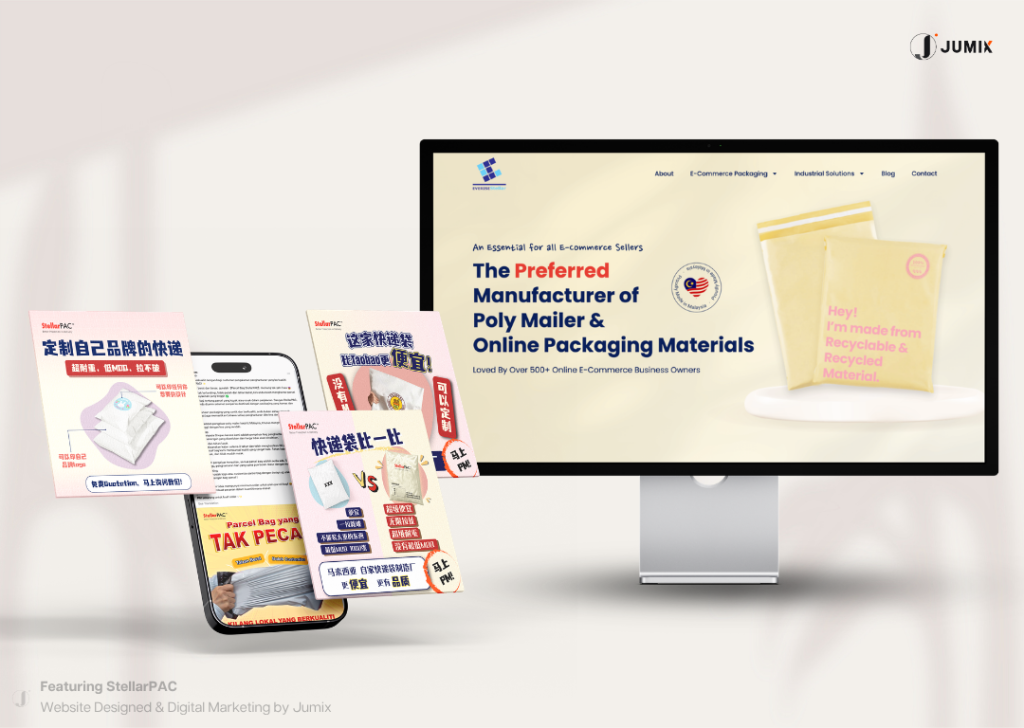
Your ads should not feel disconnected from your brand.
Many businesses create ads that look completely different from their website, this breaks trust.
A strong branding strategy Malaysia ad execution ensures:
Consistent Visual Language
Your ads should use:
- Same brand colors
- Same typography
- Same imagery style
- Same design system
This builds brand recall.
Customers begin recognizing your ads even before reading them.
Consistent Messaging
Your ad copy should match your brand tone.
Avoid:
- Casual tone on social media
- Robotic tone in ads
Consistency improves brand credibility.
Match Landing Page Experience
One of the biggest mistakes:
Ad promises something.
Landing page looks different.
Messaging changes.
This creates friction.
Your ad message should align with:
- Landing page headline
- Visual style
- Offer
Consistency improves conversions significantly.
Step 5: Measure Brand Effectiveness
Branding isn’t just creative, it’s measurable.
Track these metrics:
| Metric Category | Metric | What to Track | What It Indicates |
| Brand Awareness | Direct Traffic | People typing your URL directly | Brand recall, brand familiarity, strong awareness |
| Branded Search Volume | Searches for your brand name on Google | Increased awareness and stronger brand positioning | |
| Social Media Growth | Follower growth, reach, engagement | Organic growth reflects stronger brand visibility | |
| Brand Perception | Reviews & Ratings | Google Reviews, social media comments, marketplace reviews | Customer sentiment and brand reputation |
| Net Promoter Score (NPS) | “Would you recommend us?” surveys | Customer loyalty and trust level | |
| Share of Voice | Brand mentions vs competitors | Industry visibility and brand influence | |
| Conversion Metrics | Lead Quality | Ideal customers, higher-value leads, better-fit clients | Strong branding attracts better customers |
| Customer Retention | Returning customers and repeat purchases | Brand loyalty and long-term trust | |
| Customer Acquisition Cost | Marketing cost per customer | Strong branding reduces cost over time |
A strong branding strategy Malaysia businesses execute well reduces marketing cost over time.
Review your branding metrics quarterly and refine your strategy.
Branding improves with iteration.
Common Branding Mistakes Malaysian Businesses Make
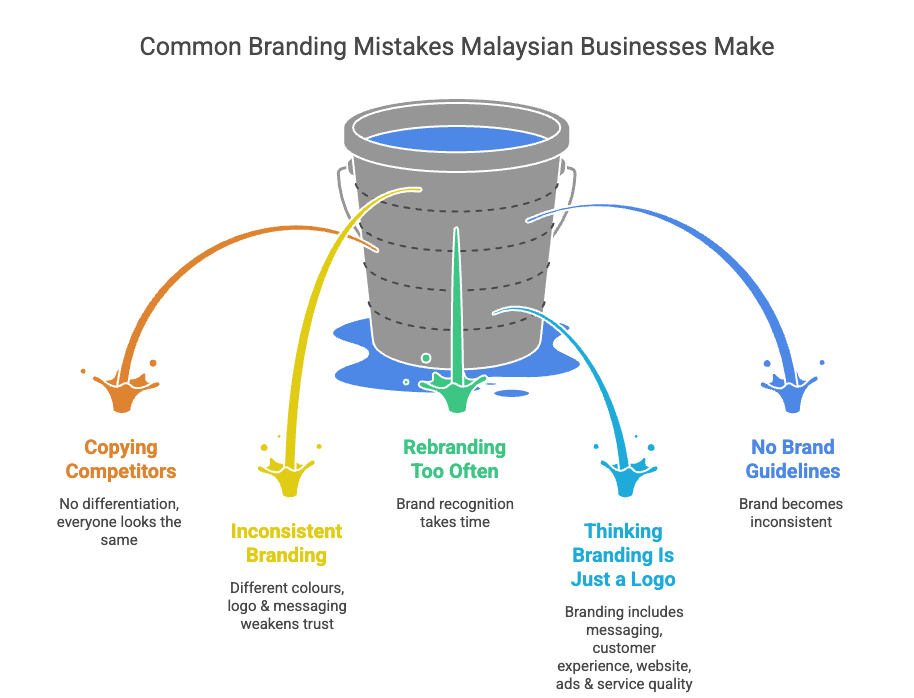
Avoid these common mistakes:
Copying Competitors
Many businesses look at competitors and replicate their branding.
The result?
Everyone looks the same.
Customers can’t differentiate.
Your branding strategy Malaysia businesses should follow must focus on differentiation, not imitation.
Inconsistent Branding Across Channels
Different:
- Logo variations
- Colors
- Tone
- Messaging
This weakens brand recognition.
Consistency builds familiarity.
Rebranding Too Often
Brand recognition takes time.
If you change:
- Logo
- Colors
- Messaging
Every year, customers never build familiarity.
Consistency wins long-term.
Thinking Branding Is Just a Logo
Branding includes:
- Customer experience
- Website design
- Messaging
- Customer service
- Packaging
- Ads
Everything shapes perception.
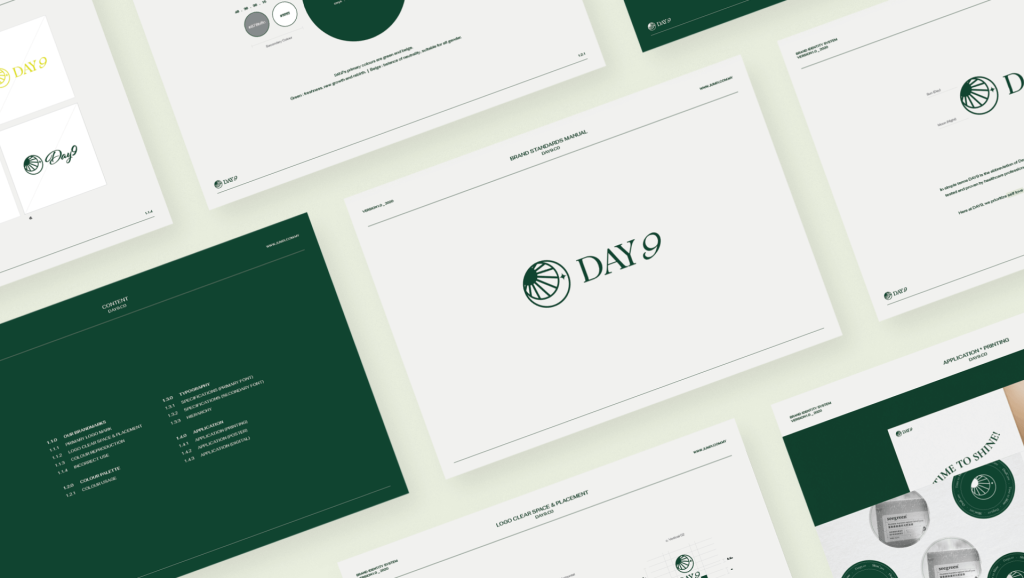
No Brand Guidelines
Without documentation, your brand becomes inconsistent over time.
Brand guidelines should include:
- Logo usage
- Color palette
- Typography
- Tone of voice
- Messaging
A strong branding strategy Malaysia businesses maintain long-term always includes brand guidelines.
This ensures your brand remains consistent, even as your team grows.
Ready to Build a Branding Strategy That Actually Works?
A strong branding strategy Malaysia businesses can execute doesn’t require huge budgets.
It requires clarity.
Follow these steps:
- Define positioning and UVP
- Build brand identity
- Develop messaging
- Apply branding consistently
- Measure and improve
Malaysia rewards brands that are:
- Consistent
- Trustworthy
- Relevant
That’s not luck, that’s strategy.
Start today.
Even small steps:
- Define your UVP
- Choose brand colors
- Clarify tone
Each step moves you ahead of competitors.
Need help building your branding strategy Malaysia from the ground up? Explore Jumix Branding & Strategy Services.
FAQs: Branding Strategy Malaysia
How much does branding strategy cost for Malaysian SMEs?
Costs vary:
- Freelancer: RM2,000 to RM8,000
- Boutique agency: RM15,000 to RM50,000+
A strong branding strategy Malaysia businesses invest in reduces long-term customer acquisition costs.
Can small businesses in Malaysia do branding themselves?
Yes. You can define:
- Positioning
- Target audience
- UVP
- Messaging
Professional help improves visual identity. Tools like Canva and Fiverr make branding more accessible.
How long does branding take to show results?
Typically 12 to 24 months. Branding is long-term. Consistency wins.
What’s the difference between branding and marketing?
Branding = Who you are
Marketing = How you promote
Branding comes first. Marketing follows.






Comments are closed for this article!