


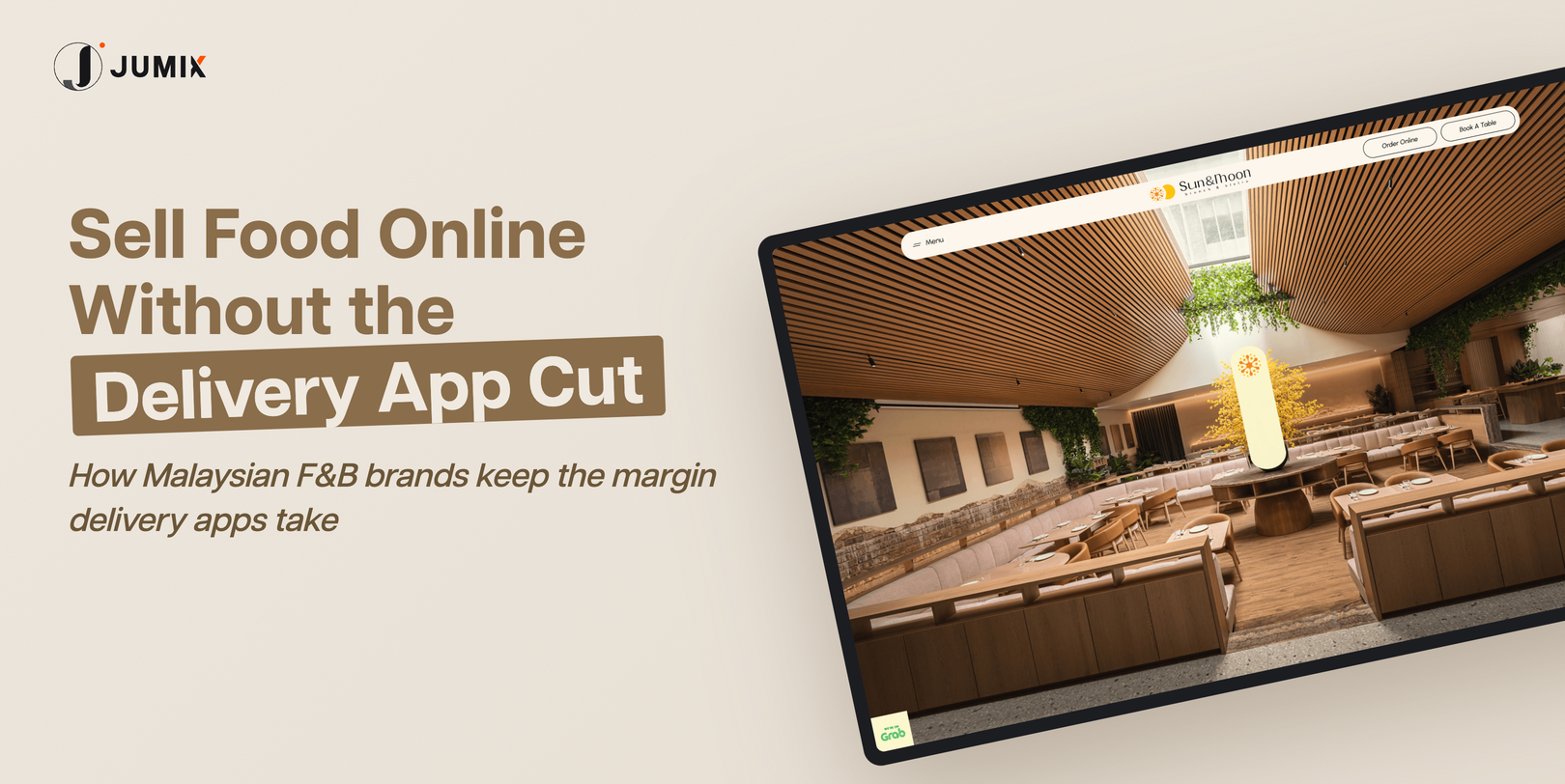
GrabFood and foodpanda commissions in Malaysia commonly run 15% to 30% per order (Source: Grab, 2026). F&B brands cut that cost by taking orders through their own website or WhatsApp, and using delivery apps only for the delivery leg.
- Quick Takeaways
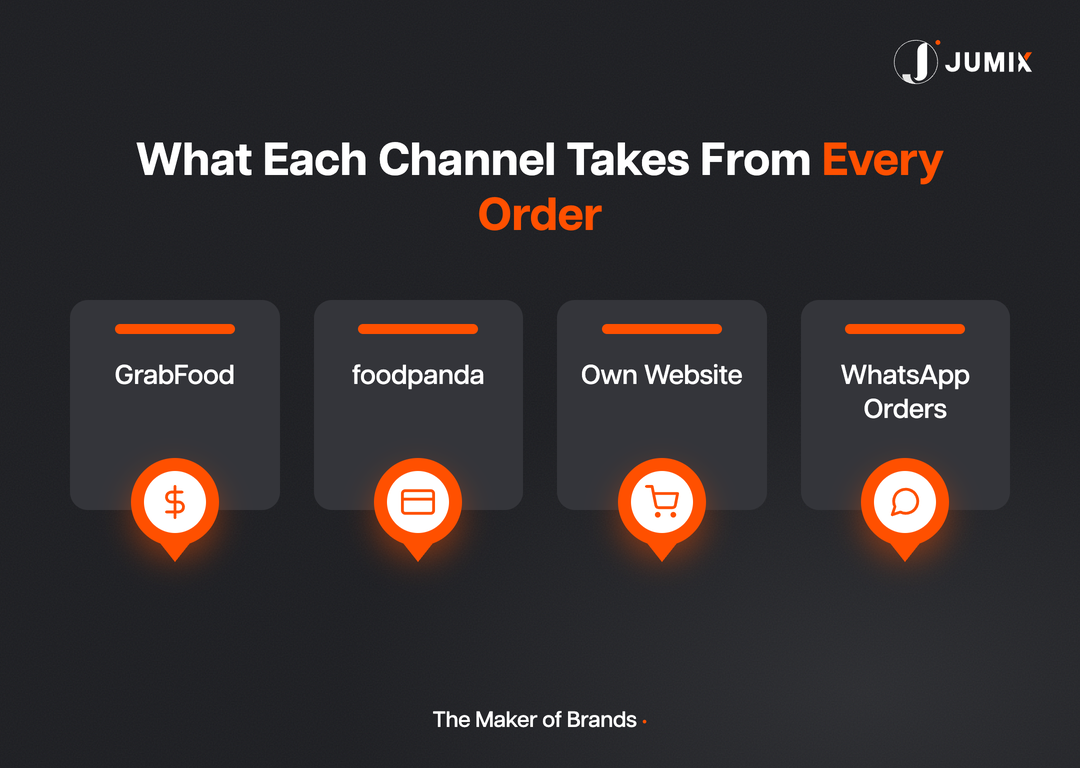
- What GrabFood and Foodpanda Actually Take From Every Order
- The Cost That Doesn’t Show Up on the Commission Line
- What Selling Direct Looks Like for a Malaysian F&B Brand
- Case Study: Two Malaysian F&B Brands That Own Their Order Channel
- Marketplace vs Owning Your Order Channel
- Mistakes F&B Brands Make Going Direct
- FAQ
Quick Takeaways
- GrabFood and foodpanda commissions in Malaysia typically range from 15% to 30% per order, depending on subscription tier and order volume (Source: Grab, 2026).
- A restaurant selling RM3,000 a month through delivery apps at 25% commission loses RM750 of that revenue before ingredient and packaging costs.
- Delivery platforms hold the customer contact data, so a repeat customer never becomes “your” customer unless they order again through the same app.
- A website or WhatsApp catalog for direct orders costs a small fixed monthly amount, not a percentage of every sale.
- The most durable setup keeps delivery apps for discovery and logistics, and routes repeat customers to a direct ordering channel the brand owns.
What GrabFood and Foodpanda Actually Take From Every Order
Every F&B owner already knows this number, roughly. Few have written it down against their own sales.
Grab’s own breakdown puts GrabFood commission at 15% to 30% of order value (Source: Grab, 2026). Most of that funds delivery partner pay and incentives, not Grab itself.
foodpanda works the same way: a percentage that varies by restaurant type, location, and volume. Negotiate 200 or more orders a month and the tier usually drops.
That commission is not the full story. It’s charged on the food price, not the profit.
Take a RM20 dish with RM8 in ingredients and packaging. A 22% commission on that RM20 costs RM4.40. That’s more than half of what was left after cost of goods.
I’ve sat with F&B clients running the actual spreadsheet, not the estimate.
The commission line is rarely the surprise. The surprise is how much smaller the number gets once packaging, promotions, and payout delay stack on top.
The Cost That Doesn’t Show Up on the Commission Line
Three costs sit outside the headline percentage, and all three are structural.
Payout delay ties up working capital. Platforms typically settle weekly or bi-weekly, not same-day.
A café doing RM10,000 a week in delivery orders is effectively financing the platform’s cash flow.
Promotional participation is often close to mandatory. App visibility depends partly on running platform-recommended discounts.
That means commission gets taken on a price that’s already been cut.
Customer ownership never transfers. The platform holds the phone number, order history, and notification channel, not the restaurant.
A regular who orders weekly through GrabFood is a GrabFood customer first. The app decides which restaurants they see next, not the restaurant itself.
Delivery apps are still an excellent discovery engine. GrabFood and foodpanda both have wide daily reach across Malaysian cities.
The problem is treating them as the entire sales channel. They’re one entry point into a relationship the brand should own.
What Selling Direct Looks Like for a Malaysian F&B Brand
For most Malaysian F&B brands, selling direct means two channels working together, not building a rival app.
A WhatsApp catalog handles the low-friction, repeat-order crowd. Regulars already have the number saved, from a past enquiry or a QR code on the receipt.
They send a message, get a menu, and pay via DuitNow or bank transfer. No app download, no commission.
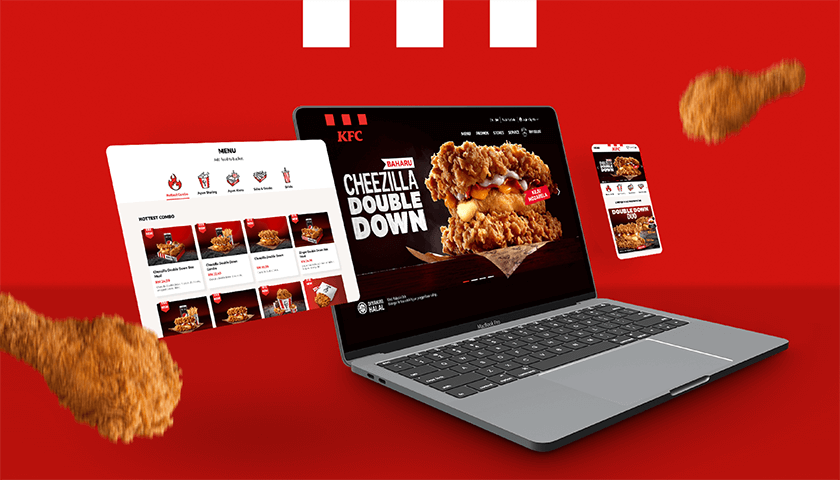
A proper ordering website handles what WhatsApp can’t: pre-orders, catering enquiries, delivery zones, and a menu that looks like the brand.
Several Malaysian chains already run WhatsApp ordering at scale. It skips the app-install step entirely.
Want your own delivery fleet instead of Grab or foodpanda riders? A handful of Malaysian logistics providers offer per-delivery pricing instead of a revenue cut.
That suits higher-ticket orders better than a straight commission model.
Case Study: Two Malaysian F&B Brands That Own Their Order Channel
Two clients illustrate why this matters beyond the spreadsheet.
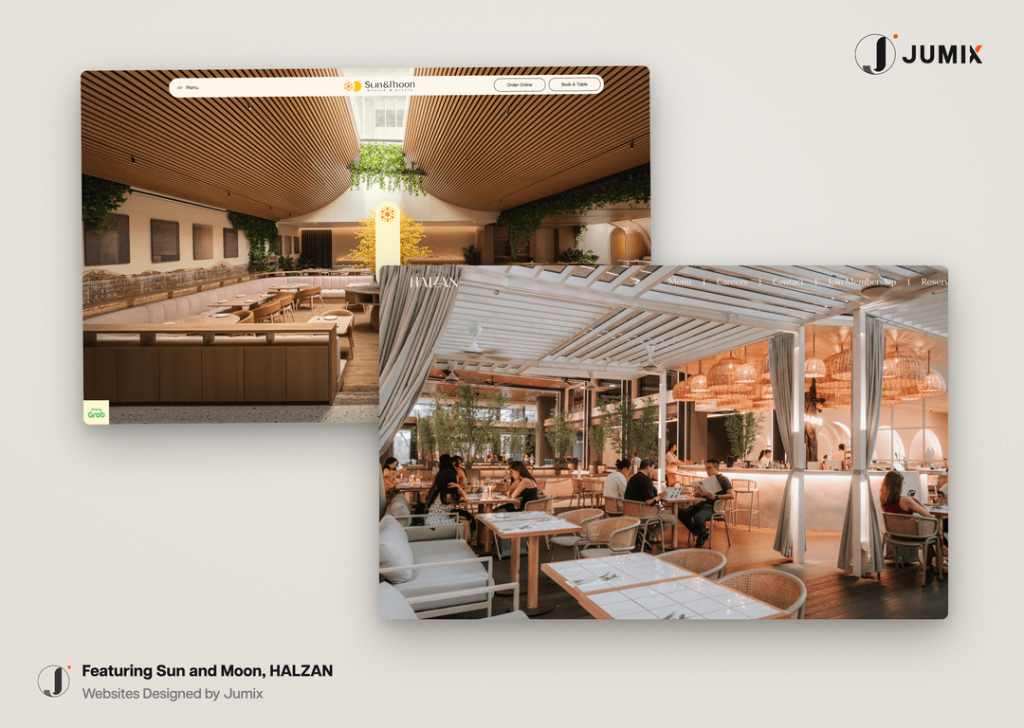
Take Sun and Moon. It runs a dual-concept dining model: a bright brunch spot by day, a moodier bistro by night.
A marketplace listing can’t explain that. It shows a static menu and a star rating, nothing else.
We built a website with visuals that shift from warm daytime tones to darker evening ones. A first-time visitor gets the two-in-one concept, and the premium pricing behind it, before they ever book a table.
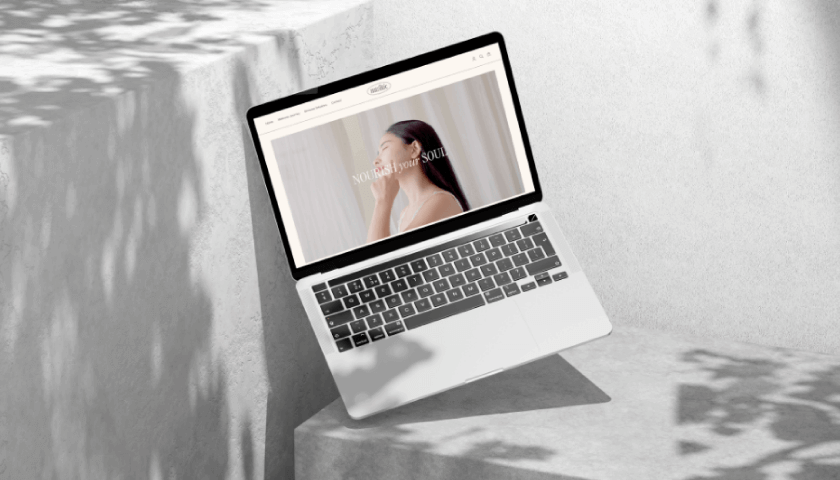
HALZAN faced a different version of the same problem. It’s a premium café built around a slow dining experience.
A delivery app listing can’t communicate ambiance. Ambiance is most of what a customer is paying for at a café like this.
The website we built uses spacious layouts and warm tones that mirror the physical space. The emotional connection starts online, not at the door.
Neither brand dropped delivery apps. Both use them for discovery, then route regulars to a channel they own.
That’s the pattern worth copying: apps for reach, your own site or WhatsApp for the relationship.
Marketplace vs Owning Your Order Channel
Laid out side by side, the tradeoff is straightforward.
| Factor | Delivery Marketplace | Own Website / WhatsApp |
|---|---|---|
| Cost per order | 15% to 30% commission | Payment gateway fee only, typically under 3% |
| Monthly cost structure | Scales with revenue | Fixed hosting and platform cost, from roughly RM50 to RM300/month |
| Customer data ownership | Held by the platform | Owned by the business |
| Payout speed | Weekly or bi-weekly cycles | Same-day via most Malaysian gateways |
| Discovery reach | High, built-in app traffic | Requires separate marketing effort |
| Menu and brand control | Limited to platform template | Full control |
The honest reading: neither column wins outright.
Marketplaces are still the cheapest way to reach a customer who’s never heard of you. Owning the channel is the cheapest way to keep one who already has.
Mistakes F&B Brands Make Going Direct
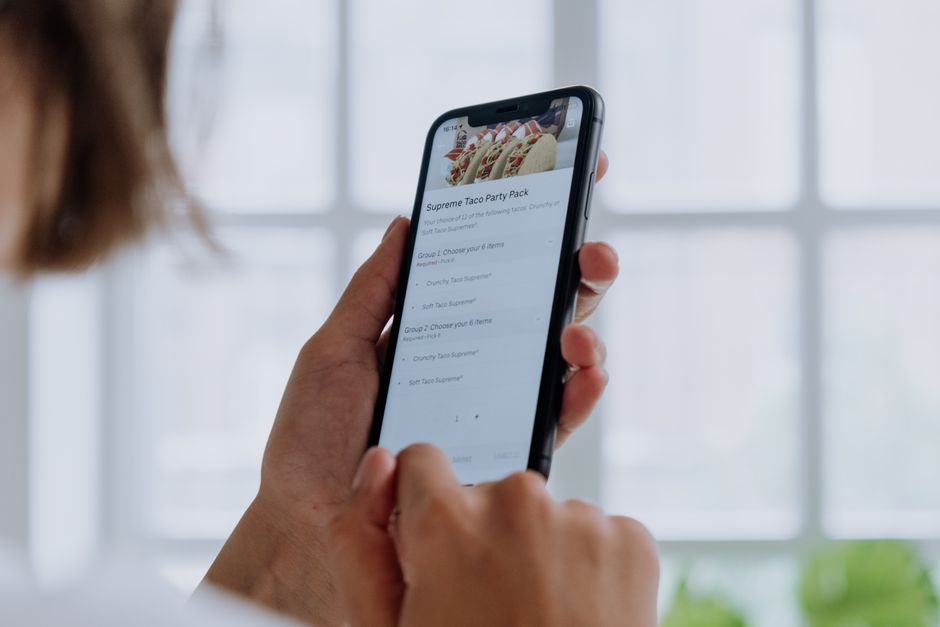
The pattern I see most often: brands abandon delivery apps entirely. They assume the own-channel move should replace them outright.
Mistake one: dropping the apps cold. That cuts discovery traffic before the direct channel has built its own audience, and nothing fills the gap.
Mistake two: building the ordering site, then never printing the link or QR code anywhere a customer will see it. Nobody knows the direct option exists.
Mistake three: skipping e-commerce fundamentals like a working payment gateway and clear delivery zones. The direct channel gets treated as an afterthought, not a real storefront.
The fix for all three is the same: run both channels for a few months before leaning into one.
Put the direct-order link everywhere a paying customer already looks. The receipt, the Google Business Profile, the Instagram bio.
FAQ
Should a small F&B business drop GrabFood and foodpanda entirely?
No, not for most brands. The apps still bring in customers who haven’t found you yet. Run both, then shift repeat customers toward your direct channel over time.
How much does it cost to set up a direct ordering website in Malaysia?
A functional ordering site with a Malaysian payment gateway runs roughly RM3,000 to RM8,000 to build. After that, it’s a small fixed monthly cost for hosting and the gateway, well below what commission costs at any real order volume.
Can WhatsApp ordering handle payments in Malaysia?
Yes. Most brands accept DuitNow QR or bank transfer, with the customer sending a screenshot as confirmation. It’s manual next to a website checkout, but it works fine at smaller order volumes.
Do delivery apps still handle the actual delivery if I take the order directly?
Some Malaysian logistics providers offer delivery-only pricing per trip instead of a percentage cut, which suits a direct-order model. Brands with a tight delivery radius sometimes run their own riders instead, and save the apps for wider-reach orders.
What’s the biggest risk of relying only on delivery marketplaces?
Losing the customer relationship. If the platform changes its algorithm, raises commission, or a competitor outbids you for placement, there’s no direct way to reach your own regulars. Owning even a small slice of direct orders is insurance against that.
Own the Order, Not Just the Kitchen
Commission on every order, forever, with no way to reach a repeat customer directly. That’s the problem worth solving here.
The brands doing this well use the app for the customer who’s never heard of them. A website or WhatsApp catalog handles the one who orders every Friday.
That second group is where the margin lives.
If your kitchen is busy but your margin isn’t showing it, the channel is probably taking a third of every sale before you see it.
We build ecommerce and ordering websites for Malaysian F&B brands, designed to work alongside delivery apps, not against them. Our e-commerce solutions page covers what that setup looks like for a restaurant, café, or cloud kitchen.




Comments are closed for this article!