




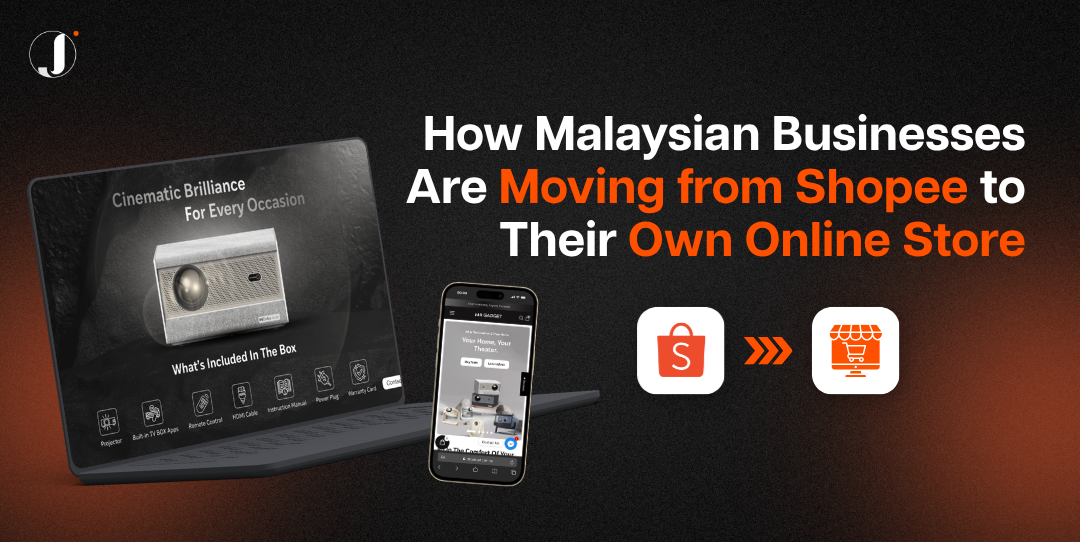
Malaysian Shopee sellers pay fees across multiple categories: transaction fees starting at 3.78%, platform support fees, seller commission, paid ads, and more. Combined, these take 25–40% of each order’s value before cost of goods.

Moving to a Shopify store removes per-sale commission, gives full ownership of customer data and brand identity, and lets sellers compete on product quality instead of price. Most Malaysian businesses run both channels in parallel for 3–6 months before shifting their primary focus to their own store.
- Quick Takeaways
- Introduction
- What Shopee is actually charging you
- The brand problem every Shopee seller faces
- What your own Shopify store gives you
- Malaysian brands that made the move
- How to make the switch without burning your Shopee sales
- Frequently Asked Questions
- Conclusion
Quick takeaways
- Shopee fees stack across 11 categories: transaction fees start at 3.78%, plus platform support, commission, and ads. Combined, Malaysian sellers lose 25–40% of each order’s value to the platform.
- Your Shopee customers belong to Shopee. You can’t email them or retarget them after a purchase.
- A Shopify store removes per-sale commission. You control your pricing, promotions, and customer data.
- Malaysian brands like Pilloo, MH Gadget, and Shirudo by Kossan have already built their own direct-to-consumer stores.
- Run both channels in parallel first. Don’t close your Shopee shop until your own store has consistent traction.
When the fees clear, the margin looks different
Your Shopee dashboard looks healthy. Orders coming in. Revenue climbing.
But when you sit down and calculate your actual margin after every fee clears, the number is different.
Shopee’s fee structure is layered. Transaction fees. Platform support fees. Commission. Paid ads. Cashback programs. Withdrawal fees.

Each line looks manageable on its own. Add them up across a typical order and Malaysian sellers are giving away 25–40% of their order value before they count a single ringgit of product cost or shipping.
That’s why more Malaysian businesses are building their own online store, and why Shopify has become the platform most of them are turning to.
This post breaks down what Shopee is actually taking from you, what a Shopify store gives you back, and how Malaysian brands are making the move.
What Shopee is actually charging you per order
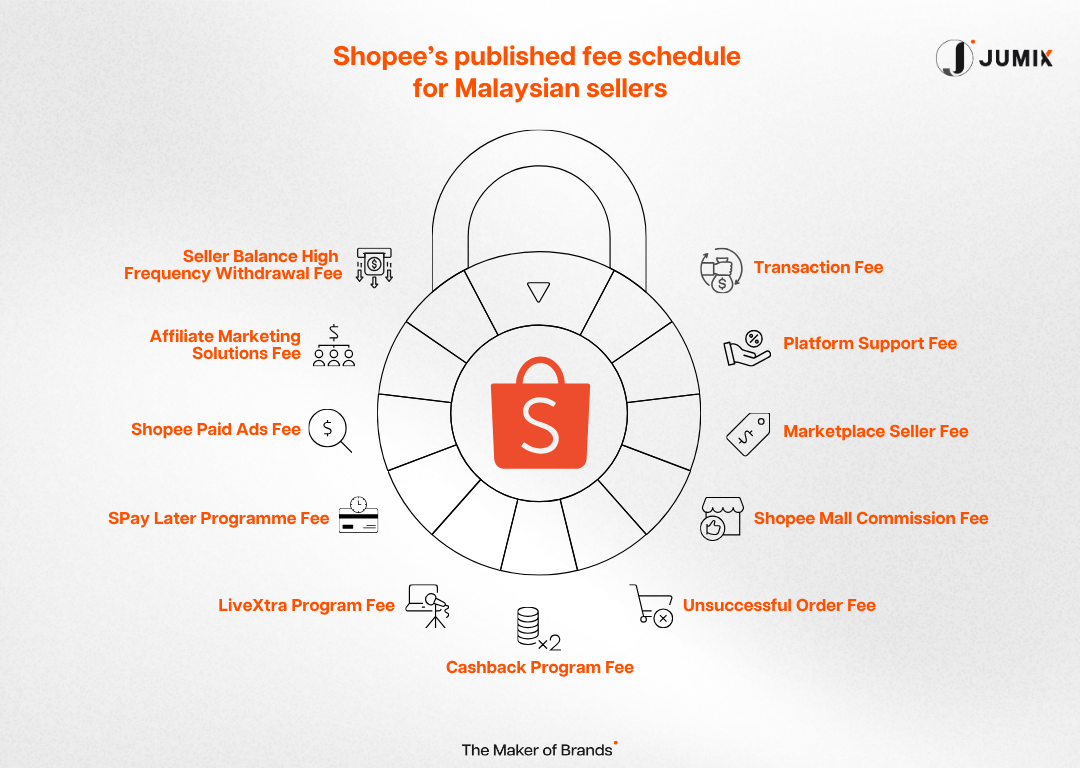
Shopee’s published fee schedule for Malaysian sellers includes (Source: Shopee Seller Education Centre):
- Transaction fee: from 3.78% per completed order
- Platform support fee: from RM0.54 per completed order
- Marketplace seller fee: varies by product category
- Shopee Mall commission fee: applies to Mall-status sellers
- Unsuccessful Order Fee: charged even when an order fails to complete
- Cashback program fee: for sellers participating in Shopee’s cashback promotions
- LiveXtra Program fee: for live streaming sellers
- SPay Later Programme fee: for buy-now-pay-later transactions
- Shopee Paid Ads fee: to maintain search visibility on the platform
- Affiliate Marketing solutions fee: for sellers in Shopee’s affiliate program
- Seller Balance High Frequency Withdrawal Fee: for frequent payout requests
Take a RM100 product. Transaction fee alone is RM3.78. Platform support adds RM0.54. Category commission sits on top.
Then comes the real expense: staying visible. Shopee is a crowded marketplace. Paid Ads aren’t optional if you want your listing seen.
Most active sellers spend 5–15% of their gross merchandise value on ads just to compete with identical listings at lower prices.
Add cashback and promotional program participation, and the combined hit on a typical order clears 25–40% of order value. Before cost of goods. Before shipping.
For sellers running 30–40% product margins, that math leaves almost nothing.
Understanding how a website can protect your profit margin is often the moment the numbers finally make sense.
The brand problem every Shopee seller faces
Margin aside, there’s a structural issue with Shopee that no fee calculator captures.
Every customer who buys from your Shopee shop is, technically, Shopee’s customer.
You can’t contact them outside of Shopee’s own messaging system. You can’t send a follow-up email. You can’t run a retargeting campaign to bring them back.
When they want to buy again, they open Shopee and search for your product category.
Your listing appears alongside dozens of others. The one with the lowest price or the biggest voucher usually wins.
Every sale you make on Shopee adds to the platform’s data. Your business gets the transaction. Shopee keeps the customer relationship.
There’s also a control problem. Shopee can change its algorithm, fee structure, or seller policies at any time.
Sellers who’ve built their entire business on the platform have no leverage when that happens.
Your search visibility, your checkout flow, your promotional mechanics: all controlled by a platform you don’t own.
This is the same dynamic that pushed hotel brands off Airbnb dependency and interior designers off Qanvast.
Recognizing why branding and a proper website work together makes the argument for independence clearer.
What your own Shopify store actually gives you
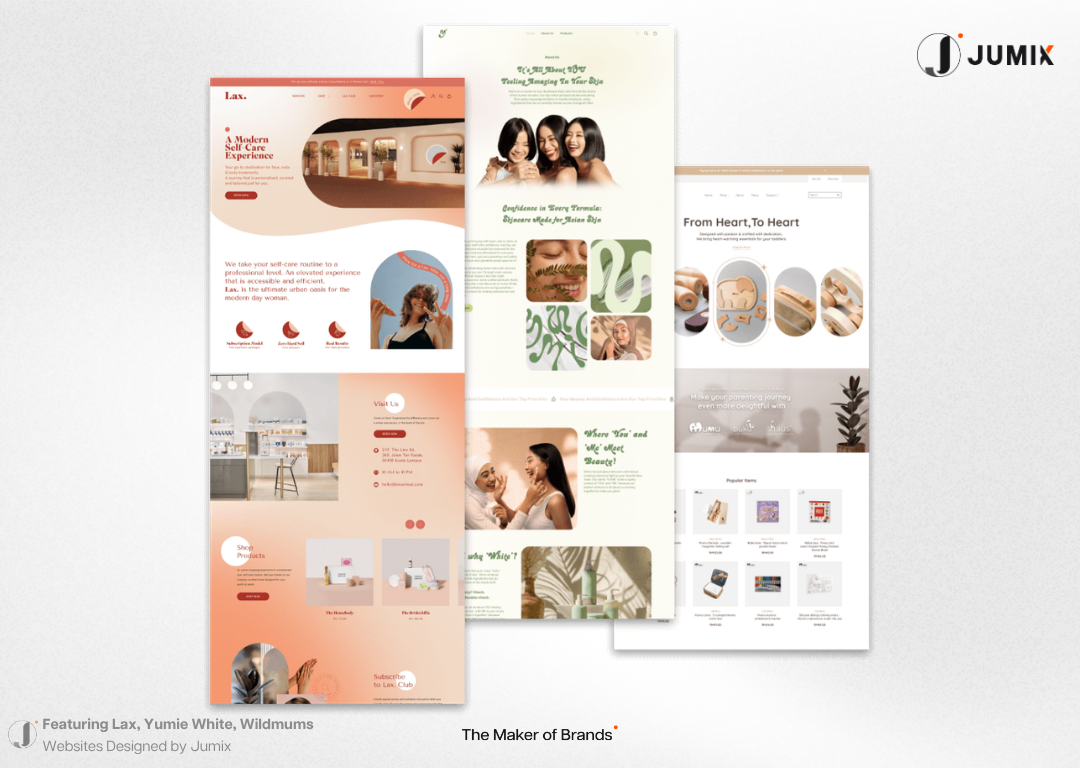
When you sell through your own Shopify store, no platform takes a commission on each sale.
You pay a monthly fee to Shopify and your payment gateway fee, typically around 1–2%. No category commission layered on top.
The margin recovery is real. But customer ownership is the bigger gain.
Every buyer who purchases from your own store gives you their email address and purchase history.
You can email them after the sale. Build a loyalty program. Re-engage buyers who haven’t ordered in 90 days.
Run retargeting ads to every visitor who browsed but didn’t buy.
That data compounds. Six months of direct sales gives you a customer list that keeps paying back.
Your brand also has proper room to develop. On Shopee, every listing looks identical: small thumbnail, price, star rating, units sold.
On your own store, you control the photography, the product story, and the pricing narrative.
The reason someone pays RM89 for yours instead of RM55 for a generic competitor lives in that space.
You’re building an asset that belongs to your business. The signs it’s time to build your own eCommerce store are worth reviewing before you decide how much longer to wait.
Malaysian brands that made the move
These aren’t hypothetical case studies. They’re Malaysian brands with their own direct-to-consumer stores, built to control their brand and own their customer relationships.
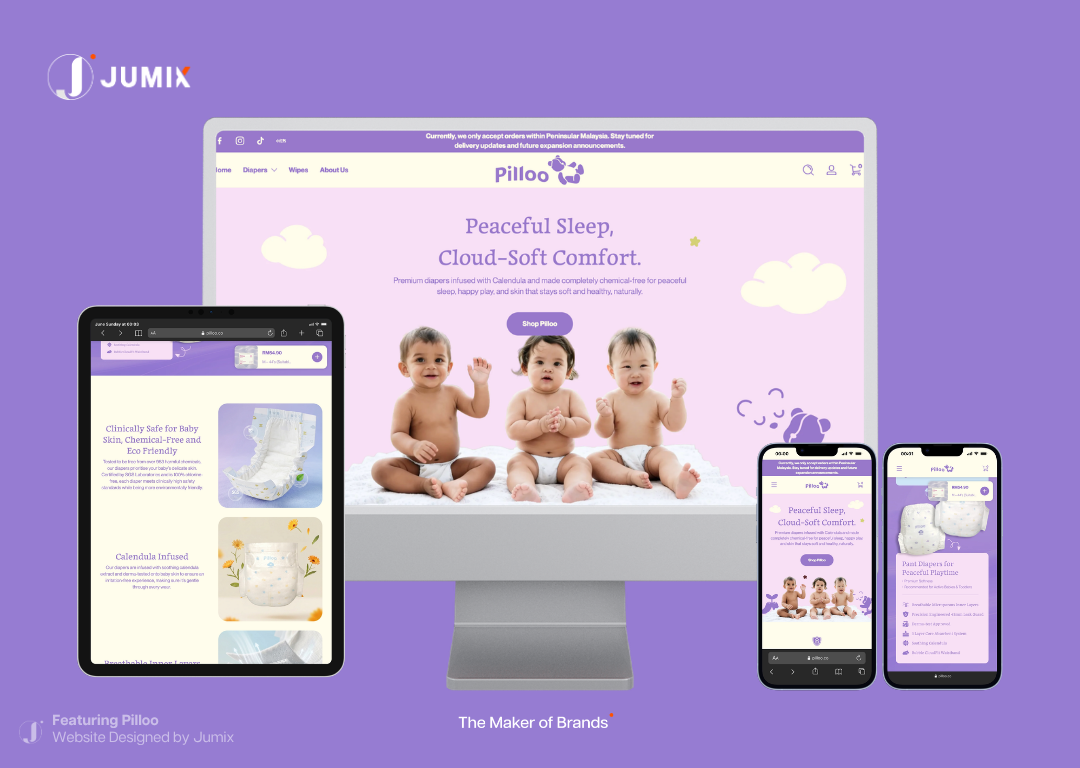
Pilloo is a Malaysian baby care brand selling premium calendula-infused diapers. Their product is genuinely differentiated: chemical-free formulation, SGS and ISO certified, dermatologically tested for sensitive skin. On Shopee, that story gets compressed into a listing competing on price. On their own store at pilloo.co, they walk parents through the formulation, explain why it costs more than generic alternatives, and build a customer base that returns because they believe in the brand.
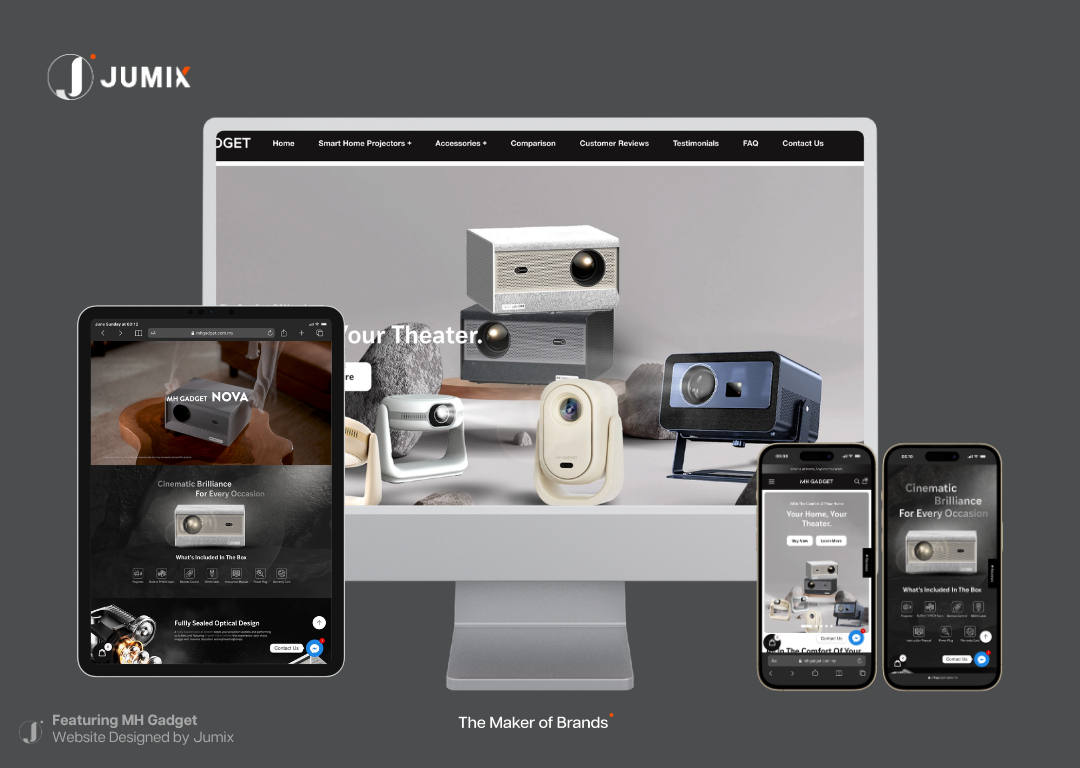
MH Gadget sells smart projectors through a Shopify store built for DTC sales. The setup includes marketing tool integrations and POS connections that a Shopee shop doesn’t support. Their store lets them track customer behavior across the full funnel, retarget visitors who browsed but didn’t buy, and run campaigns with proper attribution. Each order makes the next campaign smarter.
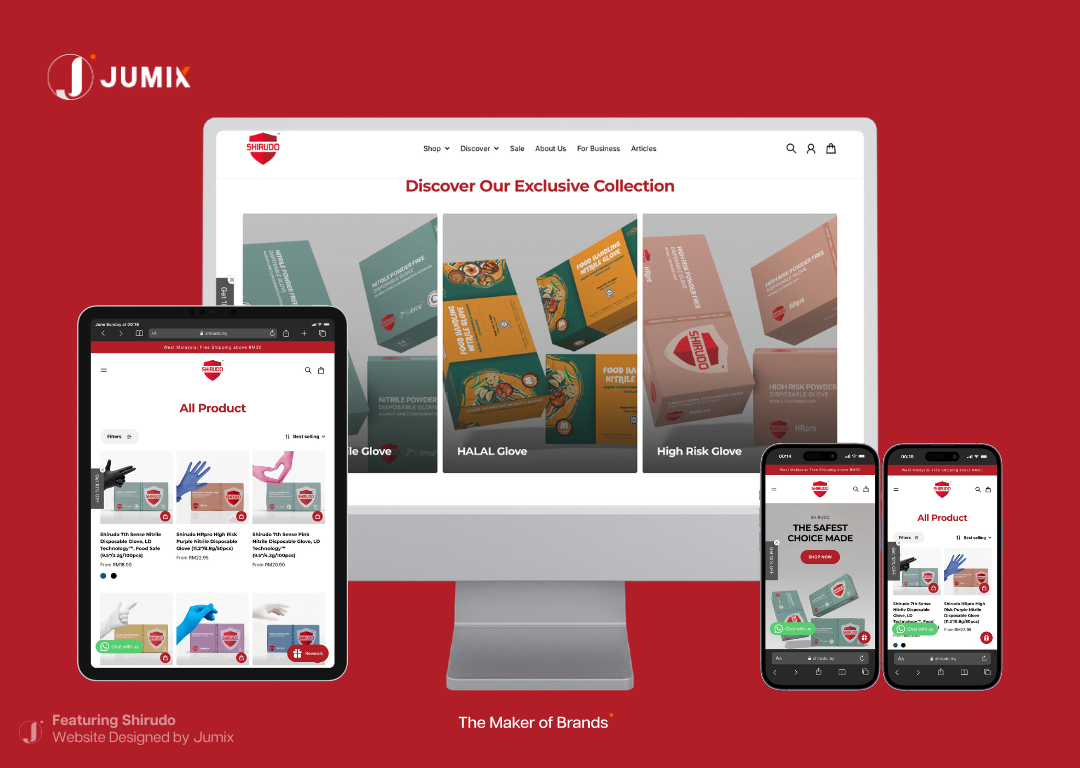
Shirudo by Kossan launched their consumer gloves brand directly into a DTC model, despite Kossan’s manufacturing background being entirely B2B. They built brand awareness through content and performance marketing from day one. Within 60 days of launch, a single viral campaign took their social following from zero to over 1,000. That audience belongs to the brand. A Shopee seller running the same campaign would have driven traffic to Shopee’s platform, not their own.
All three compete on brand quality and product story. Price becomes secondary when customers understand what they’re buying.
Avoiding the common mistakes when setting up an eCommerce store helps you build with the same clarity from the start.
How to make the switch without burning your Shopee sales
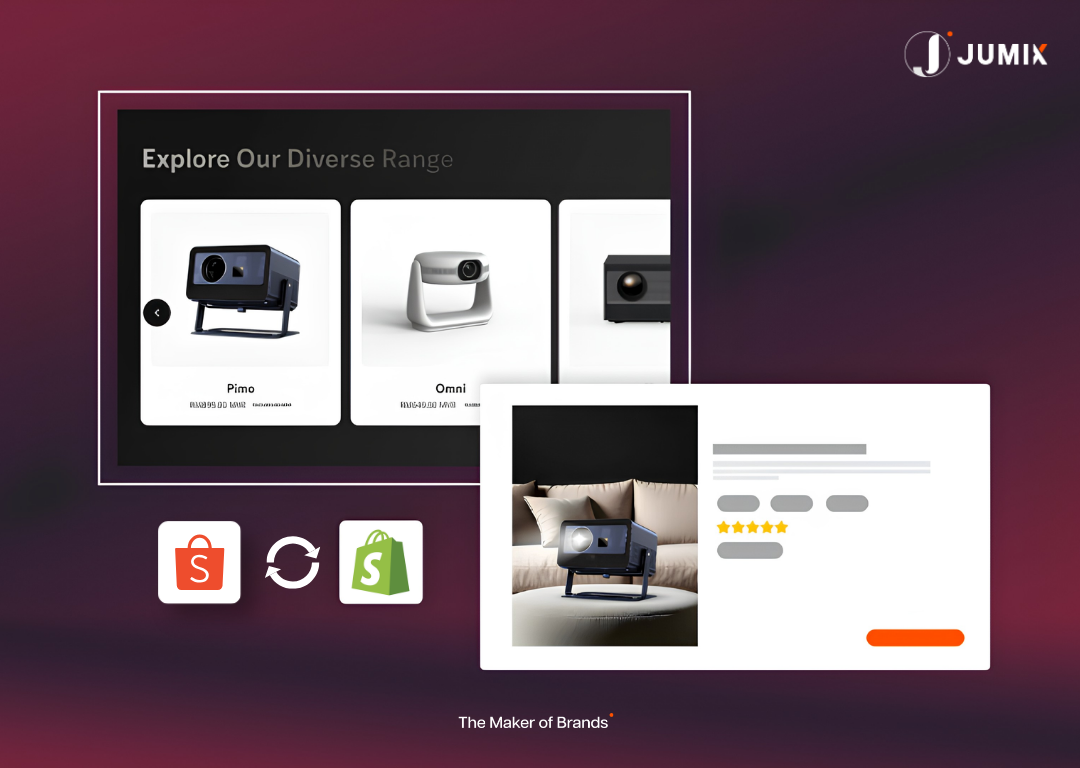
You don’t need to close your Shopee shop to start building your own store. Most Malaysian sellers who successfully transition run both channels in parallel for 3–6 months.
Keep Shopee active and fulfilling orders while your Shopify store gets built and indexed. Then start directing existing buyers to your own store through channels Shopee can’t intercept.
A simple insert in every Shopee package works well: “Get 10% off your next order at our website.” You’re beginning to own the customer relationship without disrupting current revenue.
Social media is the other lever. Drive your organic content traffic to your own store, not your Shopee page. Every follower who lands on your Shopify store and converts gives you a customer you can contact again.
After 3–6 months of parallel running, most sellers have enough repeat-buyer data from their own store to start shifting ad spend. The Shopee shop stays open but becomes a discovery channel rather than the primary sales engine.
Setting up your Shopify store with proper SEO from day one means Google starts ranking your store for your product category. That traffic costs nothing long-term.
SEO tips for your eCommerce store covers how to get this right from launch.
Frequently asked questions
Can I run Shopee and my own store at the same time?
Yes, and that’s exactly how most sellers make the transition. There’s no rule against selling on both channels simultaneously. Running them in parallel lets you maintain Shopee revenue while your own store builds momentum.
How long before my own store generates consistent sales?
Most stores see consistent direct sales within 1–2 months, assuming you’re actively driving traffic through social media, packaging inserts, and basic SEO. Stores that wait passively for traffic take much longer. The traffic doesn’t appear on its own. You have to redirect it.
Is Shopify expensive to maintain in Malaysia?
Shopify’s Basic plan starts at USD19/month (approximately RM85–90 at current exchange rates). There’s no per-sale commission beyond your payment gateway fee. For a seller losing 25–40% per order on Shopee, a fixed monthly platform cost is a significantly better deal once your store gets traction.
How long does it take to migrate from Shopee?
Building a Shopify store typically takes 4–8 weeks depending on your product catalog size, branding requirements, and any custom features you need. Product data migration is manageable: your listings and images can be exported and restructured for your new store.
How complicated is the process to migrate from Shopee to Shopify?
For most sellers, the technical side is the main barrier: configuring payment gateways, connecting delivery integrations, and making sure everything works before launch. An experienced agency like Jumix handles all of that. You focus on your products and brand; the technical build is covered.
Can my brand still be found if I move out from Shopee?
Yes. A well-built Shopify store ranks on Google for your product keywords, meaning customers can find you directly without going through Shopee. Google search traffic is yours permanently once you earn it. Shopee search visibility resets with every algorithm change or competitor ad spend.
Building a store that belongs to you
Shopee is a useful distribution channel. It’s also a fee structure that quietly takes 25–40% of every order, a platform that owns your customer relationships, and a marketplace that forces you to compete on price.
Your own Shopify store changes all three. You keep more margin per sale. Your customer list grows every time someone purchases directly.
Your brand has room to become something customers seek out, not just stumble across in a listing feed.
The move doesn’t have to be dramatic. Run both channels in parallel, redirect your repeat buyers, and let your own store grow while Shopee sales stay intact.

Jumix has helped Malaysian brands build Shopify stores designed for long-term direct-to-consumer growth.
If you’re ready to stop giving 25–40% to a marketplace, take a look at Jumix’s Shopify web design service.






Comments are closed for this article!