




The right ecommerce platform in Malaysia depends on your stage, not a single winner. Shopify suits fast-growing direct-to-consumer brands, WooCommerce suits sellers who want full cost control, and EasyStore or SiteGiant suit multi-channel sellers running Shopee, Lazada and TikTok Shop from one dashboard.
- Quick Takeaways
- What Actually Separates These Platforms
- Shopify vs WooCommerce: Cost and Control
- EasyStore and SiteGiant: the Local Option
- Marketplaces vs Your Own Store
- Which Ecommerce Platform in Malaysia Fits Your Stage
- What Changes in 2026: E-Invoice and AI Shopping Agents
- FAQ
Quick Takeaways
- Shopify’s Basic, Grow and Advanced plans run US$25, US$65 and US$399 a month, plus a 2%, 1% or 0.6% fee for using a third-party payment gateway (Source: Shopify, 2026). Per Shopify’s own supported-country documentation, Malaysia isn’t on the list for Shopify Payments, so that fee applies to every Malaysian store.
- WooCommerce charges nothing for the core software, but extensions typically cost US$29 to US$299 a year each, on top of hosting (Source: WooCommerce, 2026).
- Malaysia’s e-commerce income reached RM1,288.1 billion in 2024, up 8.8% from RM1,184.1 billion in 2023 (Source: Department of Statistics Malaysia, 2025).
- Businesses earning under RM3 million a year are now exempt from mandatory e-invoicing, effective 1 September 2026 (Source: The Star, 2026).
What Actually Separates These Platforms

Every platform conversation starts in the wrong place.
Sellers ask “Shopify or WooCommerce” before naming what kind of store they’re actually running.
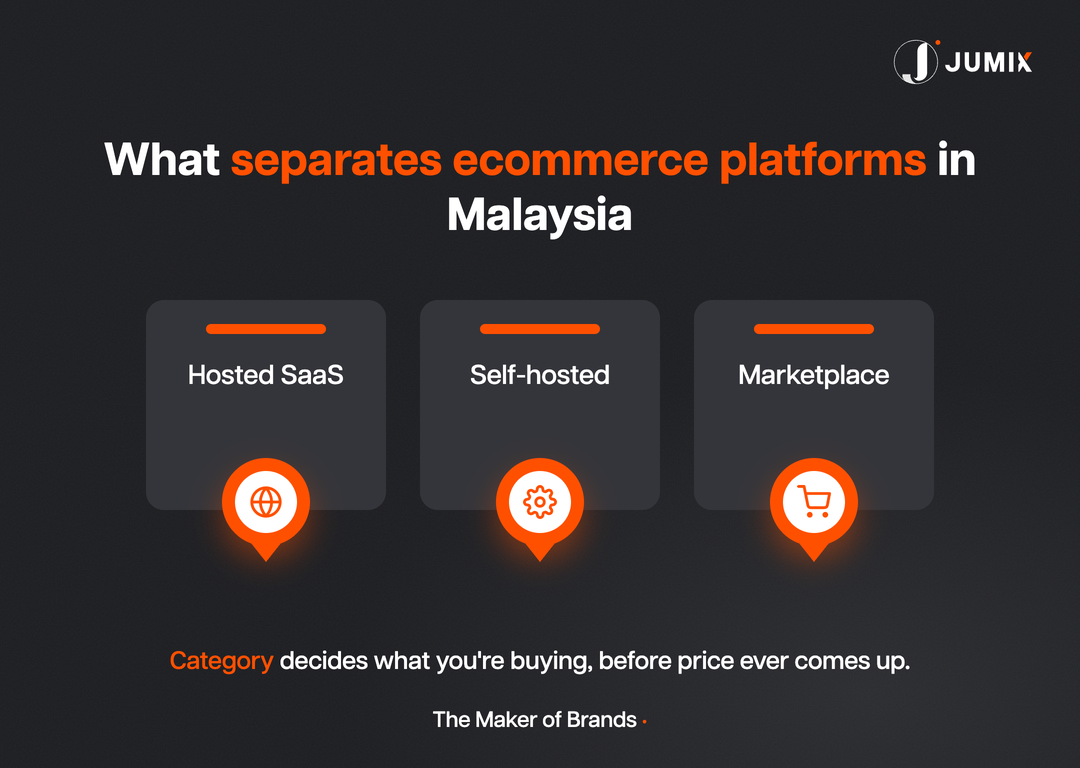
There are three categories that actually matter.
- Hosted SaaS platforms. Shopify, EasyStore, SiteGiant. You rent the infrastructure and pay a monthly fee for it.
- Self-hosted software. WooCommerce. You own the infrastructure and pay for hosting, security and a developer separately.
- Marketplaces. Shopee, Lazada, TikTok Shop. A rented shelf inside someone else’s store, not a website you own.
The category decides what you’re buying, before price enters the conversation.
| Platform | Model | Monthly cost (RM) | Marketplace sync |
|---|---|---|---|
| Shopify | Hosted SaaS | RM110–RM1,750, plus a gateway fee | Via apps |
| WooCommerce | Self-hosted | RM0 license, roughly RM150–RM1,300/year hosting and extensions (varies by host and plugin choice) | Via plugins |
| EasyStore | Hosted SaaS | RM249–RM1,199 | Built in, 5+ channels from Standard |
| SiteGiant | Hosted SaaS | Tiered by store size, quote on enquiry | Built in, multichannel by design |
| Marketplace only | Rented shelf | No monthly fee, per-order commission instead | Not applicable, it’s not your store |
Two stores on the same platform can still cost wildly different amounts to run. Category tells you the shape of the bill. Scope tells you the size of it.
Pick the category first. The specific platform inside it is the easier decision.
Shopify vs WooCommerce: Cost and Control
Shopify and WooCommerce answer the same question with opposite trade-offs.
Shopify bundles hosting, security and updates into one monthly plan. You pay someone else to keep the lights on.
WooCommerce is a free WordPress plugin. Nothing to license. Hosting, SSL and a developer all sit on your side of the ledger instead.
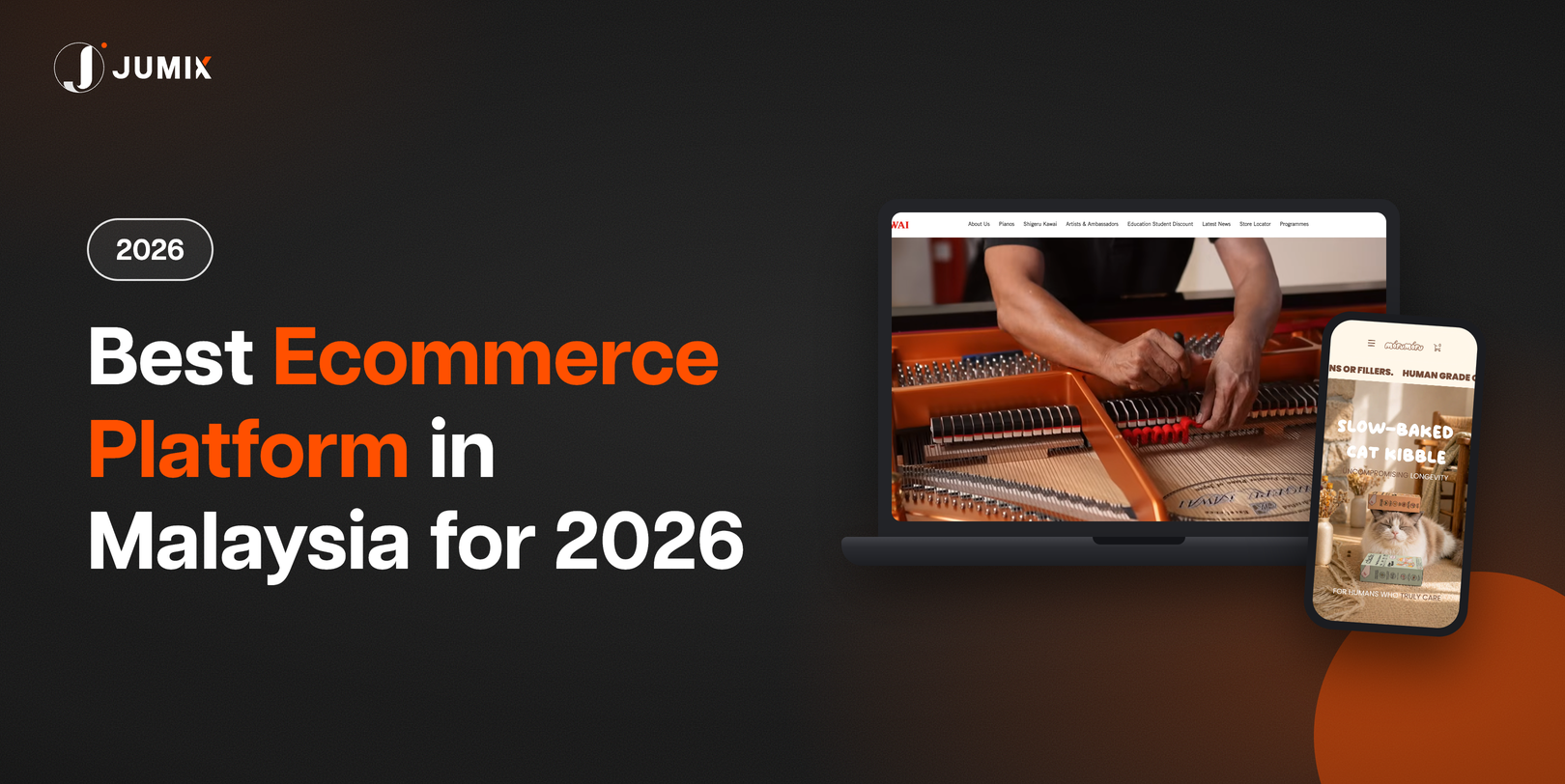
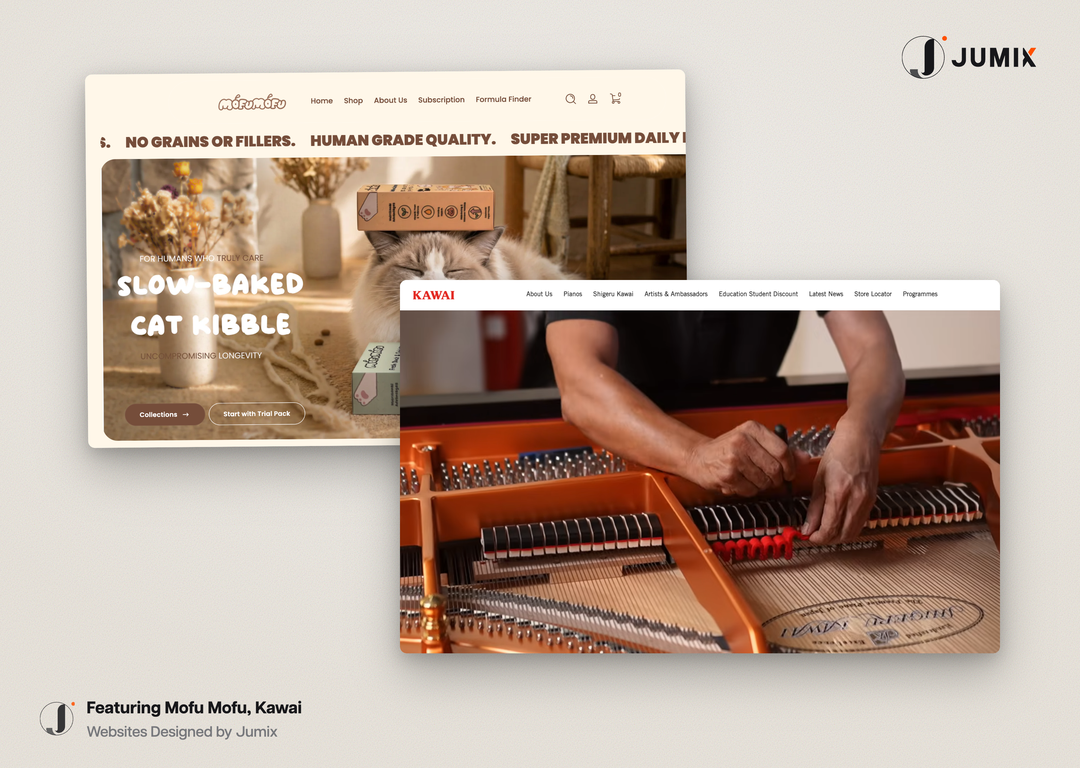
Mofu Mofu Pet Food and Kawai Malaysia both run on Shopify. In my experience, that decision is rarely about the price tag.
It’s usually the app ecosystem. Getting to a working store fast beats building the same feature set from scratch.
That speed has a ceiling. Every feature Shopify’s plan doesn’t cover means another app. Every app is another line on the monthly bill.
WooCommerce flips that. Slower to configure at first, because someone has to build what Shopify’s app store hands you ready-made.
Once it’s built, though, there’s no plan fee capping how far you can customize it.
If it were my money: Shopify for a brand that needs to launch and iterate fast. WooCommerce for one that already knows what it wants and plans to run the store for years.
Our WooCommerce vs Shopify cost comparison breaks the 3-year total cost down stage by stage. I won’t repeat that math here.
EasyStore and SiteGiant: the Local Option
Shopify and WooCommerce dominate the conversation. Neither is built for a seller running four sales channels at once.
EasyStore and SiteGiant are Malaysian-built, and multichannel is the whole premise, built in from day one.
EasyStore’s Standard plan starts at RM249 a month and already connects Shopee, Lazada and TikTok Shop alongside your own webstore (Source: EasyStore, 2026). SiteGiant runs separate ERP and Webstore tiers, from a Mini starter plan up to an ERP Premium tier for high-volume sellers, priced on enquiry (Source: SiteGiant, 2026).
Both centralize inventory, orders and pricing across channels from one screen. That’s the actual product. The webstore is almost secondary.
My two cents: if you’re already selling well on Shopee, you just need one inventory screen instead of four browser tabs.
EasyStore or SiteGiant does that job better than forcing Shopify into a marketplace-sync role it was never built for.
Where they lose is brand storytelling. A webstore built as the fourth channel of a multichannel tool reads like exactly that.
Fine for a seller optimizing operations. Limiting for a brand trying to look like a brand.
Marketplaces vs Your Own Store

Shopee, Lazada and TikTok Shop are a channel, not a foundation.
A marketplace hands you traffic and takes a commission for it. It also owns the customer relationship, the pricing display and the app you’re renting shelf space inside.
Our Shopee seller fees breakdown covers exactly what that commission costs in 2026. Our TikTok Shop vs your own store comparison covers the same trade-off for TikTok specifically.
The pattern repeats across every marketplace: use it for discovery, not as the only place your business exists.
None of the platforms in this article ask you to choose one over the other. Most of Jumix’s ecommerce clients run their own store as the brand home, then feed it traffic from whichever marketplace their category actually shops on.
Which Ecommerce Platform in Malaysia Fits Your Stage
Stage matters more than any feature comparison chart.
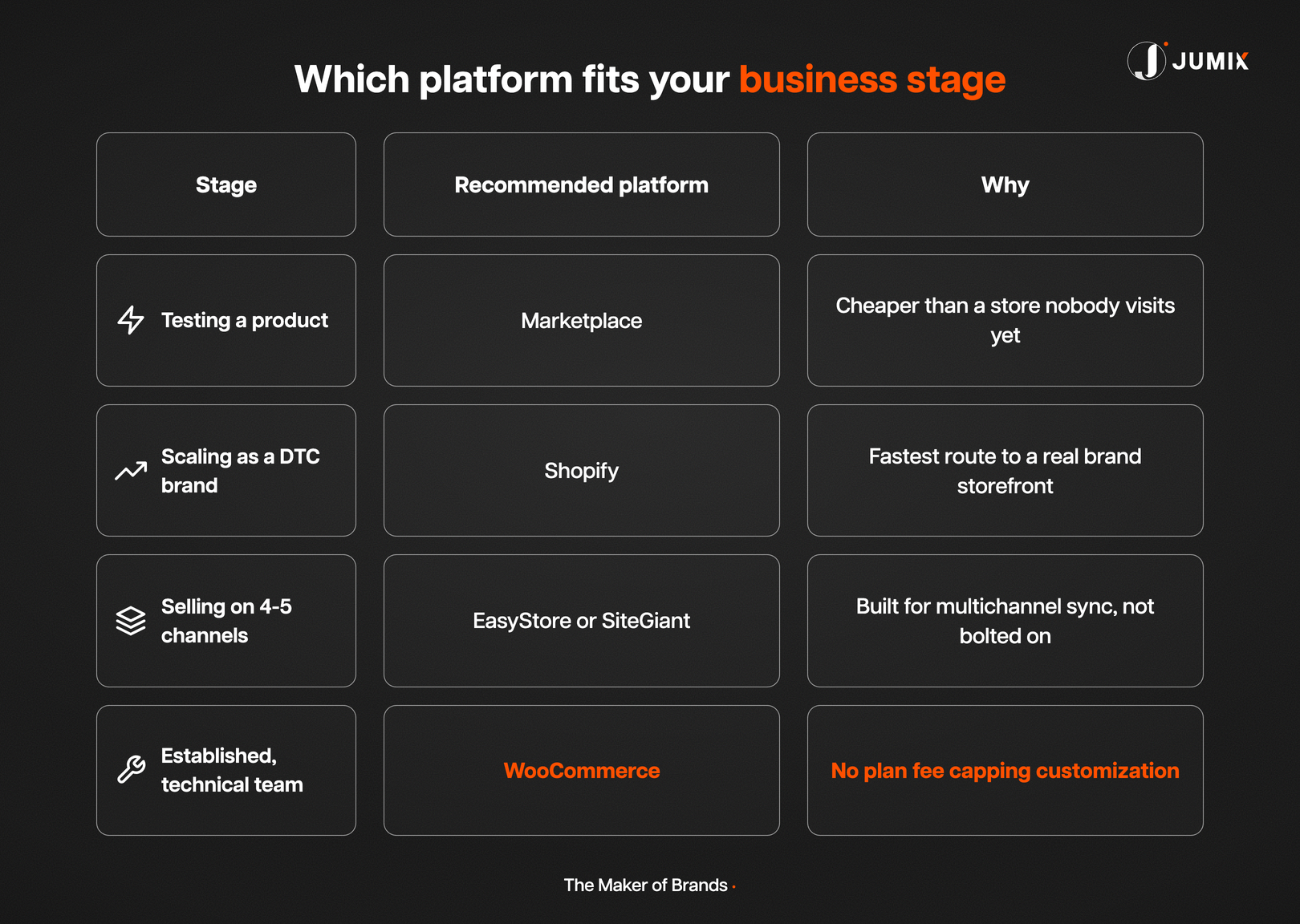
- Testing a product, no brand built yet. Start on marketplaces. They hand you traffic your own store can’t generate on day one, and the commission is cheaper than a store nobody visits.
- Scaling as a direct-to-consumer brand. Move to Shopify. Mofu Mofu made exactly this jump once Shopee and Lazada dependency capped its pricing and storytelling.
- Selling across four or five channels already. EasyStore or SiteGiant solves the operational headache Shopify’s app ecosystem wasn’t designed to solve cleanly.
- Established, technical team on staff, long time horizon. WooCommerce earns its setup cost back once you’re customizing past what any hosted plan allows.
Get the stage wrong and you’ll rebuild within two years. Rebuilding always costs more than picking correctly the first time.
What Changes in 2026: E-Invoice and AI Shopping Agents
Two 2026 developments change how you should weigh a platform, beyond price.
The government raised the e-invoice exemption threshold from RM1 million to RM3 million in annual turnover, effective 1 September 2026 (Source: The Star, 2026). That frees more than 1.1 million businesses from mandatory compliance.
Below that threshold, e-invoicing stays optional. Above it, your own webstore’s checkout needs to generate compliant invoices.
A marketplace already handles that for sales made on its own app. Our e-invoice compliance checklist covers what your own store needs to do instead.
The second shift is quieter: AI shopping agents are starting to check out on a customer’s behalf.
An agent needs clean product data, structured pricing and a checkout it can actually reach. Shopify and WooCommerce both support the schema markup and API access that make a store legible to an agent.
A pure marketplace listing gives you none of that control. Our AI shopping agents readiness framework covers what to fix first.
Platform choice used to be about cost and design. It’s now also about whether an AI agent can complete a purchase on your store without getting stuck.
FAQ
What is the best ecommerce platform in Malaysia in 2026?
There isn’t one universal answer. Shopify suits a scaling DTC brand, WooCommerce suits a business that wants full long-term control, and EasyStore or SiteGiant suit a seller already running several marketplace channels at once.
Is Shopify or WooCommerce better for a Malaysian business?
Shopify is faster to launch and easier to maintain, for a monthly fee. WooCommerce has no license fee but costs more in hosting and developer time. Choose based on technical capacity and how long you plan to run the store, not price alone.
Can I sell on Shopee and Lazada from my own ecommerce platform?
Yes. Shopify and WooCommerce both connect to marketplace channels through apps or plugins, and EasyStore and SiteGiant build that sync in from the start. None of these platforms require choosing a single sales channel.
Do I need e-invoicing if I only sell through my own ecommerce website?
Only once your annual turnover passes RM3 million, under the threshold that took effect 1 September 2026. Below that, e-invoicing stays optional for most businesses. Marketplaces handle e-invoicing for sales made on their own app regardless of your turnover.
Which ecommerce platform is easiest for a first-time Malaysian seller?
Start on a marketplace to test demand without building anything. Once a product proves itself, Shopify is the fastest route to a proper webstore, since its app ecosystem covers most of what a new brand needs out of the box.
Conclusion
Name your stage first: testing, scaling as a brand, multichannel, or established with a technical team.
The platform question answers itself once that’s clear.
At Jumix, we’ve built on Shopify, WooCommerce and everything in between, and the projects that go smoothly are the ones where the platform matched the stage before a single line of code got written.
If you’re weighing Shopify against WooCommerce or a local multichannel tool, our ecommerce team can scope the right one for where your business actually is.





Comments are closed for this article!