


Abandoned cart recovery in Malaysia means winning back shoppers who added items but didn’t pay, usually through WhatsApp, email or SMS follow-up. Globally 70.22% of online carts get abandoned (Source: Baymard Institute), driven by unexpected costs, COD preference and payment friction unique to Malaysian shoppers.
- Quick Takeaways
- Why Malaysian Shoppers Abandon Carts
- The COD and E-Wallet Trust Gap
- The WhatsApp Recovery Framework
- Mistakes Malaysian Stores Keep Making
- What a Good Recovery Rate Looks Like
- FAQ
Quick Takeaways
- The global cart abandonment rate averages 70.22% across 50 studies (Source: Baymard Institute).
- Unexpected costs at checkout cause 40% of abandonments, the single biggest reason (Source: Baymard Institute).
- PayNet processed 8.44 billion digital transactions in Malaysia in 2025 (Source: PayNet, 2025).
- Cash on delivery still covers 14% of Malaysian e-commerce payments (Source: Pos Malaysia).
- WhatsApp follow-up outperforms email for Malaysian recovery flows because open rates on WhatsApp run far higher than email.
Most Malaysian store owners treat an abandoned cart as a lost sale.
Really, it’s a shopper who got close, then hit friction.
Fix the friction and follow up right, and a real slice of that traffic comes back and pays.
Why Malaysian Shoppers Abandon Carts
Cart abandonment is a global habit, made worse here by a few local ones.
Globally, 70.22% of online carts get abandoned, based on 50 documented studies (Source: Baymard Institute).
Most Malaysian shopping happens on a phone, on a mobile network, often mid-commute. Checkout friction that a desktop shopper shrugs off is often the exact moment a mobile shopper gives up and closes the tab.
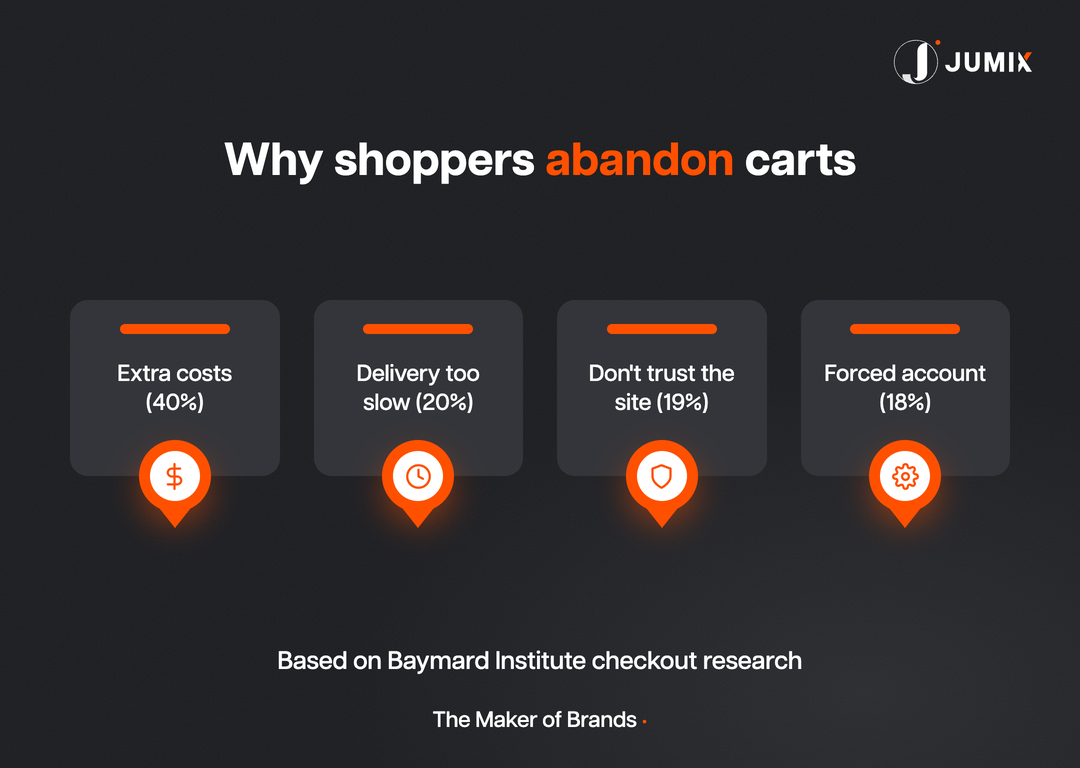
The Baymard Institute has tracked checkout abandonment reasons for years across thousands of live sessions. The top reason worldwide: unexpected costs.
| Reason for abandoning | Share of shoppers |
|---|---|
| Extra costs too high (shipping, tax, fees) | 40% |
| Delivery too slow | 20% |
| Didn’t trust the site with card details | 19% |
| Forced to create an account | 18% |
| Checkout too long or confusing | 17% |
(Source: Baymard Institute, 2026)
Notice what’s missing from that list: price.
The checkout surprised them, stalled them, or spooked them. Price rarely enters into it.
That’s a fixable problem, not a pricing problem.
The COD and E-Wallet Trust Gap
Here’s where Malaysia diverges from the Baymard averages.
Digital payments are surging. PayNet processed 8.44 billion transactions across the country in 2025, with non-bank transaction volume (e-wallets included) growing 71.7% year on year (Source: PayNet, 2025). DuitNow QR touchpoints alone now exceed 3 million nationwide.
Yet cash on delivery hasn’t died. It still covers 14% of e-commerce payments nationally, and cash in general stays the preferred option for 63.5% of Malaysians outside the Klang Valley (Source: Pos Malaysia).
Trust is the real reason.
A shopper who’s never bought from your store before doesn’t know if you’ll actually ship. Paying upfront on an unfamiliar checkout page feels like a risk they’d rather not take.
If your store only accepts card and FPX, that hesitant shopper adds to cart, gets to payment, and closes the tab.
You gave them one way to pay, and it was the one that felt riskiest. That’s why they left.
Offer DuitNow QR, a Malaysian e-wallet, and COD where your delivery partner supports it. Each option removes one excuse to leave.
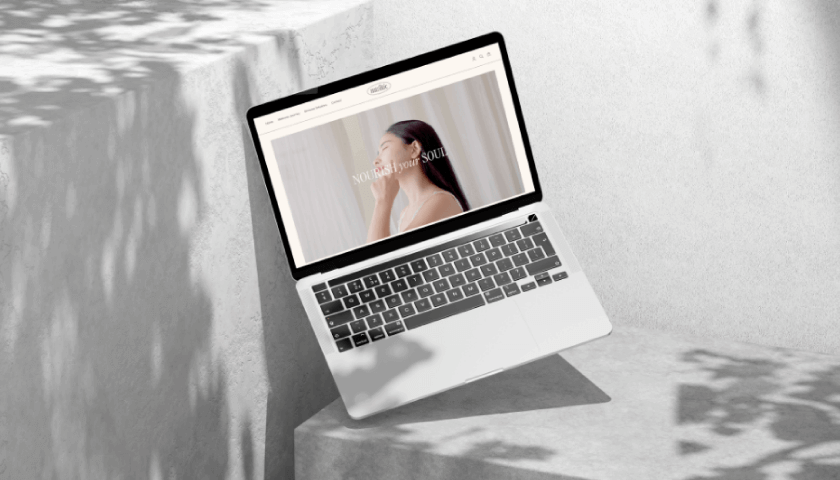
Jumix built Thirtydots from zero with no existing customer base to lean on. A clean, minimal Shopify checkout was part of how a brand-new sleepwear label earned first-time buyer trust fast enough to convert. Read more about our Malaysian payment gateway options if you’re deciding which methods to add first.
The same logic applies to gateways like Fiuu and Adaptis. Both support FPX bank transfers and card payments, and both are built for the Malaysian market specifically rather than bolted on as an afterthought.
A checkout that recognizes a Malaysian bank logo feels safer than one showing a foreign processor’s branding. Small detail. Real effect on whether a nervous first-time buyer hits pay.
The WhatsApp Recovery Framework
Email recovery works. It just works worse in Malaysia than it does in markets where inboxes still matter.
Malaysians check WhatsApp constantly and let promotional email pile up unread. A recovery message that lives in WhatsApp gets seen. One buried in Gmail’s Promotions tab doesn’t.
Here’s the sequence that works for most Shopify and WooCommerce stores selling to Malaysian shoppers.
- Capture the phone number early. Ask for it at cart, not just at checkout, so you have a way to follow up even if they never reach payment.
- Send the first message within 1 hour. A short, human line beats a templated discount blast. “Hi, saw you left [item] in your cart. Anything holding you back?”
- Follow up again at 24 hours if there’s no reply, this time with a direct link straight back into their cart.
- Offer a small, time-limited incentive on the third touch, not the first. Leading with a discount trains shoppers to abandon on purpose.
- Stop after three messages. A shopper who hasn’t responded by then isn’t going to convert from a fourth nudge. They’ll just block your number.
Apps like Alintro build this flow directly into Shopify, connecting through either WhatsApp Web QR or the official Meta Cloud API depending on how much volume you need (Source: Shopify App Store).
If you’re on WooCommerce, the equivalent plugins exist but need more manual setup. Weigh that against the platform decision itself in our WooCommerce vs Shopify comparison.
Mistakes Malaysian Stores Keep Making
Most cart recovery setups fail quietly. Nobody notices until you check the numbers months later.
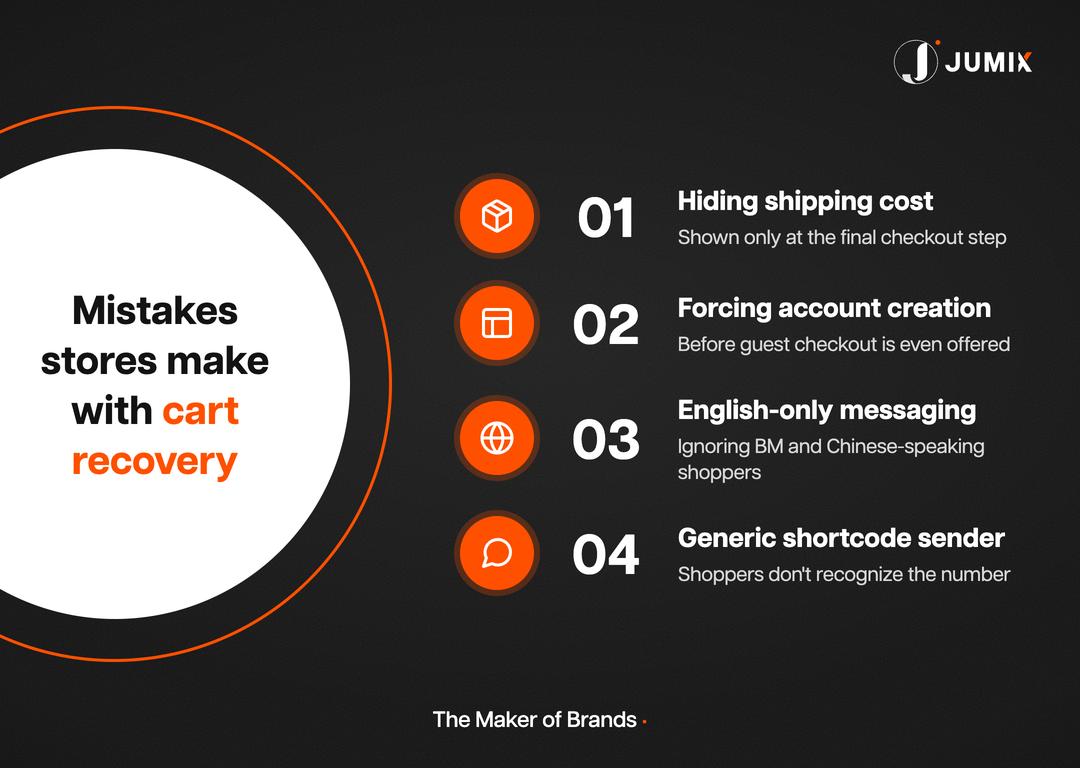
- Hiding shipping cost until the final step. Show it on the product page or cart, not after 3 minutes of checkout typing.
- Forcing account creation before checkout. Guest checkout should always be the default, with an account offered after the sale, not before.
- Only messaging in English. A Bahasa Malaysia or Chinese follow-up often converts better with shoppers who browsed in that language.
- Sending recovery messages from a generic shortcode. Shoppers ignore numbers they don’t recognize. A named WhatsApp Business account with your logo builds instant recognition.
- Never testing the checkout on a mid-range Android phone. A checkout that loads fine on your iPhone over office Wi-Fi can crawl on a customer’s phone over mobile data in Klang Valley traffic.
I’ve watched founders spend RM3,000 a month on ads while their checkout quietly bled a third of that traffic before payment. Fix the leak before you pour in more water.
If you’re vetting a developer to fix this rather than doing it yourself, our Shopify expert vetting checklist covers what to ask before you pay a deposit.
What a Good Recovery Rate Looks Like
You will never recover every abandoned cart. Don’t chase that number.
As a rule of thumb, a well-run recovery sequence wins back somewhere between one in ten and one in five abandoned carts. That’s not a Malaysia-specific benchmark; treat it as a floor to beat, not a ceiling to admire.
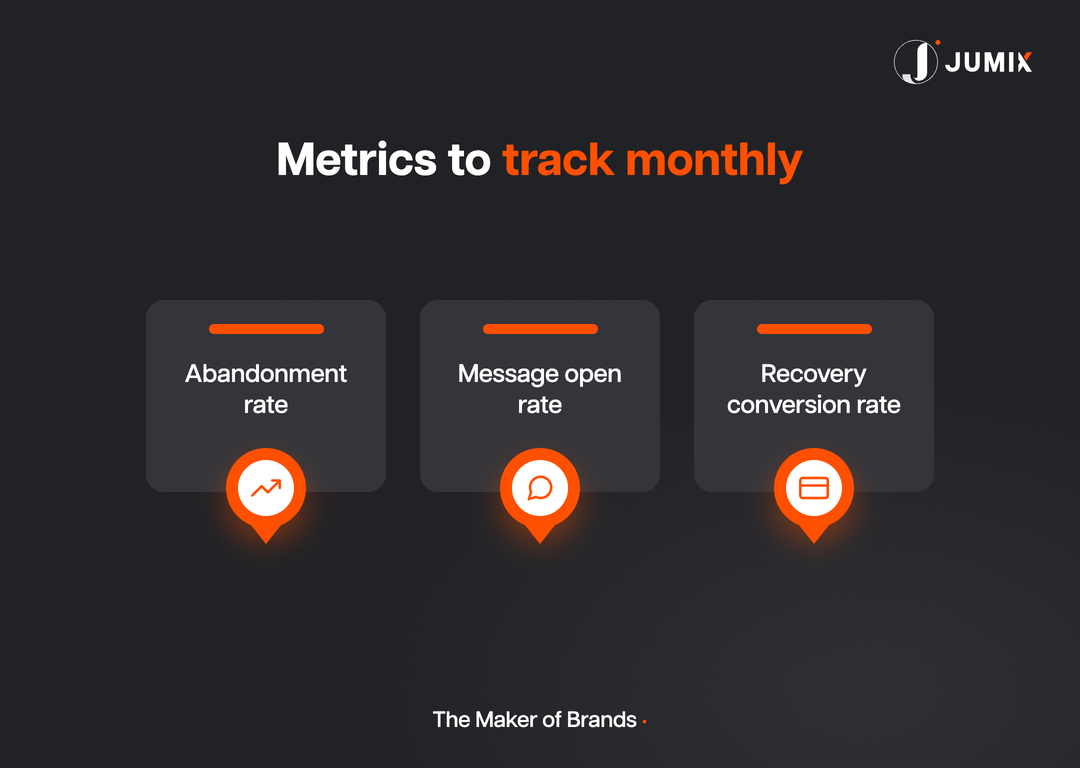
Track three numbers monthly: cart abandonment rate, recovery message open rate, and recovery conversion rate. If open rate is high but conversion is low, your message is being seen and ignored. That’s a payment-method or checkout-friction problem, not a messaging problem.
Segment your abandoners too. A shopper who bailed at the payment step needs a different message than one who dropped off during shipping cost entry.
The first shopper needs reassurance about payment safety. The second needs to know delivery isn’t as expensive as they feared. Sending the same generic message to both wastes the one shot you get.
If it were my money, I’d fix checkout friction before I spent another ringgit on recovery tooling. A great WhatsApp sequence can’t save a checkout that scares people off in the first place.
Once your checkout is clean, recovery messaging becomes the multiplier, not the fix.
FAQ
What is a normal cart abandonment rate for a Malaysian online store?
Expect somewhere close to the 70.22% global average (Source: Baymard Institute). A rate above 85% usually points to a specific checkout problem worth investigating.
Does offering cash on delivery actually reduce abandonment?
Yes, for first-time buyers especially. COD removes the upfront payment risk that makes unfamiliar checkouts feel unsafe, which is why it still covers a meaningful share of Malaysian online orders (Source: Pos Malaysia).
Is WhatsApp recovery better than email for Malaysian shoppers?
In practice, yes. Malaysians check WhatsApp far more often than promotional email, so a well-timed WhatsApp message gets read where an email often doesn’t.
How many recovery messages should I send before giving up?
Three is the practical limit. A fourth message rarely converts and risks the shopper blocking your number entirely.
Should the first recovery message include a discount?
No. Lead with a helpful nudge, not a discount. Save the incentive for the final message, otherwise shoppers learn to abandon carts on purpose to trigger a coupon.
Conclusion
Friction wins more of these battles than changed minds ever do.
Fix the checkout first: show costs early, accept the payment methods Malaysian shoppers actually trust, and keep it fast on a mid-range phone.
Then layer a WhatsApp recovery sequence on top, timed right and never leading with a discount.
At Jumix, we build Shopify stores around this exact problem: checkouts Malaysian shoppers trust enough to finish. Get that right and recovery messaging becomes a bonus, not a rescue mission.




Comments are closed for this article!