






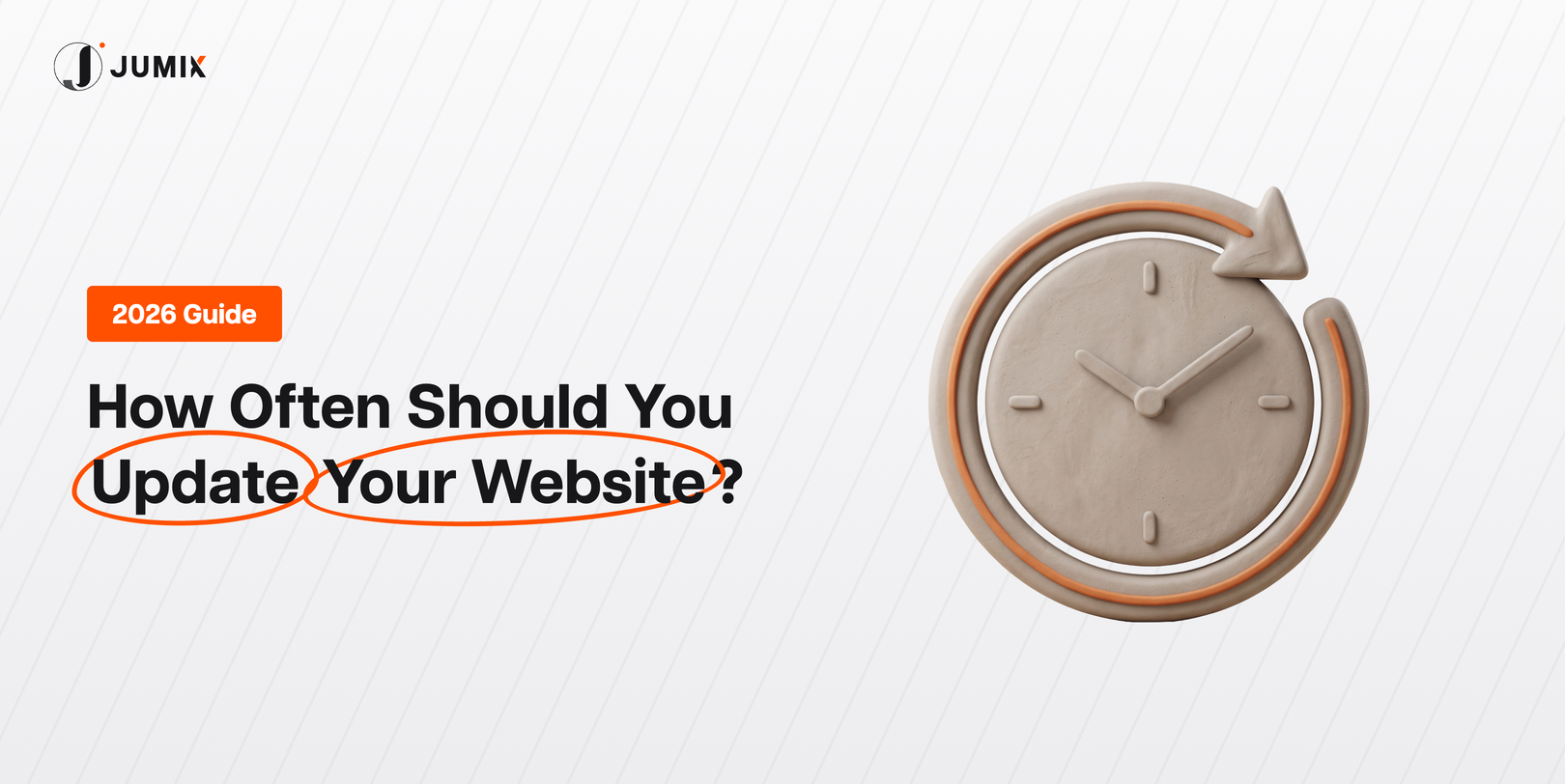
Update pricing the moment it changes. Refresh evergreen guides every 6 to 12 months, and fast-moving topics every 1 to 3 months. Google revisits pages based on real change, and AI search now cites fresher pages than standard results do. A new date with no real change helps neither.
- Quick Takeaways
- Why Updating Matters More in 2026
- How Often to Update Each Part of Your Site
- What Counts as a Real Update
- A Realistic Update Habit for an SME
- FAQ
Quick Takeaways
- Google’s crawlers learn how often a page changes. They revisit it on that schedule, so a page that never changes gets checked less (Source: Google).
- Content cited by AI tools is 25.7% fresher, on average, than pages ranking organically on Google. ChatGPT’s citations run 393 to 458 days newer than Google’s own top results (Source: Ahrefs, 2025).
- Google flags changing a page’s date without changing its content. It calls this a manipulation tactic, not a quality signal (Source: Google).
- In a widely cited HubSpot case study, rewriting old posts lifted their organic traffic by 106% and more than doubled the leads those posts generated (Source: HubSpot, 2025).
- Pricing and compliance pages need updates the moment facts change. Evergreen guides can wait 6 to 12 months.
Why updating your website matters more in 2026

Google doesn’t crawl every page on the same schedule.
Its crawlers learn how often a page changes. Then they revisit it on that schedule (Source: Google).
A page that hasn’t changed in 3 years gets checked less and less.
That means fewer chances for Google to notice your new pricing.
Or your newest case study. Or the fact that you now serve Penang as well as KL.
AI search raises the stakes further.
Pages cited by AI tools are 25.7% fresher, on average, than pages ranking organically for the same query (Source: Ahrefs, 2025).
ChatGPT’s own citations run 393 to 458 days newer than Google’s top 10.
See our breakdown of how Malaysians search with AI for the query side of this.
An AI assistant picks a source in milliseconds.
A page that still says “2023” loses before anyone reads a word of it.
How often to update each part of your website
Not every page decays at the same speed.
A pricing page goes stale the day you raise your rates.
An explainer on what SEO is barely ages at all.
| Page type | Update trigger | How often |
|---|---|---|
| Pricing and packages | Rates or scope change | Immediately |
| Legal and compliance pages | New regulation (e-invoice, SST rate) | Immediately |
| Homepage and service pages | Positioning or offer changes | Every 6 months |
| Case studies and portfolio | New client result | As it happens |
| Evergreen blog guides | New data, examples, or rules | Every 6 to 12 months |
| Fast-moving topics (AI, platforms, tax) | Industry or platform change | Every 1 to 3 months |
Malaysian SMEs face more of these triggers than most.
E-invoice rollout phases. SST rate changes. New payment gateway names.
Each one is a reason a page needs attention, not just a blog post.
Treat every regulation change as a content trigger, not a compliance checkbox.
What counts as a real update (and what doesn’t)
Google explicitly checks for this trick.
Its own guidance asks a pointed question: “Are you changing the date of pages to make them seem fresh when the content has not substantially changed?” (Source: Google).
A new “last updated” stamp on the same old pricing table fools nobody, including the algorithm.
A real update changes something a reader can act on.
A new number. A corrected fact. A new section answering a question people now actually ask.
HubSpot’s own content team showed the payoff of doing this properly, in a case study still widely cited today.
They rewrote old blog posts with current information. Organic traffic on those posts rose 106%, and leads from them more than doubled (Source: HubSpot, 2025).
They made what already existed true again.
What a realistic update habit looks like for an SME
I’ve watched plenty of Malaysian businesses redesign the whole website every few years, instead of letting one platform evolve continuously.
That’s backwards. A full redesign costs more and takes months. A content habit takes an afternoon.
If it were my site, I’d run a quarterly pass.
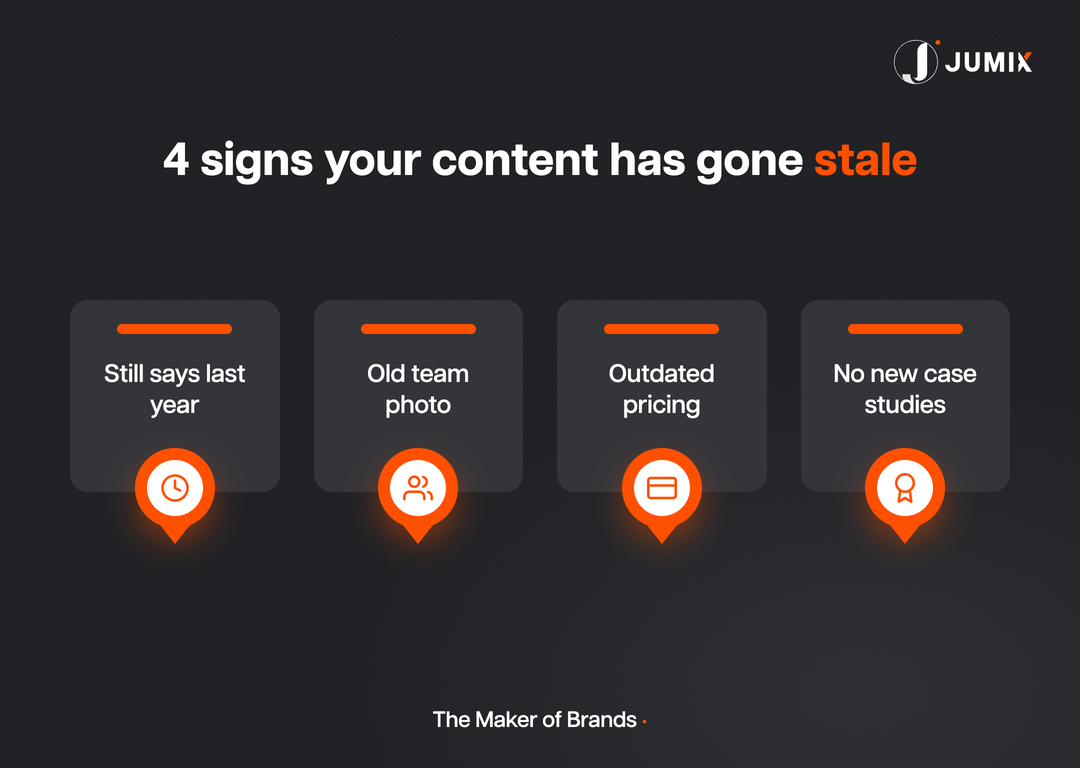
Check every price, every team photo, every “as of” claim.
Then add one thing readers are now asking that the page doesn’t answer yet.
That’s roughly what our own website maintenance retainers do for clients, from RM199 a month for a basic plan.
A fixed monthly check catches outdated pricing, broken links and stale claims before a customer or an AI crawler finds them first.
It costs far less than rebuilding the site again in 3 years.
Prefer to hand the whole AI-visibility question to a specialist? See our guide to getting recommended by ChatGPT for the other half of this equation.
FAQ
Does changing the publish date without changing the content help SEO?
No. Google names this a manipulation signal. It does not change how often a page gets crawled or cited.
How often should a blog post be updated?
Every 6 to 12 months for evergreen topics. Every 1 to 3 months for fast-moving subjects like AI tools or tax rules.
Does Google know when a page was last meaningfully updated?
Yes. Google’s crawlers compare each visit against the last version they saw. They adjust based on real change, not the date field alone.
Can updating old content ever hurt rankings?
Rarely, and only when the update thins the content out. Removing detail, stripping examples, or shortening an answer that used to be complete.
Is writing new content better than updating old content?
Not necessarily. In the same HubSpot study, most monthly blog traffic came from older posts, not new ones.
The bottom line
The page is still true. That’s what freshness proves.
Google revisits pages based on real change. AI search now cites noticeably fresher sources than standard results do.
Pick one page this week. Check if every price and every “as of” line is still accurate.
If it isn’t, that’s the update that makes a difference.
Jumix’s web design team builds sites around this habit from day one, so updating stays a quarterly task instead of a 3-year rebuild.






Comments are closed for this article!