


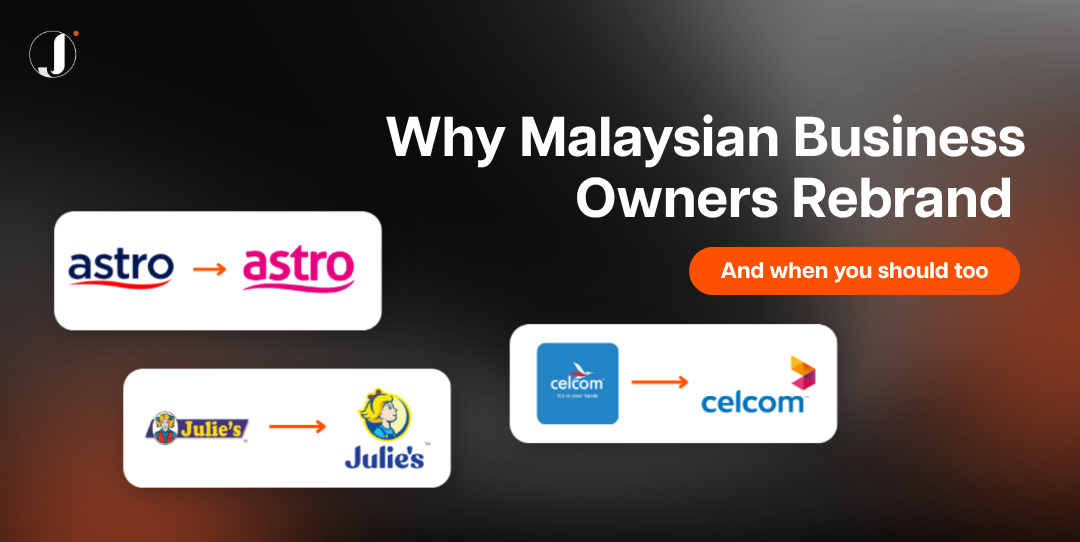
Malaysian businesses rebrand when their identity stops matching their market: an unchanged look after 10+ years, a brand that reads older than the customers it wants, or a new market the old identity can’t stretch into. A rebrand makes sense when the mismatch is costing you customers. It doesn’t make sense when you’re just bored of your own logo.

- Quick Takeaways
- Why this question keeps coming up
- The 3 real reasons Malaysian businesses rebrand
- Signs your brand identity is holding you back
- Case study: rebranding for a younger audience
- What rebranding actually costs in Malaysia
- When you shouldn’t rebrand
- Frequently Asked Questions
- Conclusion
Quick takeaways
- Most Malaysian businesses don’t rebrand too often. They rebrand too late, usually a few years after the warning signs showed up.
- The 3 real triggers: a decade with no changes, a younger audience you can’t reach, or a new market your old identity can’t fit.
- A full brand identity in Malaysia typically runs RM5,000 to RM25,000, depending on scope. Logo-only work sits lower.
- Yoy Natura’s rebrand shows what it looks like to win a younger audience without losing the customers you already have.
- Not every business needs a rebrand. Some need a refresh. Knowing the difference saves you money and disruption.
Why this question keeps coming up
Same logo since 2014. Same tagline. Same colour palette that felt fresh when Instagram was still mostly squares.
A lot of Malaysian business owners are sitting on a brand like this right now.
It’s not broken. It still “works.” Customers still find the shop, the website, the WhatsApp number.
But somewhere along the way, the market moved and the brand stayed exactly where it was.
That gap is expensive. A brand that looks 10 years old tells new customers you might be 10 years behind too, even if your product, service, or kitchen never stopped improving.
This post breaks down when a rebrand actually makes sense for a Malaysia business, what it costs, and when you’re better off leaving it alone.
None of this is about chasing trends. It’s about closing a gap that’s already costing you customers, even if nobody on your team has said it out loud yet.
The 3 real reasons Malaysian businesses rebrand
Most rebrand decisions in Malaysia trace back to one of 3 triggers. Not a feeling. A specific business reason.
1. A decade with no real changes
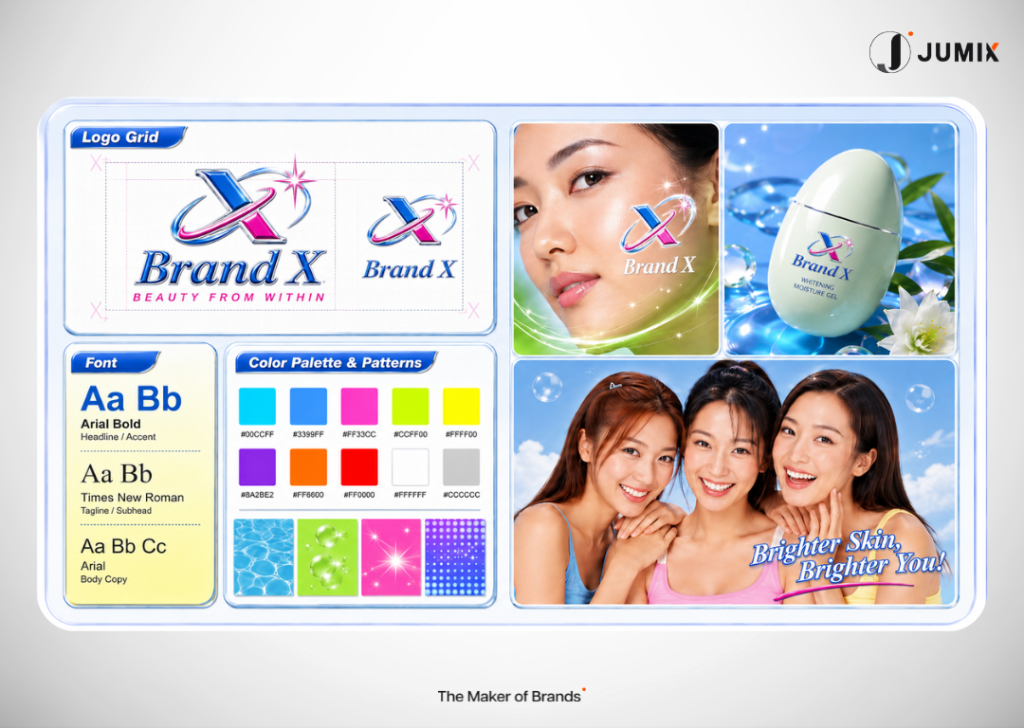
Ten years is long enough for an entire design era to come and go.
Fonts trend, then date. Colours that read “premium” in 2016 read “tired” by 2026.
If your visual identity hasn’t moved while your product line, pricing, or team has grown, the brand and the business have quietly drifted apart.
Customers feel that mismatch even if they can’t name it.
2. You need to reach a younger audience
Your original customers are loyal. They’re also ageing alongside your brand.
If a younger, digital-first crowd scrolls past your brand without a second look, that’s not a marketing problem.

That’s a brand identity Malaysia businesses outgrow when they don’t refresh how they look and talk.
3. You’re entering a new market or category
An identity built for one product, one price point, or one region doesn’t always stretch.
Launching premium when you built your name on “affordable” confuses everyone. So does expanding regionally with a brand that only makes sense locally.
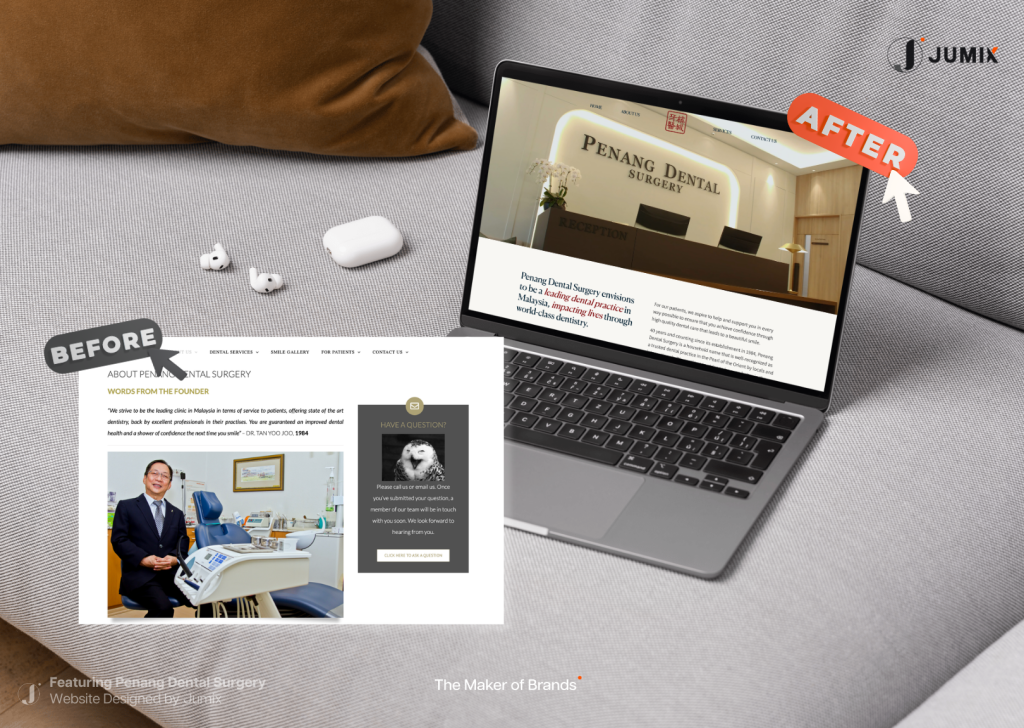
Take a clinic chain growing from one branch to eleven. A logo and tone built for a single neighbourhood clinic doesn’t automatically read as trustworthy across KL and Selangor. Scale changes what the brand needs to communicate, even when the service itself hasn’t changed.
Brand consistency matters once you’ve rebranded, but consistency around the wrong identity just locks in the mismatch for longer.
Signs your brand identity is holding you back
Three triggers tell you why. These signs tell you it’s actually happening to you right now.
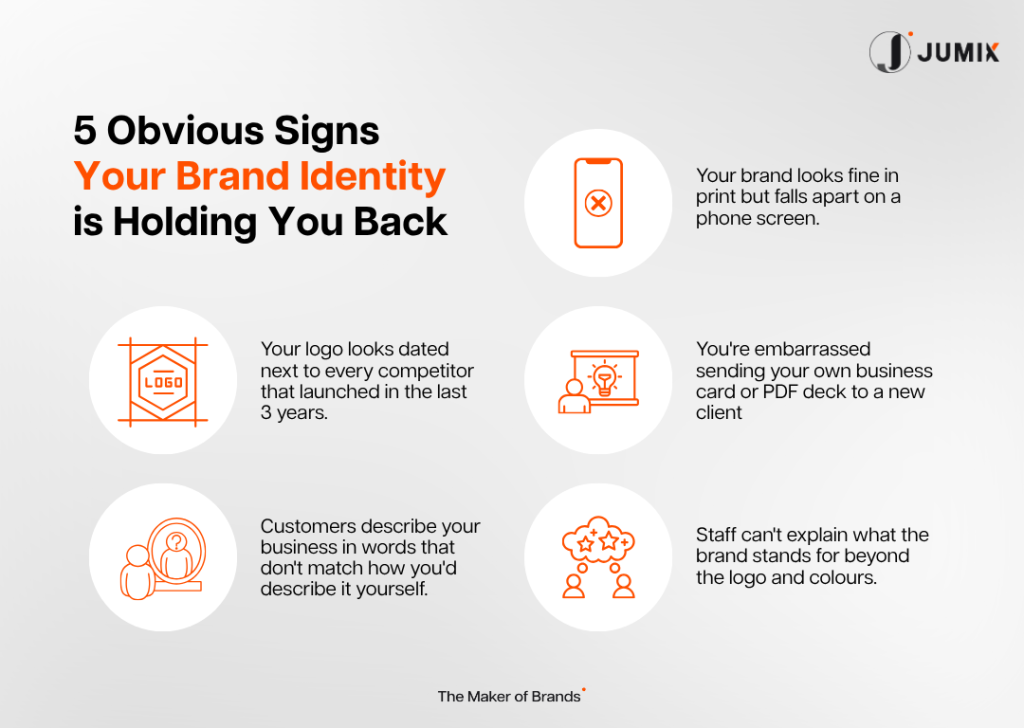
- Your logo looks dated next to every competitor that launched in the last 3 years
- Customers describe your business in words that don’t match how you’d describe it yourself
- Your brand looks fine in print but falls apart on a phone screen
- You’re embarrassed sending your own business card or PDF deck to a new client
- Staff can’t explain what the brand stands for beyond the logo and colours
One of these signs is normal. Two or three together means the brand is actively working against the business.
This shows up online before anywhere else. Web design trends in Malaysia move fast, and an old brand identity makes even a brand-new website look like it’s wearing borrowed clothes.
Watch how your own team talks about the brand too. If staff default to explaining the logo instead of what the business stands for, the identity has stopped doing its job.
A brand is supposed to do that explaining for you, automatically, before anyone opens their mouth.
Case study: rebranding for a younger audience
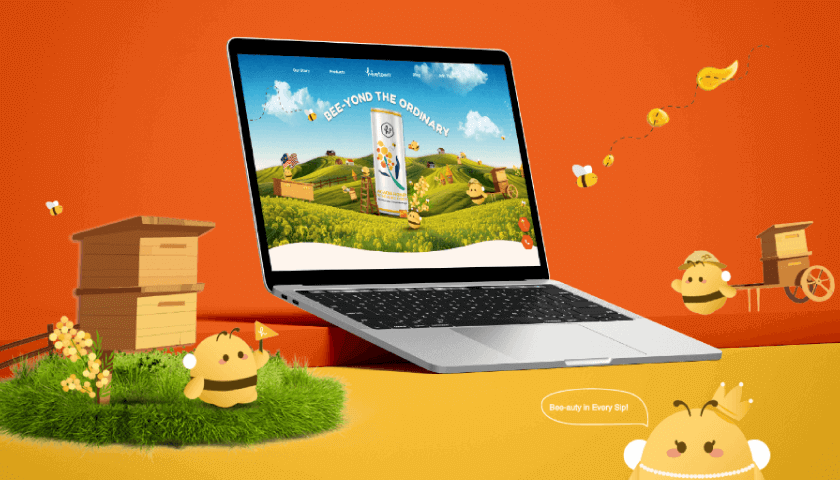
Yoy Natura makes over 70 varieties of noodles. Good product. The website wasn’t keeping up.
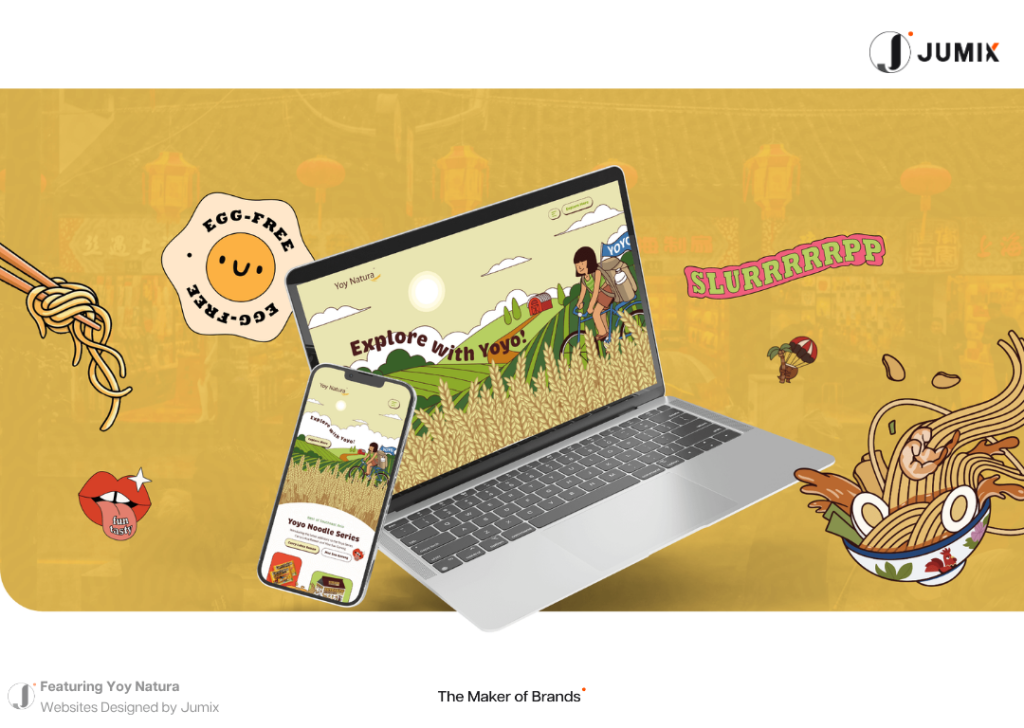
The old site was visually outdated, cluttered, and confusing to navigate. Worse, it created a gap between how good the product actually was and how it looked online. Younger buyers weren’t connecting with it.
We rebuilt the brand experience around Yoyo, their mascot, and gave the whole site a playful, youth-oriented direction.
Custom illustrations replaced the old product-heavy photography. Yoyo moves as you scroll. Draggable sticker elements add a layer of fun most F&B sites skip entirely.
The product didn’t change. The brand caught up to it. Strong brand identity work often starts exactly here, with a mascot or visual device that carries personality the old design never had room for.
A food brand with real personality loses customers when its website stays static. Yoy Natura’s rebrand fixed that gap, not by reinventing the product, but by finally letting the brand sound like it.
What rebranding actually costs in Malaysia
Rebranding cost Malaysia businesses budget for varies a lot depending on scope. Here’s roughly what each layer runs, based on what we typically quote and see in the market.
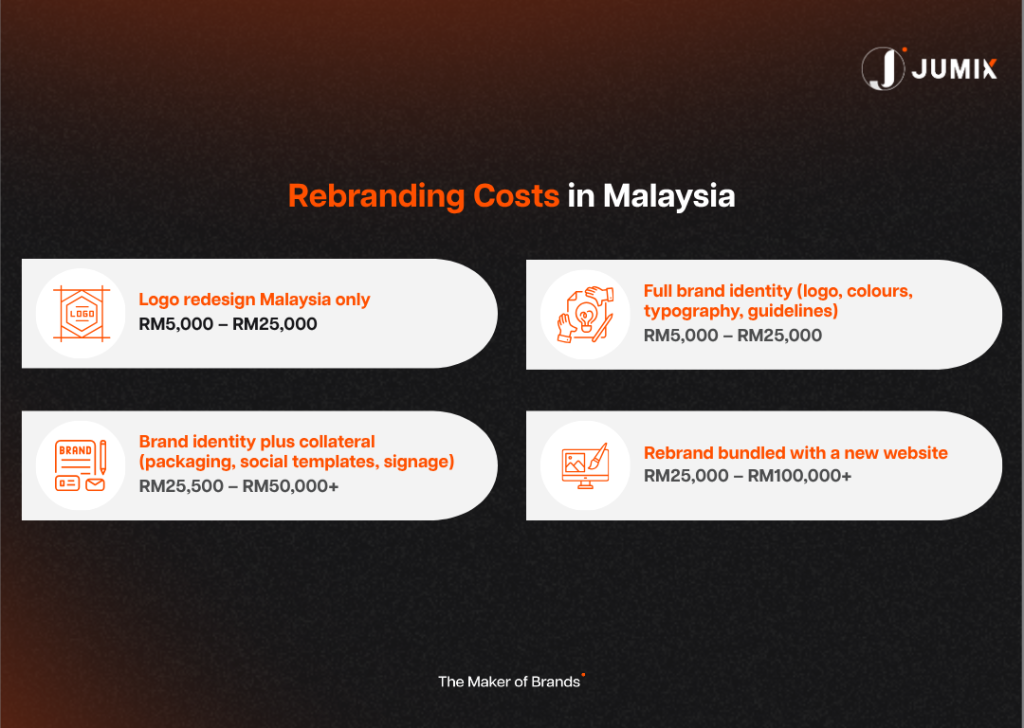
| Scope | Estimated cost |
|---|---|
| Logo redesign Malaysia only | RM1,500 – RM5,000 |
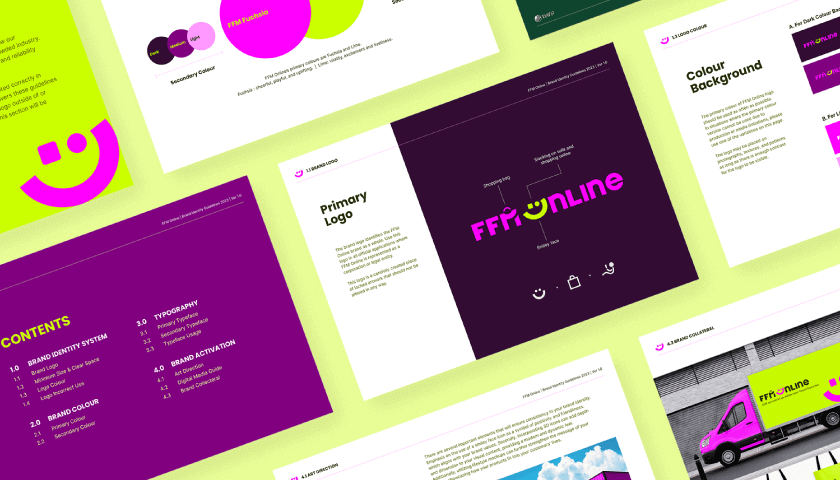
| Full brand identity (logo, colours, typography, guidelines) | RM5,000 – RM25,000 |
| Brand identity plus collateral (packaging, social templates, signage) | RM25,000 – RM50,000+ |
| Rebrand bundled with a new website | RM25,000 – RM100,000+ |
Where you land on this range depends on how many touchpoints carry your brand today. A small service business with a logo, a website, and a Facebook page sits on the lower end. A multi-branch retailer with packaging, signage, uniforms, and vehicle wraps sits much higher, because every one of those needs updating in the same launch window.
Bundling the rebrand with a website rebuild usually costs less than doing them as 2 separate projects months apart. Branding and web design solve different problems, but they need to launch in sync, or your new logo ends up sitting on an old, mismatched site for months.
Skip the bundle and you risk a half-finished rebrand: new business cards, old website. The rebrands that actually worked all launched the new identity everywhere at once, not piece by piece.
When you shouldn’t rebrand
Not every itch to change your logo is a real signal.
Don’t rebrand because you’re bored of your own colours. Don’t rebrand because a competitor just launched something flashy.
Don’t rebrand mid-crisis, hoping a new logo distracts from a real operational problem.
If your brand is mostly fine but feels slightly stale, a refresh, not a full rebrand, usually solves it. Update the colour palette. Modernise the typography. Keep the logo mark people already recognise.
A refresh costs less and avoids confusing loyal customers who built trust around your current name and look.
Save the full rebrand for when the identity itself is the problem, not just the polish.
Frequently Asked Questions
How much does a rebrand cost in Malaysia?
A logo-only redesign runs RM1,500 to RM5,000. A full brand identity with guidelines and collateral runs RM5,000 to RM25,000 or more, depending on how many touchpoints you need covered.
How do I know if my business needs a rebrand vs a refresh?
If the core identity still fits your business and audience but feels slightly dated, refresh it. If your audience, market, or positioning has genuinely changed, a refresh won’t close that gap. You need a rebrand.
How long does a rebrand take?
A logo and identity refresh can take 2 to 4 weeks. A full rebrand with a new website and collateral usually takes 6 to 12 weeks, depending on how fast you can approve concepts and supply content.
Will rebranding confuse my existing customers?
Only if you launch it piecemeal. Announce the change, explain why, and switch everything (website, signage, packaging, social) at the same time. Customers adapt fast when the change is clear and confident, not when it trickles out over months.
Do I need to rebrand and redesign my website at the same time?
Not strictly, but it’s the cleaner path. A new identity sitting on an old website creates the exact mismatch you were trying to fix. If budget forces a sequence, launch the brand identity and website together, even if that means waiting an extra month to do both properly.
Know which one you’re solving for
A brand that hasn’t changed in a decade isn’t stable. It’s invisible.
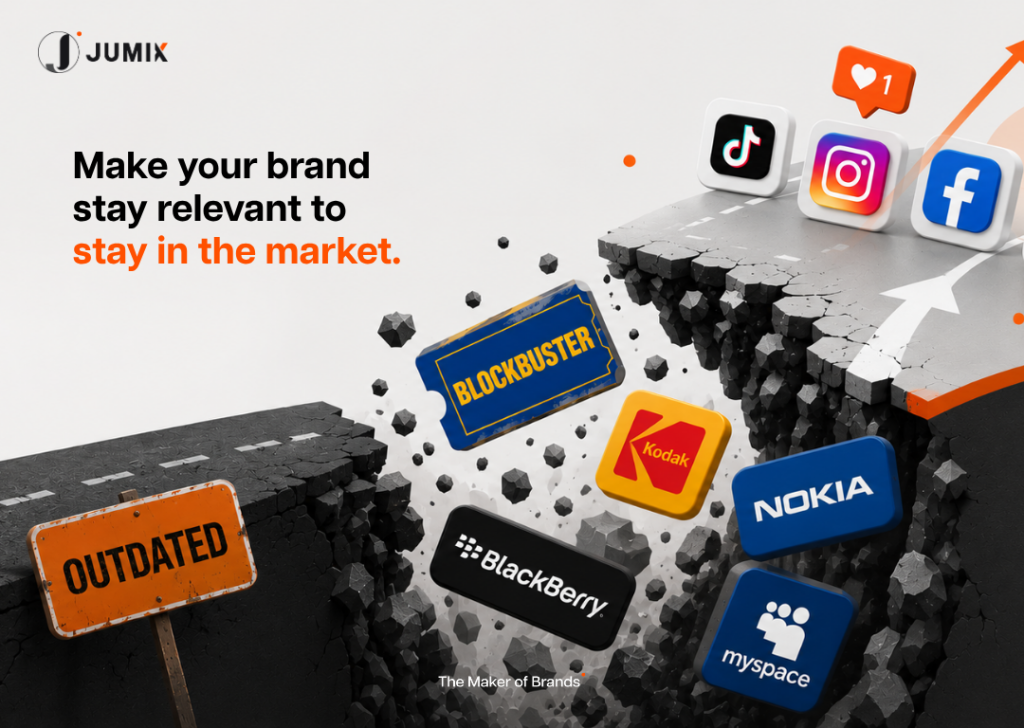
The businesses that rebrand well aren’t chasing trends. They’re closing a real gap, between an outdated identity and the audience, market, or ambition they’re actually building toward now.
Figure out which of the 3 triggers applies to you before you touch a single colour swatch. Then decide if you need a full rebrand or just a refresh.
If the identity itself is the problem, Jumix’s branding service covers the full rebuild: strategy, logo, identity guidelines, and a launch that lands everywhere at once instead of trickling out over months.





Comments are closed for this article!