





A freelance web designer in Malaysia is cheaper upfront but carries real structural risks: one person handling every role, no guaranteed after-sales support, and no backup if they exit the industry. A web design agency costs more but brings a full team, documented processes, and long-term accountability. For businesses that depend on their website to generate leads, an agency is the lower-risk investment.

Quick Takeaways
- Freelancers juggle sales, design, development, and support alone. That workload shows up in your project.
- Freelancer pricing has caught up with agency rates, but the capacity and backup haven’t
- After-sales support is where most freelancer relationships quietly break down
- An agency has a business reputation to protect. A freelancer has a career they can pivot out of.
- The right choice depends on what your website actually needs to do for your business
- Two quotes. One decision.
- What a freelance web designer in Malaysia actually looks like
- The 7 real differences between a freelancer and an agency
- When a freelancer is actually the right call
- How to vet whoever you hire
- Frequently Asked Questions
- Conclusion
Two quotes. One decision.

You asked around. You got a quote from a freelancer and a quote from an agency.
The freelancer replied faster. They’re friendlier. Their price looks better.
The agency sent a proper proposal with a timeline, a process, and a higher number at the bottom.
Now you’re stuck deciding whether the agency is worth it, or whether the freelancer can do the same job for less.
This article gives you the honest answer. There are real differences between hiring a freelance web designer vs agency in Malaysia.
Most of them don’t show up in the quote. They show up three months into the project, or six months after launch, when you need someone and can’t find them.
Read this before you decide.
What a freelance web designer in Malaysia actually looks like
A freelance web designer is one person running an entire business.

On any given day, they’re writing proposals for new clients, doing discovery calls, designing your homepage, writing code, answering support tickets from a previous client, chasing unpaid invoices, and trying to find their next project. All at the same time.
That’s not a criticism. It’s just the reality of running a solo operation.
The problem is what happens to your project inside that reality. When a freelancer is slammed with three projects at once, response times slow.
Revisions get delayed. Small errors slip through because there’s no second set of eyes. And you, the client, absorb the cost of that.
A good freelancer manages this well. But even the best ones have a hard ceiling on what they can deliver when they’re doing everything alone.
The 7 real differences between a freelancer and an agency
1. After-sales support
Your website launches. 3 months later, you need a new page added. Or something breaks. Or you want to update your pricing.
With an agency, you raise a support ticket or send an email.
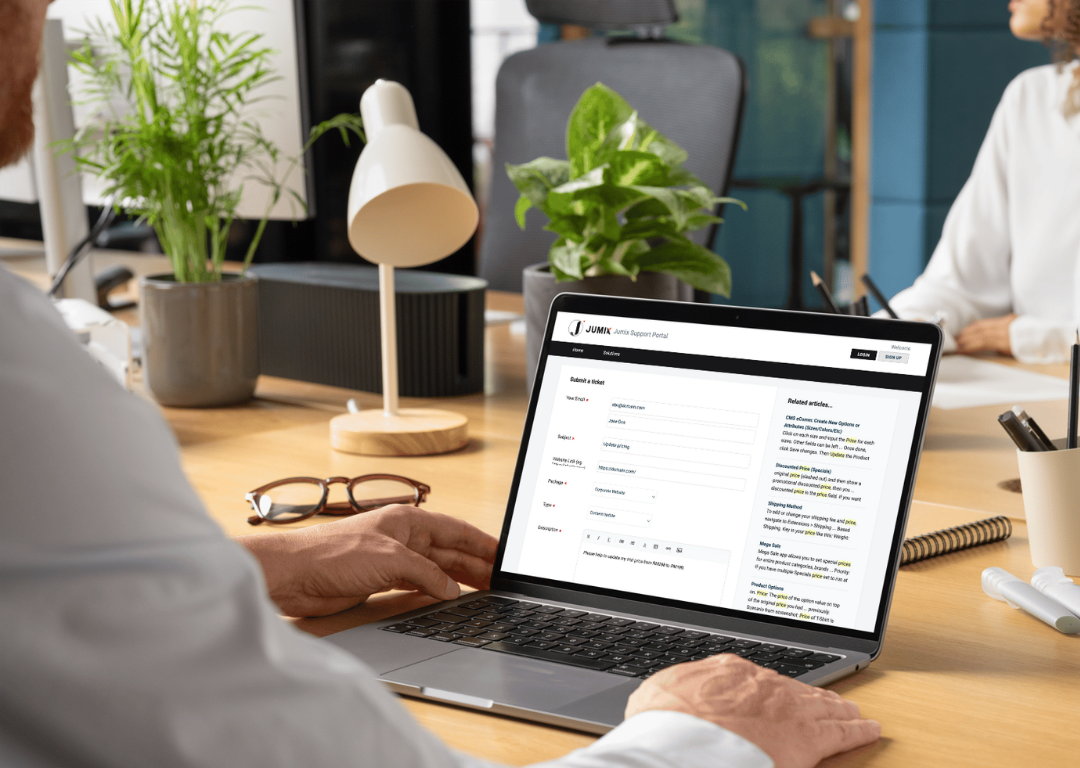
Someone gets back to you, usually within a business day, because that’s part of how the business operates.
With a freelancer, you send a WhatsApp. Maybe they reply. Maybe they’re deep in another project. Maybe they’ve taken on a full-time job and are winding down their freelance work. You won’t know until you need them.
After-sales support is the most common point of failure in freelancer relationships. And the one that gets skipped in every price comparison.
2. Single-person overload

When one person is responsible for client acquisition, project management, design, development, testing, and support, something gives. Usually it’s response speed. Sometimes it’s quality. Often both.
Agencies split these roles across a team. A project manager tracks your timeline. A designer handles visuals. A developer builds the site. A QA process catches errors before launch. Each person focuses on what they’re best at.
A freelancer switches between all of these roles in the same afternoon. The cognitive load alone affects output quality in ways that are hard to see on a finished page but easy to feel six months into using the site.
3. Price parity
The assumption that freelancers are significantly cheaper than agencies in Malaysia is increasingly outdated.
A skilled, experienced freelance web designer in Malaysia typically charges RM3,000 to RM8,000 for a business website.
A mid-market agency quotes RM5,000 to RM15,000 for the same scope. The gap is smaller than most expect. And it’s shrinking.
Why? Because a freelancer can only take on a limited number of projects at once.
They need each project to pay enough to cover their income. They can’t scale by hiring. They scale by charging more.
So you’re often paying near-agency rates for one person with no team, no backup, and no process behind them.
4. Career uncertainty
An agency is a business. It has employees, overheads, clients, and a reputation to maintain. It has structural reasons to stay in business and deliver on its commitments.
A freelancer is an individual. They might decide next month that they want to go full-time at a company. Or move abroad. Or shift into a different industry entirely. It happens constantly in Malaysia’s creative sector, especially among younger designers who freelance while figuring out their longer-term path.
If that happens mid-project, you’re left with an unfinished website, assets stored somewhere you can’t access, and no clear path to getting it completed.
There’s no ill intent in most of these situations. Life changes. But your business still needs a website.
5. Track record and accountability

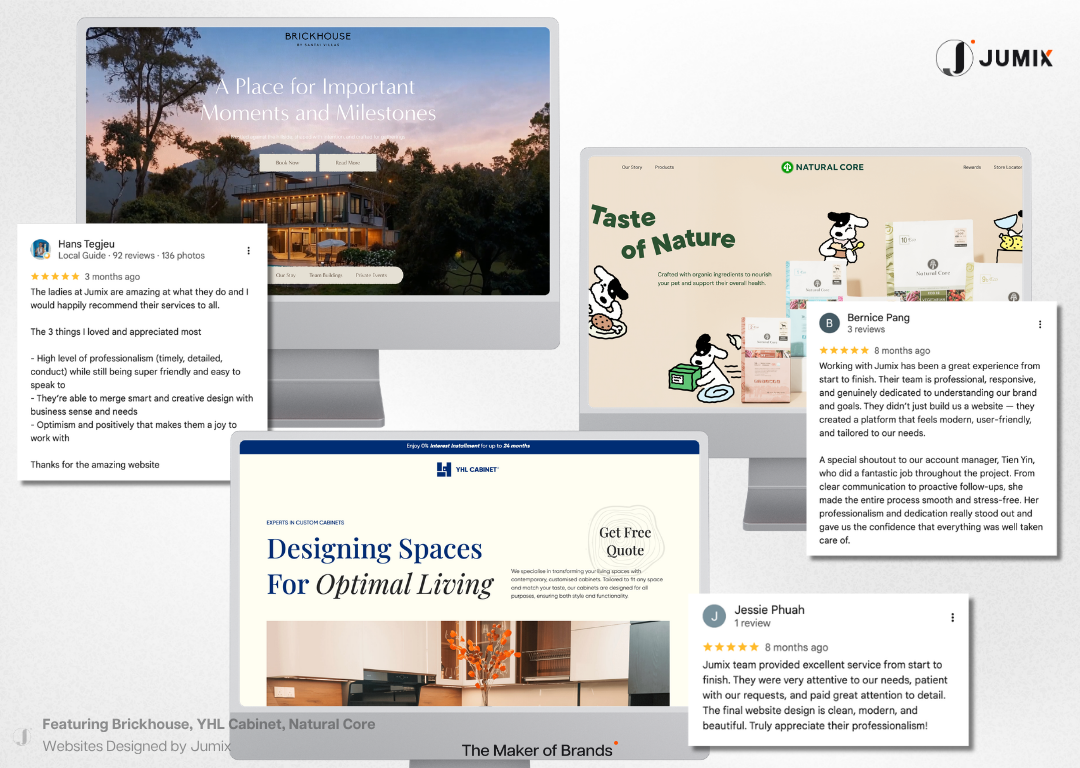
Agencies publish portfolios. They have Google reviews. They have case studies with named clients. Their business reputation is public and verifiable.
Freelancers vary. Some have strong portfolios and referrals. Others show you work they contributed to partially, or projects that can’t be verified. And because they’re operating as individuals, there’s limited formal accountability when things go wrong.
An agency that delivers a bad product risks its entire client pipeline. A freelancer risks a bad review on Facebook. The incentive structures are different.
6. Tools, resources, and expertise depth
Agencies invest in licensed tools, design systems, development frameworks, and testing environments. They have accumulated knowledge across dozens of projects, industries, and problem types.
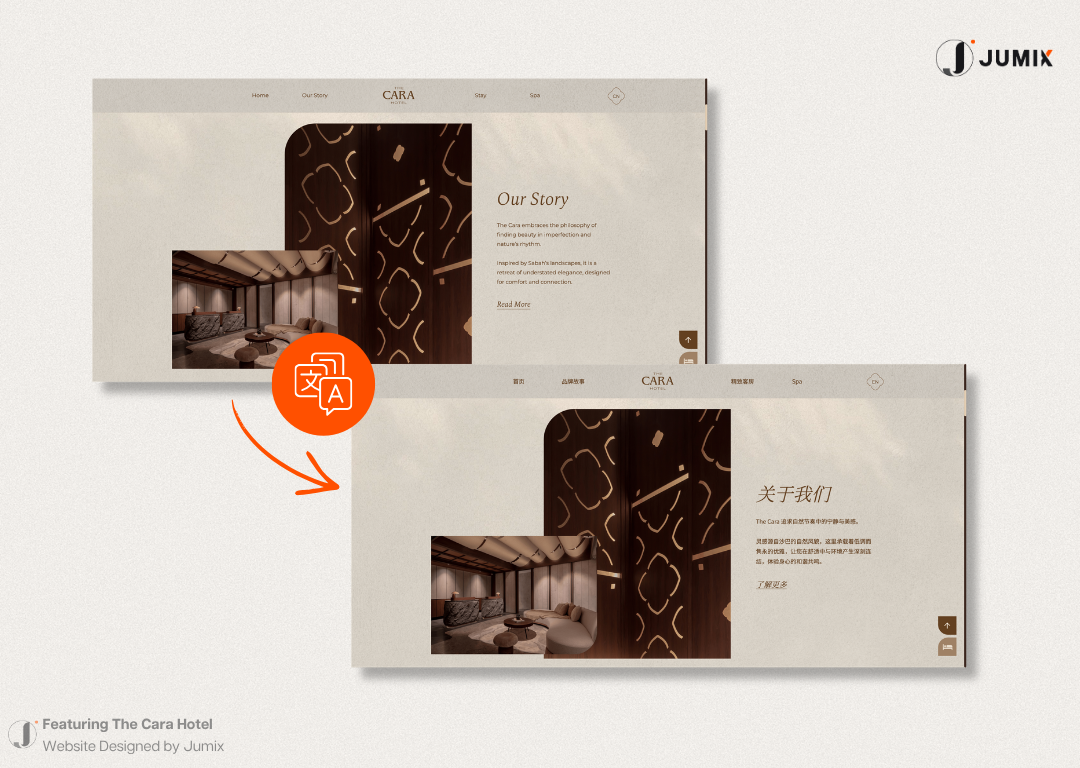
When your project needs something specific (a custom checkout flow, multilingual support, or a complex integration) there’s usually someone on the team who’s done it before.
A freelancer works lean by necessity. They’re skilled at what they specialize in, but the breadth of what they can confidently execute is narrower. And when they hit something outside their depth, they figure it out on your project’s time.
7. Scalability as your business grows
Your business launches the website. Then it grows. You need a new service page, a booking system, a member portal, a redesign. The project expands.
An agency grows with you. They have the capacity to take on new scope, bring in the right people, and manage a larger engagement without breaking.
A freelancer hits a ceiling fast. Once they’re at capacity, you’re waiting. Or they’re rushing. Either way, your growth is constrained by their bandwidth.
The real cost shows up 18 months later, when your business is ready to move and your website can’t keep up.
Two clients illustrate this clearly.
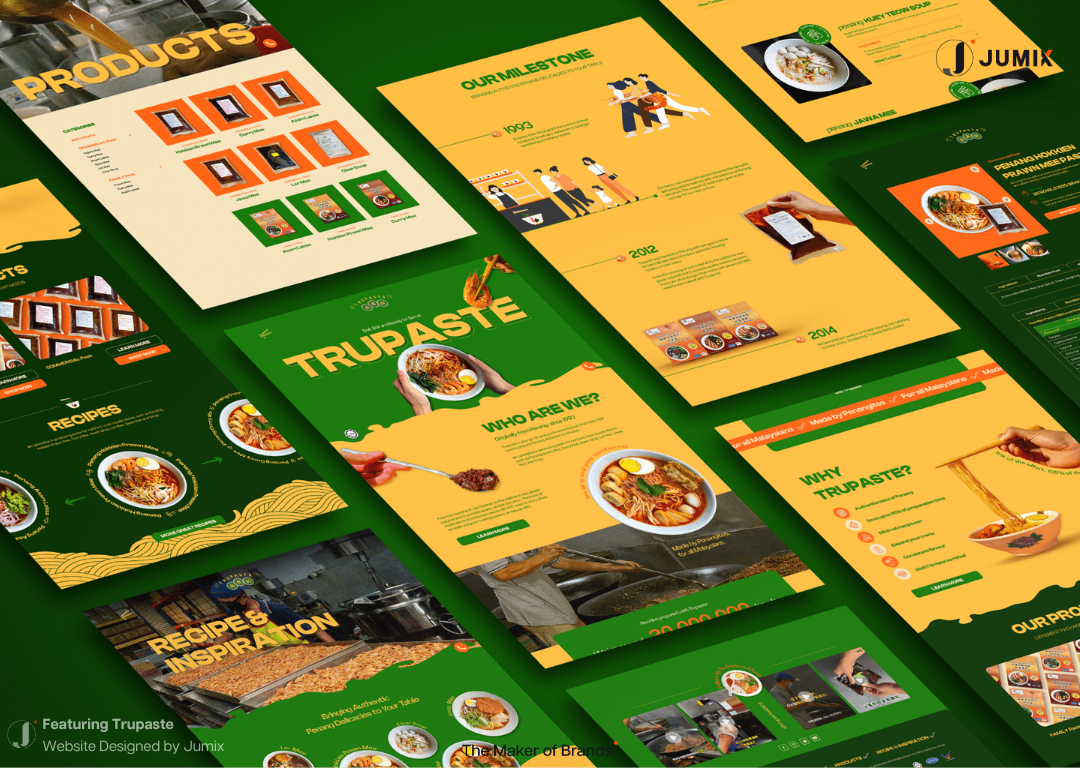
TruPaste, a Penang soup paste manufacturer selling to restaurant operators and commercial kitchens, needed a B2B website that spoke directly to F&B decision-makers. The messaging had to be precise. The structure had to qualify visitors quickly. The positioning had to differentiate them in a crowded food manufacturing market. It requires a strategist, a copywriter, a designer, and a QA reviewer working as a system to get all of that right.
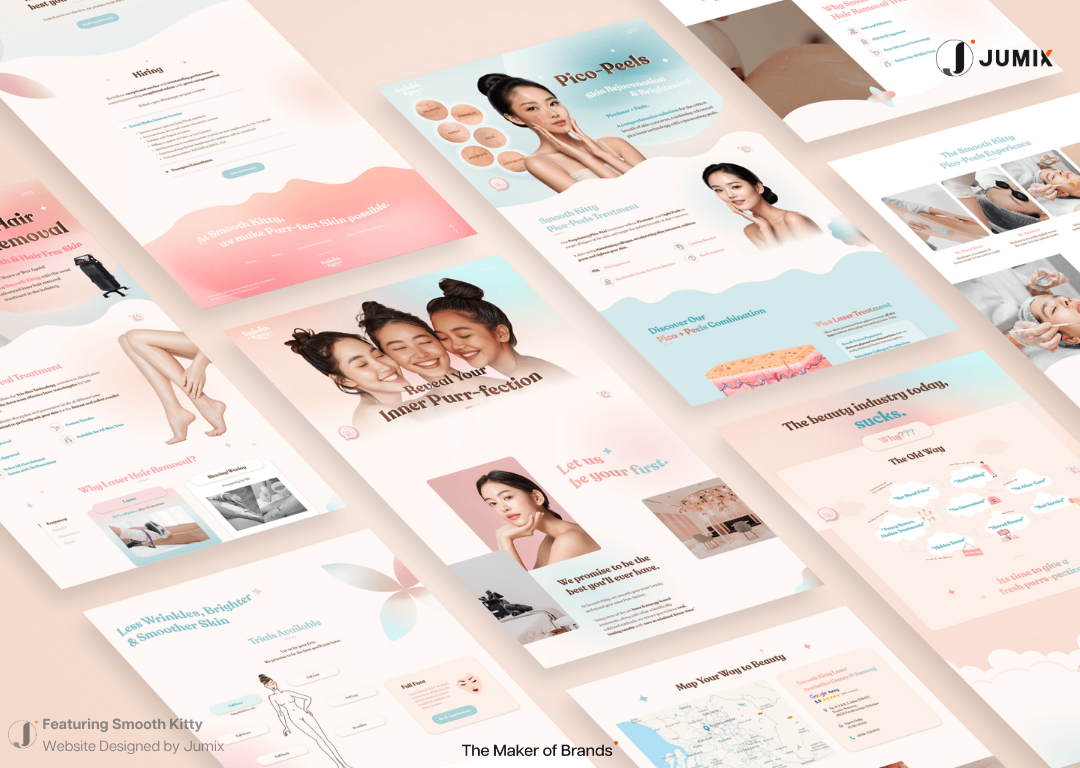
Smooth Kitty, an aesthetic beauty clinic, needed brand identity and conversion flow working as one. The warmth of their visual direction had to earn trust. The UX had to guide first-time clients from hesitation to booking confidence. An agency builds brand, design, and UX as one system. That’s what made it possible.
Knowing what to look for before you sign protects you regardless of who you hire.
When a freelancer is actually the right call
To be fair: there are situations where a freelancer makes sense.
If you need a simple one-page landing page for a campaign with no plans to scale it, a freelancer is probably fine.
If you’re testing a new product concept on a tight budget and just need something live quickly, a freelancer can get you there faster and cheaper.
Personal portfolio sites, simple event pages, internal tools that don’t face customers. All reasonable freelancer territory.
The risk calculus changes when your website is your primary business asset. When it’s generating leads, building brand trust, supporting sales, or serving as a customer’s first impression of your company, the structural limitations of a solo operator start to matter.
Be honest about what your website actually needs to do. Then make the decision from there.
How to vet whoever you hire
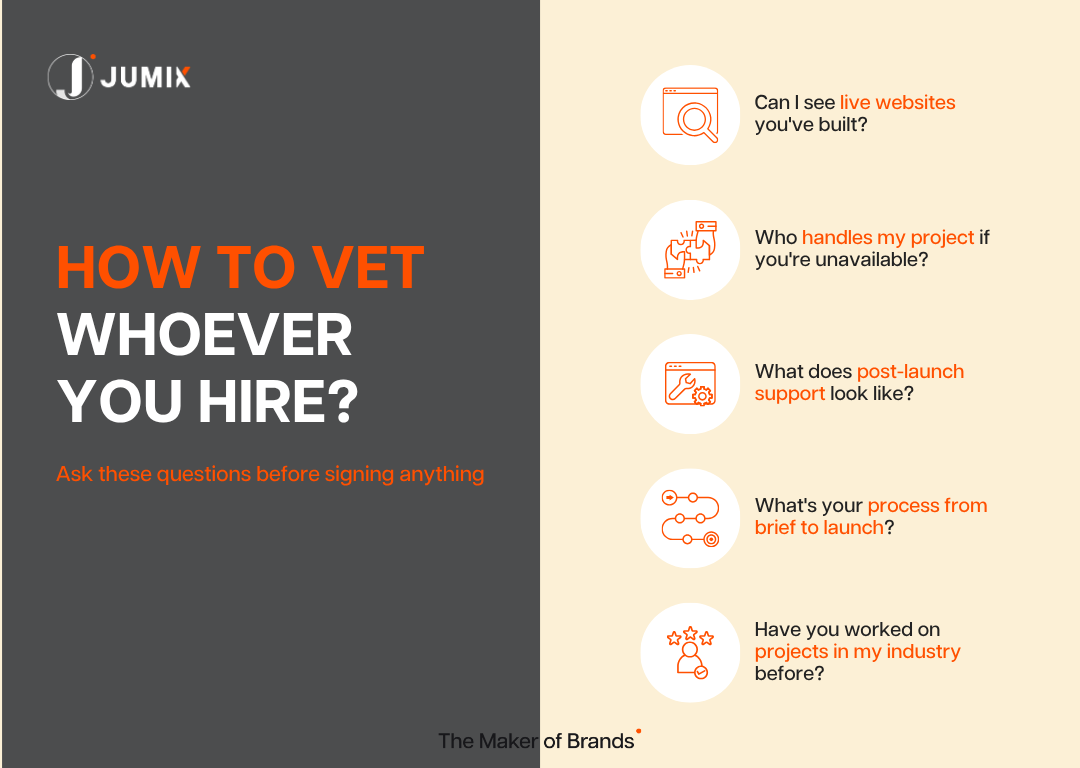
Whether you go with a freelancer or an agency, ask these questions before signing anything:
- Can I see live websites you’ve built? Live websites. Working URLs I can browse right now, not mockup images.
- Who handles my project if you’re unavailable? For an agency, this should have a clear answer. For a freelancer, the honest answer is often nobody.
- What does post-launch support look like? Get this in writing, with a timeframe and a process.
- What’s your process from brief to launch? A structured answer signals experience. Vagueness signals the opposite.
- Have you worked on projects in my industry before? Not mandatory, but relevant context for how quickly they can understand your audience.
Frequently Asked Questions
Is a freelance web designer cheaper than an agency in Malaysia?
Often, but less so than most people expect. Experienced freelancers in Malaysia charge RM3,000 to RM8,000 for a business website. Agencies start around RM5,000 and scale up based on scope. The price gap is real but narrower than it used to be. And the gap in what you’re actually buying is wider.
What happens if my freelancer goes MIA after the project?
More common than anyone admits. You’re typically left without access to your own files, no one to handle updates or fixes, and the cost of starting over with a new provider. The best protection: ensure you own all assets, credentials, and hosting from day one, regardless of who builds the site.
How do I know if my project needs an agency?
Ask yourself: is this website a core business asset that needs to generate leads, build trust, or scale with my company? If yes, the structural support of an agency is worth the investment. If it’s a simple, low-stakes page you’re not depending on commercially, a capable freelancer can handle it.
Can a freelancer do the same quality work as an agency?
Some can, for the right project. A highly skilled freelancer who specializes in your type of website and has a strong track record is a legitimate option. The design quality at delivery might be fine. The support, scalability, and continuity are where things fall apart.
The right choice is the one that matches your risk tolerance
A freelancer is a person. An agency is a system.
For low-stakes, simple websites, a person can be enough.
For business-critical websites that need to perform, convert, and grow with you, a system is the safer bet.
Most businesses in Malaysia underestimate how much their website does. Then it stops working and there’s no one to call.
If you’re ready to work with a team that takes the brief seriously, builds for conversion, and is around long after launch, Jumix’s web design service is built for exactly that. Get started here and we’ll figure out the right approach for your business together.






Comments are closed for this article!